

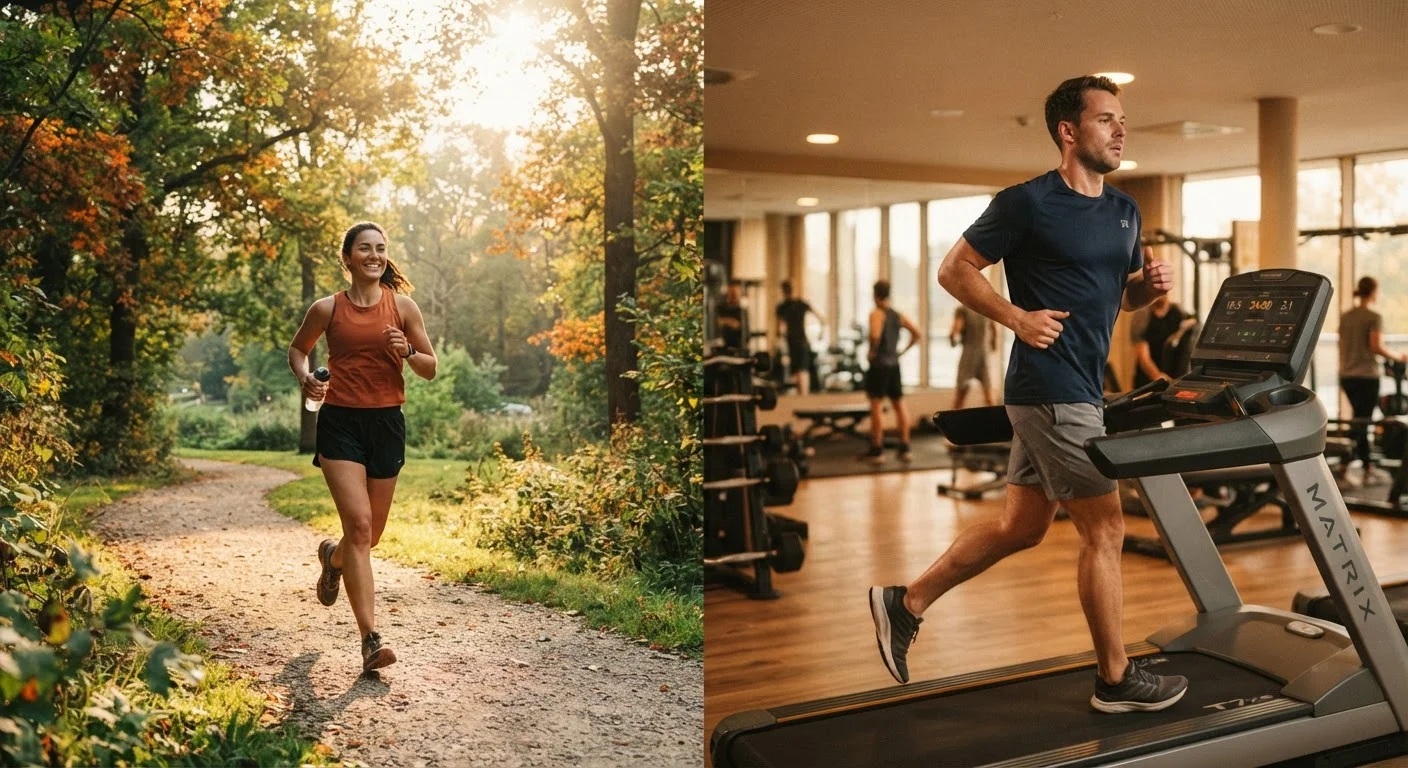
Key Takeaways
- Outdoor exercise often provides mood and mental health benefits linked to natural settings and daylight exposure.
- Indoor environments offer consistency, weather protection, and greater control over intensity and equipment.
- Neither setting is universally superior - the best environment is the one you'll return to consistently.
- Combining both approaches throughout the week can help sustain motivation and accommodate life's unpredictability.
- Personal factors like safety, accessibility, and budget matter as much as any physiological comparison.
Our Verdict
Outdoor and indoor exercise each offer genuine, research-supported benefits, and neither wins outright. The environment that keeps you moving consistently - whether that's a park, a gym, or your living room - is the one that serves your health best. Most people find that a flexible mix of both settings supports long-term activity habits better than committing rigidly to one.
| Best for | Recommended |
|---|---|
| Those who find motivation in fresh air, scenery, and daylight | Outdoor exercise |
| Those who need weatherproof, predictable conditions with structured equipment | Indoor gym or home exercise |
| Those balancing busy schedules with limited commute time | Home exercise |
| Those seeking variety and long-term adherence | A flexible mix of both |
Why Environment Matters More Than Most People Realize
Most conversations about exercise focus on what you do - the type of movement, the frequency, the intensity. Far less attention goes to where you do it. Yet your surroundings shape how an activity feels, how long you stick with it, and even how your body responds physiologically. This isn't a trivial detail.
Research in environmental psychology and exercise science has explored how settings - natural landscapes, enclosed gyms, home spaces - influence perceived effort, mood during activity, and willingness to repeat the experience. Understanding these dynamics can help you choose settings that genuinely support your movement habits, rather than working against them. If you're returning to regular activity after a break, where you start can shape whether you keep going.
What Outdoor Exercise Tends to Offer
Moving outside - whether walking, running, cycling, or simply stretching in a backyard - exposes you to a set of conditions that indoor settings can't fully replicate. Natural light supports circadian rhythm regulation, which influences sleep and energy levels. Varied terrain engages stabilizing muscles differently than flat, predictable surfaces. Perhaps most notably, natural environments are associated with reductions in perceived stress and improvements in mood during and after activity.
This relationship between nature exposure and psychological wellbeing has been studied enough to have its own shorthand: sometimes called "green exercise" in public health literature. It doesn't require wilderness - urban parks and tree-lined streets appear to offer some of the same effect. The connection between physical activity and mental health is meaningful regardless of setting, but the outdoor environment may amplify certain mood-related benefits.
The trade-offs are real, though. Weather, air quality, daylight hours, and personal safety all affect whether outdoor movement is consistently accessible. These aren't small considerations, particularly in winter months or in areas with high traffic pollution or limited safe walking routes.
| Outdoor Exercise | Indoor Gym | Home Exercise | |
|---|---|---|---|
| Weather dependency | High - conditions vary | None - fully controlled | None - always available |
| Cost | Generally free | Ongoing membership fee | Variable; minimal to moderate |
| Mood and mental wellbeing | Strong evidence of benefit | Moderate benefit | Moderate benefit |
| Equipment variety | Limited to what you bring | Broad range available | Depends on home setup |
| Accessibility | Requires safe nearby space | Requires travel | On-demand, no commute |
| Consistency and routine | Weather-dependent | High structure supports routine | Requires self-direction |
| Social environment | Variable; generally solitary | Community often available | Usually solitary |
What Indoor Exercise Tends to Offer
Indoor settings - gyms, fitness studios, or home spaces - provide something that outdoor environments can't reliably deliver: consistency. Temperature, surface, lighting, and available equipment stay predictable session to session. For people who find unpredictability discouraging, this reliability can make a meaningful difference in adherence.
Gyms offer access to a range of equipment that supports different movement goals, from cardiovascular machines to free weights. If you're curious about how different movement types compare, our overview of cardio vs. strength training covers what each approach generally does for the body. Home exercise removes the commute barrier entirely, which is often underestimated as a practical motivator.
Indoor exercise does have limitations. Enclosed spaces with artificial lighting and recycled air don't replicate the sensory experience of being outside. Some people find gym environments intimidating, particularly when deciding between group and solo approaches. Home exercise requires self-direction and enough space to move safely.
Try Mixing Environments Over the Week
If you're unsure which setting suits you best, there's no need to commit fully to one. Many people find that a short outdoor walk on some days and an indoor session on others provides both variety and a backup plan when conditions change. Flexibility in setting tends to support flexibility in habit - which makes it easier to keep moving over the long term.
Practical Factors Worth Weighing
Beyond the experiential differences, several practical factors often determine which setting is realistic for a given person at a given time in their life.
- Cost: Outdoor movement is generally free. Gym memberships carry ongoing costs. Home equipment ranges from minimal to significant investment.
- Accessibility: Safe outdoor spaces aren't equally distributed. Gyms require travel. Home exercise is available on demand but depends on having usable space.
- Social context: Some people move more consistently with others around; others prefer solitude. Both settings can accommodate either preference depending on how you structure them.
- Weather and season: Outdoor exercise requires flexibility or appropriate gear. Indoor options sidestep this entirely.
- Joint considerations: Soft natural surfaces like grass or packed trails can be gentler on joints than hard pavement. Indoor equipment like ellipticals or stationary bikes offers low-impact alternatives without weather dependency.
It's also worth noting that everyday movement counts too - gardening, walking to an errand, taking stairs - and much of this naturally happens outdoors without being framed as "exercise" at all.
Finding an Approach That Works for You
The research doesn't point to one setting being categorically better. What it does suggest is that enjoyment and perceived ease during exercise are among the strongest predictors of whether someone continues to do it. If a crisp morning walk feels far more appealing than a treadmill, that preference matters. If the gym's structure keeps you accountable when motivation dips, that matters too.
Many people find that a flexible approach - outdoor movement when conditions and energy align, indoor alternatives when they don't - gives them the resilience to stay active through schedule changes and seasonal shifts. Understanding what moderate-intensity movement actually feels like can help you gauge effort across both settings, since the environment can change your perception of how hard you're working.
If you're newer to regular movement or navigating specific health conditions, speaking with a healthcare provider or qualified fitness professional before significantly changing your routine is a sensible step - regardless of where you plan to exercise.
This article is for general informational purposes only and is not a substitute for professional medical or fitness advice. Always consult a qualified healthcare professional before beginning a new exercise routine, particularly if you have any health concerns.