

Key Takeaways
- Budgeting works at any income level - it's about awareness, not abundance.
- A budget doesn't ban enjoyment; it gives you permission to spend guilt-free.
- You don't need special software or math skills to build a working budget.
- Imperfection is normal - missing one month doesn't mean failure.
- Simple methods like the 50/30/20 rule make budgeting accessible for beginners.
Why Myths About Budgeting Are So Damaging
Budgeting has a reputation problem. Many people delay building one - not because they lack discipline, but because they've absorbed ideas about budgeting that simply aren't true. These myths frame budgets as restrictive, complicated, or only useful once you're already financially stable. In reality, a budget is just a plan for your money, and plans are most valuable when resources feel tight.
Understanding what a budget actually is - and isn't - is the first step toward making one work. If you're new to the concept, what a household budget actually means may help clarify the basics before diving in.
Below, we address the most common myths that stop people from starting - and replace them with straightforward facts.
Myth
You need a high income before budgeting makes sense.
Fact
Budgeting is most useful when money is limited - it helps you direct every dollar intentionally regardless of how many you have.
This is one of the most common reasons people postpone building a budget. The reasoning goes: once I earn more, I'll have something worth tracking. But budgeting isn't about managing surplus - it's about understanding where money goes and making deliberate choices with it. Lower-income households often have the most to gain from a budget because margins are tighter and small leaks in spending have a bigger impact. Income level determines how much you have to work with; a budget determines what you do with it.
Myth
Budgeting means you can't spend money on anything fun.
Fact
A well-designed budget explicitly includes spending on things you enjoy - it just makes that spending intentional rather than accidental.
The image of a budget as a punishment - no restaurants, no entertainment, no treats - drives more people away from budgeting than almost any other myth. In practice, budgets work best when they reflect real life, including leisure spending. The 50/30/20 framework, for example, formally allocates a portion of income to "wants." When you budget for enjoyment, you spend that money without guilt, because it was planned. Unplanned spending on the same items tends to produce both the expense and the guilt. A budget doesn't eliminate pleasure; it finances it responsibly.
Myth
Budgeting requires a spreadsheet, an app, or strong math skills.
Fact
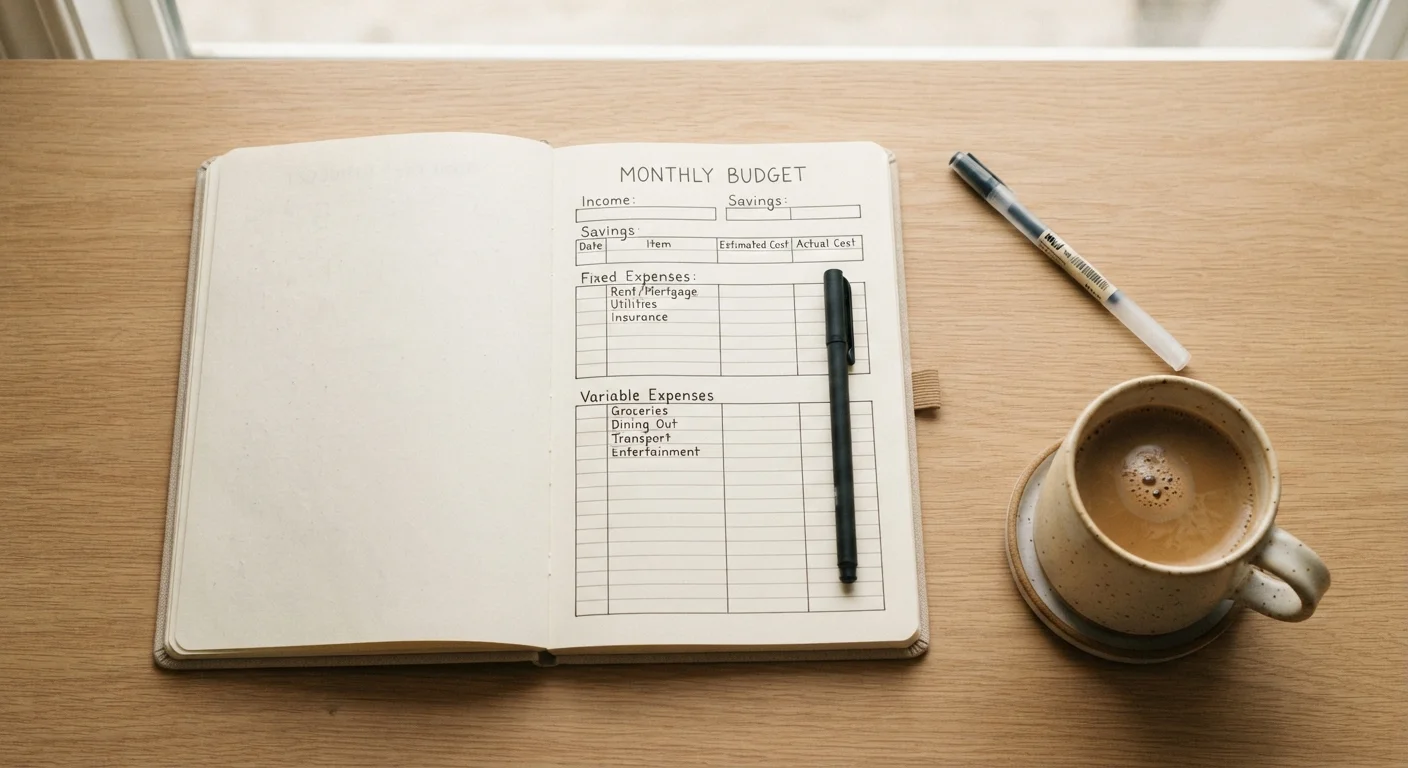
Effective budgets have been built with nothing more than a pen, paper, and basic addition.
Technology can make budgeting easier, but it's not a requirement. The core task - listing income, listing expenses, and comparing the two - involves only simple arithmetic. Many people find that a handwritten list is more engaging and easier to maintain than an app they forget to open. The tool matters far less than the habit. If a spreadsheet helps you stay organized, use one. If a notes app on your phone works better, that's equally valid. The best budgeting tool is the one you'll actually use consistently.
Myth
If you go over budget one month, the whole system has failed.
Fact
Going over in one category or one month is normal - what matters is reviewing what happened and adjusting for next month.
Perfection is not the goal of budgeting; awareness is. Nearly every person who budgets will overspend in at least one category each month, especially at the start. An unexpected car repair, a medical copay, or a social event can all disrupt even a carefully planned month. The response to overspending isn't to abandon the budget - it's to note where the gap occurred, decide whether it was a one-time event or a recurring underestimate, and adjust future allocations accordingly. Treating a single difficult month as proof that budgeting doesn't work is like stopping physical therapy after one hard session. Progress is built through consistency, not flawlessness. For more on avoiding this trap, see building a budget that survives real life.
Myth
Budgeting is only about cutting spending.
Fact
Budgeting is equally about directing money toward what matters most - savings goals, debt payoff, or experiences you value.
Framing budgets purely as a cost-cutting exercise misses their larger purpose. Yes, a budget may reveal unnecessary spending you're willing to eliminate. But it also illuminates how much is already going toward things that matter - and how much could be redirected toward goals like an emergency fund, paying down debt, or saving for a specific purchase. For context on how budgeting connects to longer-term financial goals, the Saving & Debt hub offers actionable guidance. Budgeting is a tool for intentionality, not deprivation.
How to Move Forward Once the Myths Are Out of the Way
Recognizing faulty assumptions is half the work. The other half is choosing a method simple enough to actually use. Here are a few widely recognized approaches:
- 50/30/20 rule: Allocate roughly 50% of after-tax income to needs, 30% to wants, and 20% to savings or debt repayment. It's a flexible starting framework, not a rigid rule.
- Zero-based budgeting: Assign every dollar a job each month so income minus expenses equals zero. This approach works well for people who prefer detailed tracking.
- Envelope method: Divide cash (or digital sub-accounts) into spending categories. When the envelope is empty, spending in that category stops for the month.
None of these methods requires financial expertise. For a plain-language breakdown of terms you'll encounter while building your first budget, see this glossary of budgeting terms.
~30%
Americans with a detailed monthly budget
Gallup polling has consistently found that fewer than one-third of U.S. adults maintain a detailed household budget, suggesting that barriers to starting remain widespread.
50/30/20
Popular beginner budgeting framework
The 50/30/20 rule - allocating income across needs, wants, and savings - is widely recommended by consumer finance educators as a low-barrier starting point.
Even freelancers and gig workers - whose income varies month to month - can use a budget effectively. The approach simply looks different. Budgeting on an irregular income walks through strategies designed for unpredictable paychecks.
If your budget has stalled after a promising start, you're not alone. Common structural problems - not weak willpower - tend to be the cause. Why your budget keeps failing in month two covers the patterns worth watching for.
This article is for general informational and educational purposes only. It does not constitute personalized financial advice. Consider consulting a qualified financial professional for guidance specific to your situation.