

Key Takeaways
- Half your plate filled with vegetables and fruits is a widely supported starting point across most healthy eating patterns.
- Nutrient density - getting the most nutritional value per calorie - matters more than strict calorie counting for most people.
- Variety within food groups reduces nutritional gaps and supports a diverse gut microbiome.
- Whole, minimally processed foods tend to deliver more fiber, vitamins, and minerals than their refined counterparts.
- These principles apply whether you eat meat, follow a plant-based diet, or follow a Mediterranean-style approach.
Why Some Plate-Building Principles Transcend Diet Labels
Mediterranean, DASH, plant-based, flexitarian - the landscape of named eating patterns can feel overwhelming. Yet when nutrition researchers compare these approaches, a handful of structural principles surface in nearly all of them. These aren't rigid rules; they're evidence-informed habits that most adults can apply regardless of their food preferences or cultural background.
Understanding these shared principles can help you build a healthier plate without overhauling your entire lifestyle. For a closer look at how specific eating patterns stack up, see how Mediterranean, DASH, and whole-foods approaches compare.
This article is for general informational purposes only and is not a substitute for personalized advice from a registered dietitian or qualified healthcare professional.
The Core Principles of a Balanced Plate
Rather than memorizing food rules, think of these principles as a flexible framework you can return to at any meal.
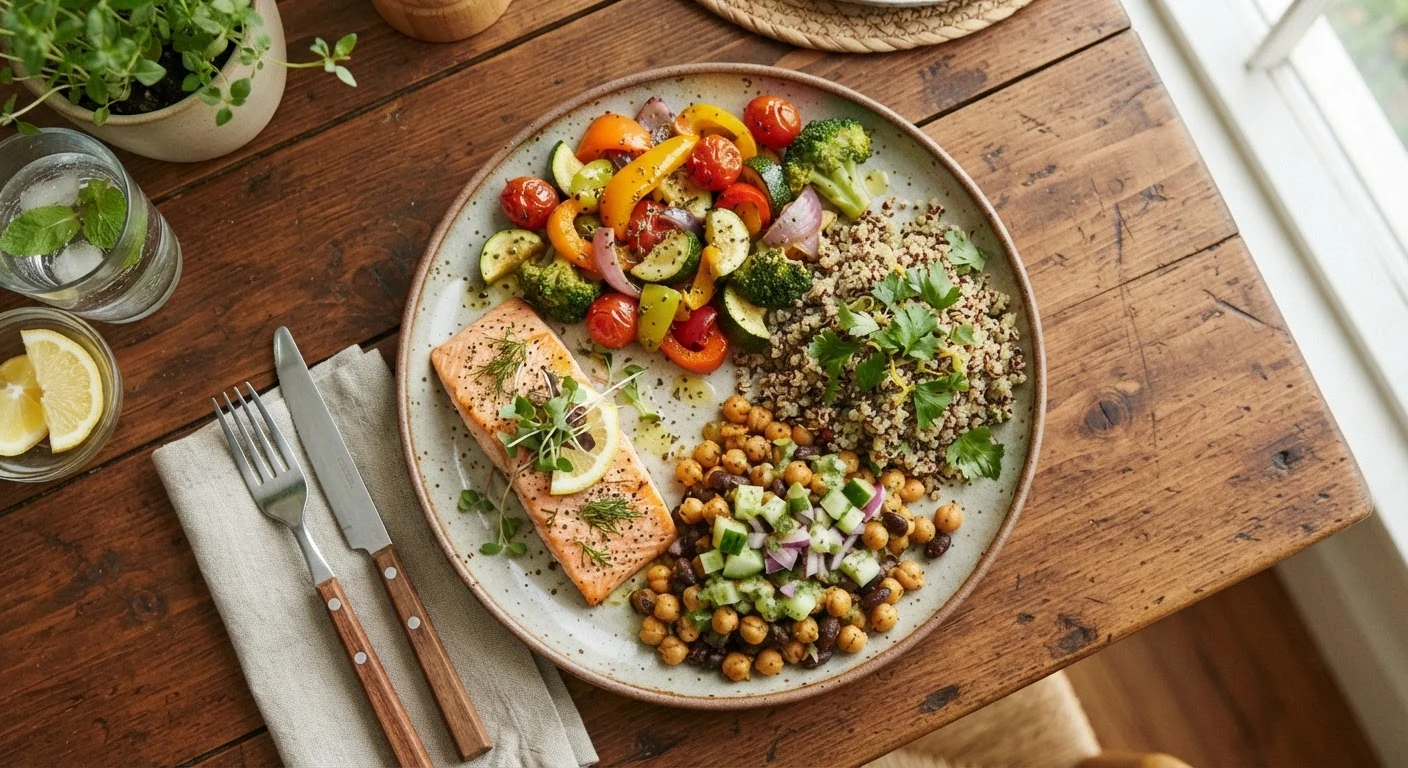
Fill at least half your plate with vegetables and fruits at most meals.
Vegetables and fruits are rich in fiber, vitamins, minerals, and phytonutrients while typically being lower in calories. Major dietary guidelines globally converge on this proportion as a practical starting point for overall diet quality.
Choose whole, minimally processed grains over refined versions when possible.
Whole grains retain their bran and germ, providing fiber, B vitamins, and minerals that are largely stripped during refining. Higher fiber intake is consistently linked to better digestive health and more stable blood sugar levels.
Prioritize protein sources that also deliver micronutrients, not just grams of protein.
Protein foods vary widely in what else they bring to the table. Legumes offer fiber and iron; fatty fish provide omega-3s; eggs deliver choline. Thinking beyond grams helps you choose proteins that do more nutritional work.
Build variety deliberately - rotate foods within each food group rather than eating the same options daily.
Different foods within the same category offer different nutrient and fiber profiles. Varied eating also supports a more diverse gut microbiome, which emerging research links to immune and metabolic health.
Use healthy fats as part of the meal rather than eliminating them.
Unsaturated fats found in foods like olive oil, avocado, nuts, and seeds support heart health and help absorb fat-soluble vitamins (A, D, E, and K). Eliminating fat entirely can actually limit how well your body uses nutrients from the rest of the meal.
Quick Actions You Can Take Today
You don't need a complete dietary overhaul to start eating more intentionally. Small, consistent shifts tend to be more durable than dramatic changes.
What the Research Actually Supports
~9 in 10
Americans fall short of recommended vegetable intake
According to CDC data, only about 1 in 10 U.S. adults meets federal recommendations for both fruit and vegetable consumption.
~28g
Daily fiber recommended for most adults
The 2020-2025 Dietary Guidelines for Americans identify dietary fiber as a nutrient of public health concern due to widespread under-consumption.
70%+
Of U.S. calories come from ultra-processed foods
Research published in nutrition journals estimates that ultra-processed foods account for more than 70% of the food supply in the United States by product count.
One of the most consistent findings in nutrition science is that dietary patterns matter more than individual foods. No single food makes or breaks a healthy diet - it's the overall composition of your meals, repeated over time, that shapes health outcomes. This is good news: it means an occasional indulgence doesn't undo your progress, and there's room for flexibility.
It's also worth separating well-established evidence from popular claims. Some nutrition advice that sounds scientific is actually based on thin or outdated research. For a grounded look at what the evidence really shows, see common nutrition myths and what research actually says.
“The best diet is one that you can maintain long-term and that is rich in a variety of whole foods. Dietary patterns, not single nutrients, are what matter most for overall health.”
— Walter Willett, Professor of Epidemiology and Nutrition, Harvard T.H. Chan School of Public Health
Applying These Principles Without Meat - or With It
These plate-building principles work across omnivorous and plant-based diets alike. The key variable is where your protein, healthy fats, and micronutrients come from - not whether those nutrients are present.
For those reducing or eliminating meat, sourcing adequate protein thoughtfully becomes especially important. Beans, lentils, tofu, tempeh, edamame, and certain whole grains each contribute different amino acid profiles, which is why variety within plant proteins is particularly valuable. For practical guidance, see how to meet daily protein needs from plant sources.
For omnivores, these same principles apply - emphasizing plants as the foundation, choosing leaner or minimally processed animal proteins, and keeping portion proportions in mind rather than letting protein crowd out vegetables and whole grains.
Special Populations: Consult a Professional
These general principles are intended for healthy adults. If you are pregnant, nursing, managing a chronic condition, or caring for a child or older adult, nutritional needs differ significantly. Please consult a registered dietitian or your healthcare provider before making changes to your diet based on general guidance.