

Key Takeaways
- Meditation is a formal practice; mindfulness is a quality of attention that can be applied anywhere.
- All meditation doesn't require mindfulness, and mindfulness doesn't require meditation - though the two often reinforce each other.
- Research suggests both practices are associated with reduced stress and improved emotional regulation.
- Neither approach requires special equipment, cost, or prior experience to begin.
- Consulting a mental health professional is advisable if you're managing a specific condition.
Option A
Meditation
A dedicated, structured practice for mental training.
Best for: People who want to set aside intentional, focused time to cultivate calm, concentration, or self-awareness.
Option B
Mindfulness
An everyday quality of attention you can apply anywhere.
Best for: People who want to bring greater awareness and presence to daily activities without a formal routine.
If you want a consistent, structured mental wellness routine
Meditation
A dedicated meditation session - even five to ten minutes daily - provides a reliable container for building focus and self-awareness over time.
If your schedule is unpredictable or you struggle to sit still
Mindfulness
Mindfulness can be woven into existing activities like eating, walking, or washing dishes, making it easier to sustain without a fixed schedule.
If you want to manage stress responses in real time
Mindfulness
Applying mindful attention in the moment - noticing tension, breath, or thoughts without judgment - can interrupt stress cycles as they happen.
If you're drawn to deeper self-exploration or spiritual practice
Meditation
Many meditation traditions offer structured pathways for introspection, concentration, and insight that go beyond day-to-day awareness.
What's the Difference, Really?
Meditation and mindfulness are often used as if they mean the same thing, but they describe two distinct - though closely related - concepts. Understanding the difference can help you choose an approach that actually fits your life.
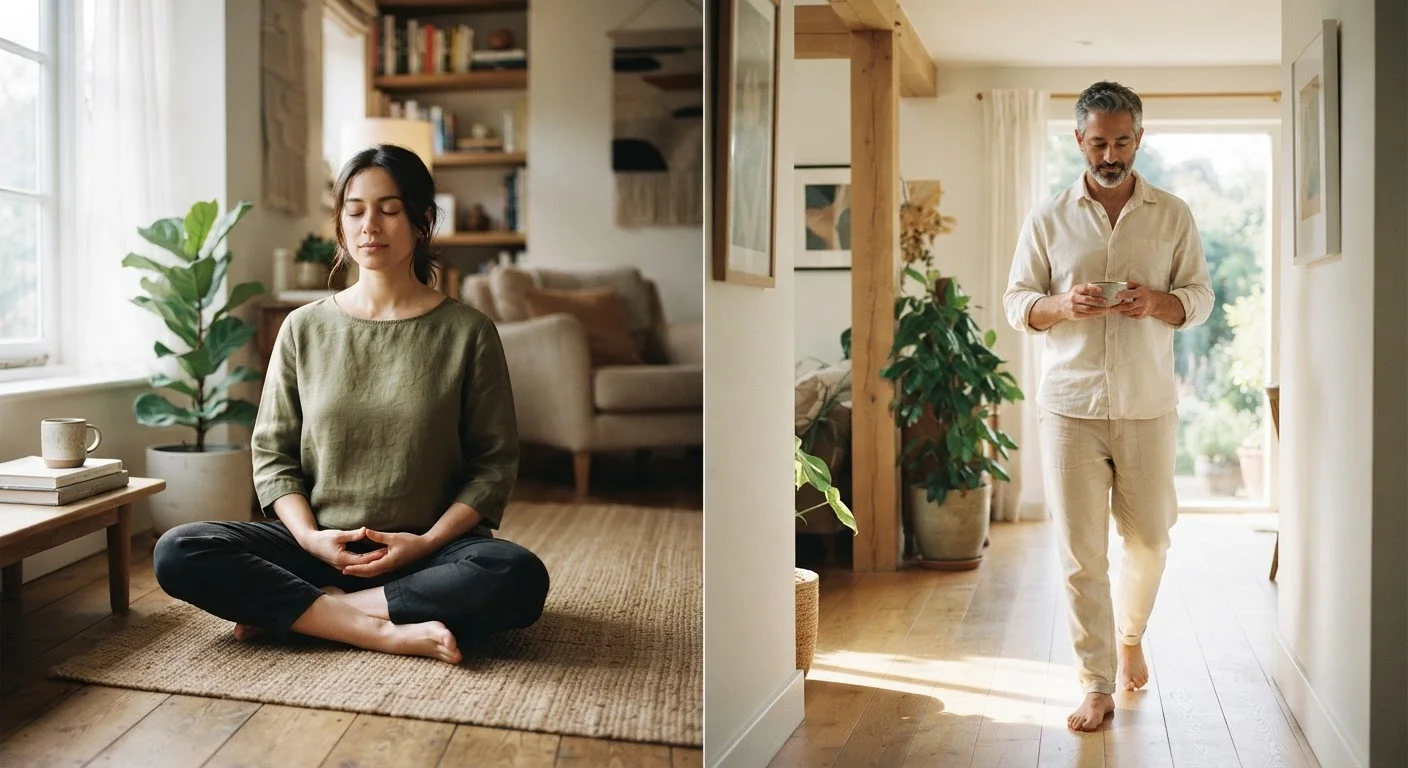
Meditation is a deliberate practice: you set aside time, adopt a particular posture or focus, and engage in a structured mental exercise. This might involve following the breath, repeating a phrase, visualizing an image, or simply observing thoughts as they arise. It has a beginning and an end. It's something you do.
Mindfulness, by contrast, is a quality of attention - a way of being present to whatever is happening right now, without judgment or distraction. You can be mindful while cooking, driving (safely), or having a conversation. It doesn't require setting a timer or sitting on a cushion. It's something you cultivate.
The relationship between them is real: many forms of meditation train mindfulness as their central skill. But you can also meditate without specifically targeting mindfulness (some practices focus on concentration or visualization), and you can practice mindfulness without ever formally meditating.
For a broader look at how these tools fit into overall mental wellness, see our beginner's guide to mental wellness.
How Each Practice Works - and What Research Suggests
| Criterion | Meditation | Mindfulness |
|---|---|---|
| Format | Formal, time-set practice | Informal quality of attention |
| Where it happens | Dedicated session, set location | Anywhere, anytime |
| Time required | Set block (e.g., 5-30 minutes) | No fixed duration |
| Learning curve | Modest - technique varies by type | Low - can begin immediately |
| Common techniques | Breath focus, body scan, visualization | Sensory awareness, non-judgmental observation |
| Research support | Moderate - growing body of evidence | Moderate - especially in structured programs |
| Best used for | Building focused, consistent mental training | Bringing presence to everyday moments |
Both practices have been studied for their effects on stress, attention, and emotional health. Research published in journals such as JAMA Internal Medicine and Psychological Science has found associations between regular meditation and reductions in anxiety, improvements in attention, and better emotional regulation. Mindfulness-based interventions - structured programs incorporating mindfulness techniques - have shown similar patterns in clinical settings.
It's worth noting that most studies involve short-term programs and self-reported outcomes, and effect sizes vary considerably across populations. Researchers continue to refine their understanding of what works, for whom, and under what conditions. These practices are supportive tools, not replacements for professional mental health care.
~40%
Reduction in psychological distress
A meta-analysis in JAMA Internal Medicine found mindfulness meditation programs associated with roughly a 40% reduction in anxiety symptoms compared to control groups.
8 weeks
Duration of most studied programs
The widely researched Mindfulness-Based Stress Reduction (MBSR) program, developed at the University of Massachusetts, typically runs for eight weeks.
1 in 6
U.S. adults who have tried meditation
According to the CDC's National Health Interview Survey, the share of U.S. adults reporting meditation practice has grown significantly over the past decade.
If you're curious whether digital tools can help you build either practice, our overview of digital mental health tools offers a balanced look at what apps can and can't provide.
Choosing What Works for You
There's no universally superior option - the right approach depends on your goals, temperament, and daily rhythms. A few practical questions to consider:
- Do you have predictable pockets of free time? If so, a short daily meditation practice may be sustainable. Even five minutes of consistent, focused practice can be meaningful.
- Do you find it hard to sit still? Informal mindfulness - paying close attention during a walk, a meal, or a routine task - can be equally effective and far more accessible.
- Are you managing a specific mental health condition? If so, speak with a qualified healthcare professional before starting any new wellness practice. Certain techniques may not be appropriate for everyone, and a clinician can help you find what fits your situation.
Many people find that the two work well together: a brief morning meditation can sharpen the mindful awareness they then carry into the rest of the day. Others prefer to start with informal mindfulness and gradually layer in structured meditation as their interest grows.
For ideas on building these habits alongside other wellness routines, see our article on habits that support emotional wellbeing. And if you want to use either practice to sharpen focus before studying or working, our study session checklist may offer useful preparation strategies.
This article is for general informational purposes only and is not a substitute for professional medical or mental health advice. If you have concerns about your mental health, please consult a qualified healthcare provider.