

| Typical housing cost guideline | At or below 30% of gross income (Widely cited in US housing and personal finance guidance) |
| Common number of budget categories | 10-15 for most households |
| Subscriptions easy to miss | Quarterly review recommended |
| Savings treated as | A non-negotiable category, not leftover money |
| Best data source for your categories | 3 months of bank & credit card statements |
Why Spending Categories Matter
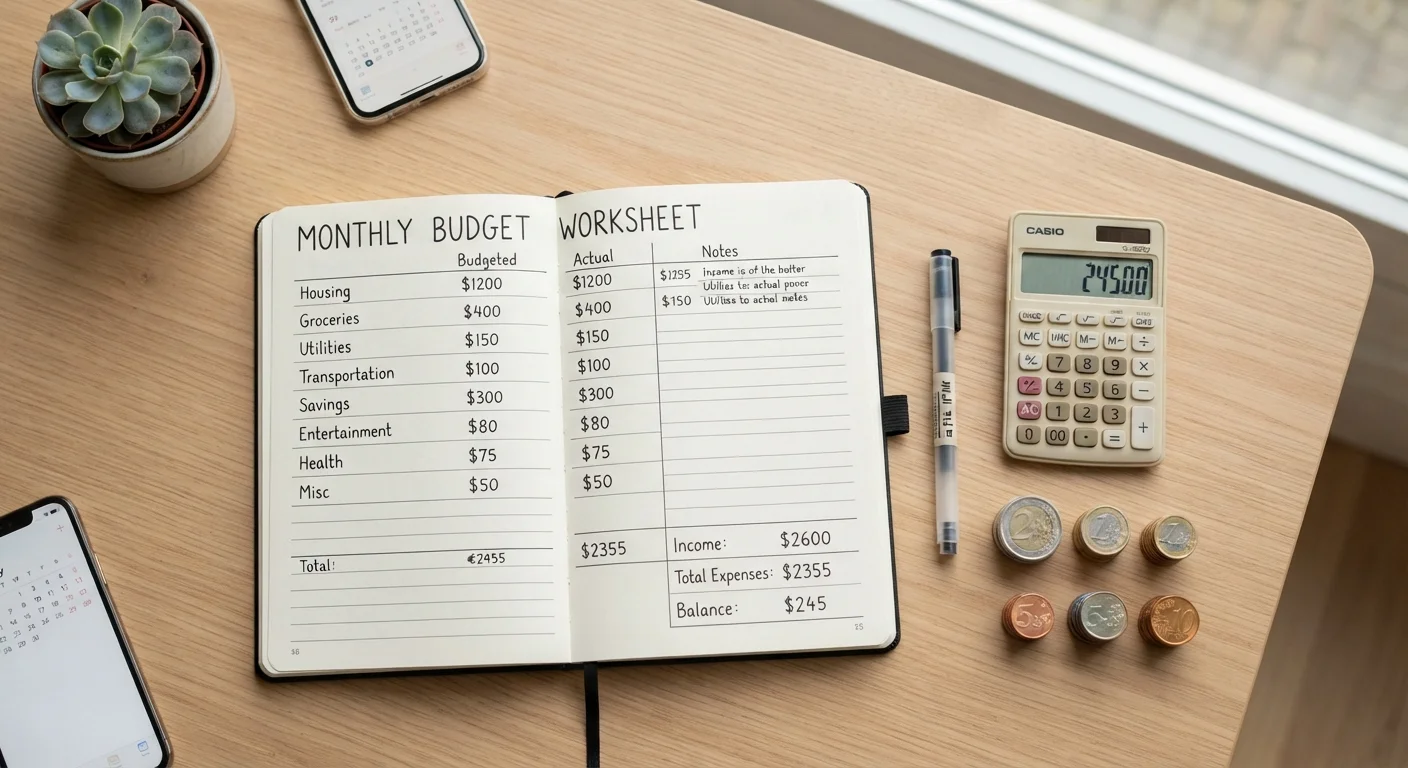
A budget without clearly defined categories is just a number on paper. Categories are the mechanism that turns income into a plan - they show you where money is expected to go before it disappears. Without them, it's easy to account for rent and groceries while completely overlooking car registration, streaming services, or the annual vet visit.
This reference covers the core spending categories that belong in most household budgets. Use it as a checklist when you're setting up or auditing your own. If you're just getting started, the first-month budgeting walkthrough pairs well with this guide.
| Typical housing cost guideline | At or below 30% of gross income (Widely cited in US housing and personal finance guidance) |
| Common number of budget categories | 10-15 for most households |
| Subscriptions easy to miss | Quarterly review recommended |
| Savings treated as | A non-negotiable category, not leftover money |
| Best data source for your categories | 3 months of bank & credit card statements |
The Core Spending Categories
Housing
Rent or mortgage payment, property taxes (if not escrowed), renters or homeowners insurance, and HOA fees. For most households, this is the largest single budget line - financial guidance commonly suggests keeping housing costs at or below 30% of gross income, though local markets vary widely.
Utilities & Home Services
Electric, gas, water, sewer, trash collection, and internet. Some of these fluctuate seasonally, so reviewing a full year of bills gives a more accurate monthly average.
Groceries & Household Supplies
Food bought for home preparation, cleaning products, paper goods, and personal care basics. Keep this separate from dining out - the distinction helps reveal where food spending actually goes.
Transportation
Car payment, auto insurance, fuel, parking, tolls, public transit passes, and rideshares. Don't forget to set aside something monthly for maintenance and registration - irregular costs that many budgets miss. See the guide to hidden household costs for more on planning around these.
Health & Medical
Health insurance premiums (if paid out of pocket), copays, prescriptions, dental, and vision. If your employer covers premiums, note what's deducted from your paycheck - it still affects your take-home pay.
Debt Payments
Student loans, credit card minimum payments, personal loans, and any other fixed repayment obligations. Tracking these separately from other expenses helps you see your true debt load at a glance. For strategies around paying these down, the Saving & Debt hub offers actionable guidance.
Discretionary spending
Money spent on wants rather than needs - dining out, entertainment, and subscriptions are common examples. This is typically the most flexible part of a budget and the first place to look when cutting costs.
Fixed expense
A cost that stays the same amount each billing period, such as a rent payment or loan installment. Fixed expenses are easier to plan around because they don't change month to month.
Variable expense
A cost that changes in amount from period to period, such as groceries, utilities, or fuel. Budgeting for variables typically involves setting a ceiling based on past averages.
Sinking fund
A savings category where you set aside a small amount each month to cover a known future expense - like an annual insurance premium or holiday gifts. It converts irregular costs into predictable monthly contributions.
Emergency fund
A reserve of savings set aside specifically for unexpected expenses or income disruptions. It is kept separate from spending money so it is available without disrupting the rest of the budget.
Savings & Emergency Fund
Treat savings as a non-negotiable category rather than whatever is left over. This includes your emergency fund contributions, retirement account deposits, and any goal-specific saving (vacation fund, down payment, etc.).
Subscriptions & Memberships
Streaming services, gym memberships, software subscriptions, news sites, and any recurring charges. These accumulate quickly and often go unnoticed. A quarterly review of your bank and credit card statements is a reliable way to catch forgotten subscriptions.
Dining Out & Entertainment
Restaurants, takeout, coffee shops, movies, concerts, and similar discretionary spending. For couples managing shared finances, agreeing on a combined limit here upfront reduces friction - the guide to budgeting as a couple covers this in depth.
Clothing & Personal Care
Clothing purchases, haircuts, salon services, and grooming products beyond basic household supplies. Budget a realistic monthly average even if spending in this category is lumpy across the year.
Childcare & Education
Daycare, after-school programs, school supplies, tutoring, and extracurricular activity fees. These costs can be substantial and are easy to underestimate when building a first budget.
Giving & Miscellaneous
Charitable donations, gifts for birthdays and holidays, and one-off expenses that don't fit elsewhere. A small miscellaneous buffer prevents these from derailing your plan entirely.
How to Use This Category List
Not every category applies to every household. A renter with no car will have a very different list than a homeowner with two vehicles and school-age children. Start by reviewing three months of bank and credit card statements and matching each transaction to a category. That exercise alone will reveal where your money actually goes versus where you think it goes.
Understanding which of these categories are fixed (same amount each month) versus variable (fluctuates) is foundational to building a budget that works. The article on fixed vs. variable expenses breaks down that distinction clearly.
Once your categories are set, a monthly review keeps the plan current. Use the monthly budget reset checklist to audit spending, adjust category limits, and carry any lessons from last month into the next.
This article is for general informational and educational purposes only and does not constitute personalized financial advice. Consider consulting a qualified financial professional for guidance specific to your situation.