

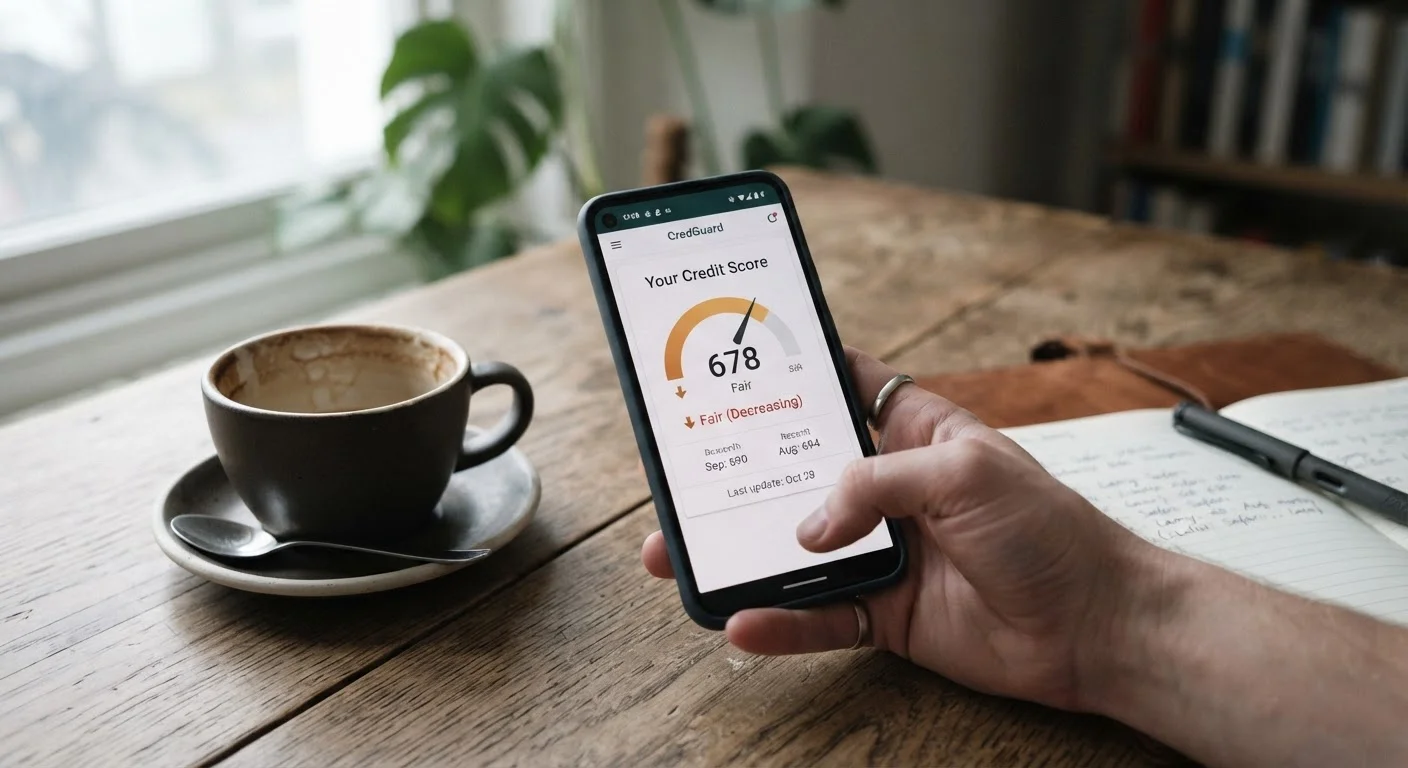
Key Takeaways
- Carrying a high credit card balance relative to your limit is one of the most damaging silent score killers.
- Closing old credit accounts can shorten your credit history and raise your utilization ratio simultaneously.
- Applying for multiple new credit accounts in a short period triggers hard inquiries that chip away at your score.
- Missing a payment by even 30 days can leave a negative mark that stays on your report for seven years.
- Regularly monitoring your credit report helps catch subtle damage before it compounds into a larger problem.
Why Credit Damage Often Goes Unnoticed
Credit scores don't always drop because of dramatic events like bankruptcy or foreclosure. More often, scores erode slowly because of everyday habits that seem harmless - or even responsible - on the surface. The problem is that the credit scoring system is more nuanced than most people realize, and behaviors that feel neutral can quietly cost you points over months or years.
Understanding exactly which habits cause this kind of silent damage is the first step toward protecting your score. For a broader look at keeping your credit healthy over time, see our guide to managing credit responsibly. The mistakes listed below are among the most common - and most overlooked.
Keeping a high credit utilization ratio by carrying large balances on revolving accounts.
Why it happens: Many consumers assume that as long as they pay the minimum or pay on time, their utilization doesn't matter. They don't realize the balance reported to the bureaus - not just the payment behavior - directly affects their score.
Closing old or unused credit card accounts without considering the consequences.
Why it happens: Closing an account feels like responsible financial housekeeping, especially for cards with annual fees. But most people don't realize that closing a card reduces total available credit and can shorten average account age - both of which hurt the score.
Applying for multiple new credit accounts in a short window.
Why it happens: Consumers often shop for credit - whether credit cards, auto loans, or store financing - without realizing that each hard inquiry can subtract points from their score. The impact of each individual inquiry seems small, making it easy to underestimate cumulative damage.
Paying bills 30 or more days late, even occasionally.
Why it happens: Life gets busy, and a single forgotten payment can feel like an easy fix once caught. But a payment that crosses the 30-day threshold becomes a derogatory mark that lenders report to the bureaus - and it stays on the report for seven years.
Ignoring small collection accounts, especially for medical bills or minor debts.
Why it happens: Small balances - a forgotten utility bill, a medical copay sent to collections - can feel too trivial to address. But a collection account, regardless of dollar amount, signals default risk to lenders and significantly damages credit scores.
The Numbers Behind Credit Scoring
To understand why these habits hurt, it helps to know what credit scoring models actually measure. While exact formulas vary by scoring model, most weigh five broad factors: payment history, amounts owed (including utilization), length of credit history, new credit inquiries, and credit mix. Each factor carries different weight, which means a misstep in one category can offset gains elsewhere.
30%
Recommended maximum credit utilization rate
Credit scoring experts and consumer finance educators widely recommend keeping revolving credit utilization at or below 30% to avoid score penalties.
7 years
How long a late payment stays on your report
Under the Fair Credit Reporting Act, most negative items - including late payments - remain on a consumer's credit report for up to seven years from the date of first delinquency.
35%
Weight of payment history in FICO score calculation
According to FICO, payment history is the single largest factor in its widely used credit scoring model, making on-time payments the most critical credit habit.
One of the most misunderstood factors is credit utilization - the ratio of your revolving balances to your total available credit. Keeping this ratio low is consistently cited by credit experts as one of the most impactful things a consumer can do. If you suspect your report contains errors inflating your balances or missing payments, learn how the dispute process works to address them formally.
It's also worth separating fact from fiction. Many consumers carry balances thinking it builds credit faster - it doesn't. Our breakdown of common credit card myths covers this and other widespread misconceptions that lead to score-damaging behavior.
Utilization Is Recalculated Every Month
Unlike late payments, which leave a lasting mark, credit utilization has no memory - it resets based on whatever balances are reported each billing cycle. This means paying down balances can produce relatively quick score improvement, but letting balances creep back up will undo that progress just as fast. Consistency matters more than a one-time payoff.
If you want to see exactly how these factors appear on your actual report, reading your credit report without the confusion walks through every section in plain language.
Rebuilding After Silent Damage
Reversing slow credit damage requires patience and consistency rather than a quick fix. Start by pulling your free annual credit reports from each of the three major bureaus and reviewing them carefully for inaccuracies or patterns - such as accounts you've forgotten about or balances that are higher than you realized.
Be Cautious of Credit Repair Services
Some companies market themselves as able to quickly 'fix' or 'remove' negative items from your credit report. Legitimate negative information generally cannot be removed before it ages off naturally. No company can legally do anything for your credit that you cannot do yourself by working directly with the credit bureaus. Verify any service carefully and consult a nonprofit credit counseling agency if you need structured help.
From there, focus on the highest-impact behaviors first: bring any past-due accounts current, reduce revolving balances, and stop applying for new credit until your score stabilizes. Building a sustainable budget helps ensure you're not relying on credit to cover regular expenses - our budgeting basics hub offers practical strategies for tracking spending and freeing up cash. For guidance on managing existing debt while you rebuild, the saving and debt hub covers actionable approaches suited to everyday consumers.
This article is for general informational purposes only and does not constitute personalized financial or credit advice. Consult a qualified financial professional for guidance specific to your situation.