

Key Takeaways
- Thailand offers well-developed tourism infrastructure and diverse landscapes, making it accessible for most travel styles.
- Vietnam's long north-to-south geography means climate and culture vary significantly by region.
- Indonesia's island geography requires internal flights or ferries, adding complexity to multi-stop itineraries.
- Cambodia's smaller tourism network is concentrated around Angkor Wat but offers emerging coastal options.
- The Philippines suits travelers comfortable with island-hopping who prioritize beaches and marine environments.
Our Verdict
Each Southeast Asian destination has a genuinely distinct profile - no single country is objectively superior. Your experience will depend on how you weigh infrastructure, budget, natural environment, cultural depth, and ease of travel logistics. Researching your specific interests against each country's strengths is the most reliable planning approach.
| Best for | Recommended |
|---|---|
| First-time visitors to the region wanting reliable infrastructure | Thailand |
| History and food enthusiasts willing to navigate varied terrain | Vietnam |
| Nature and diving travelers comfortable with complex logistics | Indonesia |
| Beach-focused travelers seeking quieter, less-touristed settings | The Philippines |
How to Use This Overview
Southeast Asia encompasses eleven countries, each with its own languages, visa policies, climate patterns, and cultural norms. This overview focuses on five of the most commonly visited - Thailand, Vietnam, Indonesia, Cambodia, and the Philippines - and profiles each honestly, including limitations alongside strengths. No destination here is presented as universally superior; the goal is to give you factual context so you can match a country's realities to your own travel priorities.
Always verify visa requirements, health precautions, and entry conditions through official government sources before booking, as these can change without notice.
| Thailand | Vietnam | Indonesia | Cambodia | Philippines | |
|---|---|---|---|---|---|
| Tourism Infrastructure | Very well developed | Strong in major cities | Strong in Bali; limited elsewhere | Moderate; concentrated | Moderate; island-dependent |
| Primary Landscape Type | Beaches, mountains, cities | Coastline, mountains, delta | Volcanic islands, reefs | Lowland plains, temples | Archipelago, beaches, reefs |
| Internal Travel Complexity | Low to moderate | Moderate | High | Low to moderate | High |
| English Accessibility | High in tourist areas | Moderate | Moderate in Bali | Moderate | High nationwide |
| Major Weather Risk Period | May-Oct (south) | Sep-Nov (central) | Nov-Mar (Bali wet season) | May-Oct | Jun-Nov (typhoon season) |
| Cultural Heritage Highlights | Temples, Buddhism | Imperial cities, cuisine | Hindu-Buddhist temples | Angkor complexes | Colonial towns, festivals |
Thailand
Thailand has one of the most developed tourism infrastructures in the region. Bangkok offers an extensive public transit network, English is widely spoken in tourist areas, and the country's road, rail, and domestic air connections are comparatively reliable. Landscapes range from mountainous northern regions around Chiang Mai to the beach-heavy southern peninsulas of Krabi and Koh Samui.
High seasons (roughly November through February) bring significant crowds and higher accommodation costs in popular areas. Monsoon patterns affect different regions at different times, so timing matters. Travelers should also be aware that certain dress codes are strictly observed at religious sites, and local laws differ meaningfully from those in the U.S. - including regulations around photographing public officials or commenting on the monarchy.
Vietnam
Vietnam stretches over 1,000 miles from north to south, which means climate, cuisine, and culture shift noticeably between regions. Hanoi in the north has a distinct four-season feel; Ho Chi Minh City in the south is tropical year-round. Central Vietnam, including Hoi An and Hue, sits between the two climatic zones and is prone to flooding during typhoon season (roughly September through November).
Train travel along the coast is a practical and scenic way to move between major cities. Street food culture is particularly strong and widely praised, though food safety considerations are worth researching before departure. Visa requirements for American citizens have changed in recent years - confirm current rules through official Vietnamese government or U.S. State Department sources.
Plan Around Regional Climate Differences
Southeast Asia does not have a single monsoon season - each country and even each region within a country experiences rain patterns differently. Before finalizing any itinerary, look up the specific weather window for each location on your route. Moving from southern to northern Vietnam, for example, can mean traveling through two entirely different weather systems in a single trip.
Indonesia
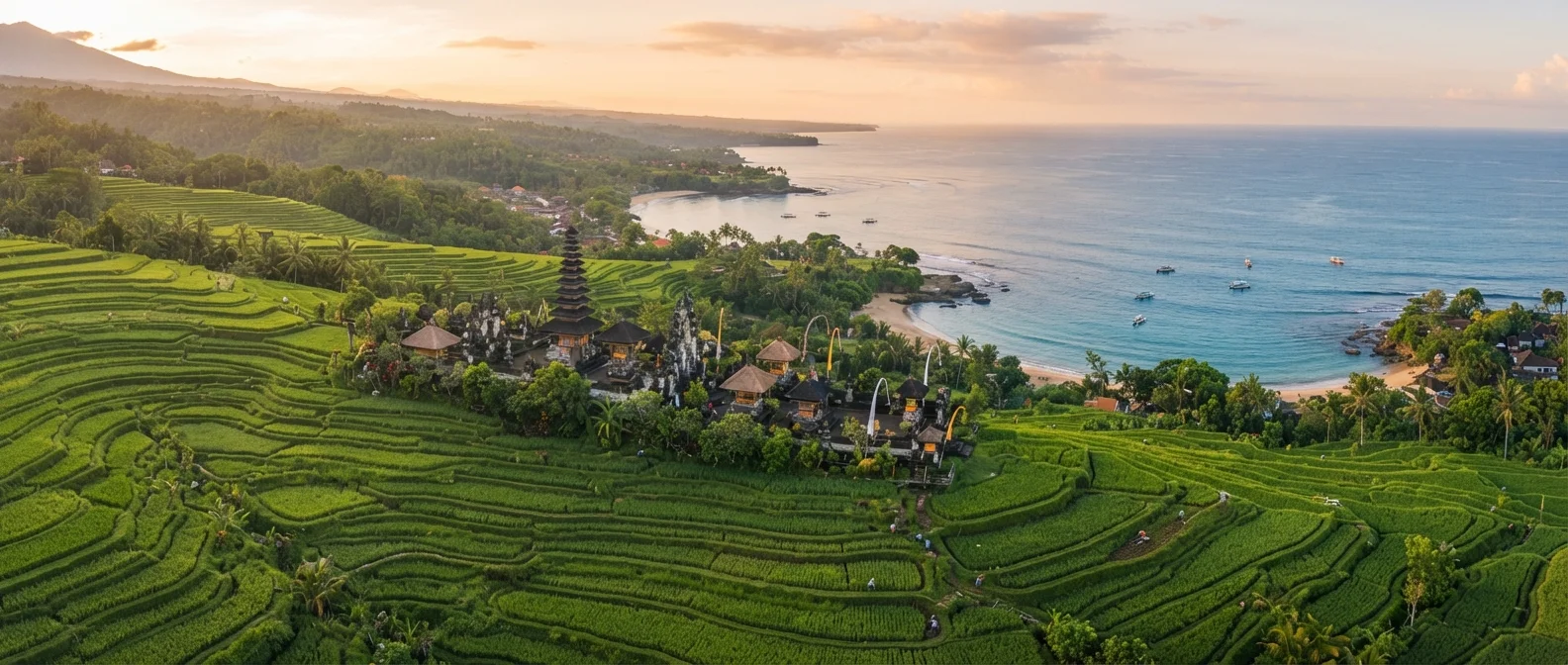
Indonesia is the world's largest archipelago nation, comprising over 17,000 islands. Bali is by far the most visited, offering established tourism services, international restaurants, and a well-known arts and wellness culture. Beyond Bali, destinations like Lombok, the Gili Islands, Raja Ampat, and Komodo require additional planning - often involving domestic flights or slow ferry rides with variable schedules.
The country is volcanically active; eruptions and earthquakes occur periodically and can affect travel plans with little warning. Travelers venturing to more remote islands should research medical facility availability carefully, as healthcare access outside major cities is limited.
Cambodia and the Philippines
Cambodia is most associated with the Angkor Archaeological Park near Siem Reap, a UNESCO World Heritage Site containing hundreds of temple complexes. Phnom Penh, the capital, has grown significantly as a destination in its own right, with museums, riverside dining, and emerging arts communities. Cambodia's southern coast - including Sihanoukville and Koh Rong - offers beach options, though development has been uneven and traveler reviews of those areas vary widely. Infrastructure outside major tourist corridors remains limited.
The Philippines consists of over 7,600 islands, with Palawan, Cebu, and Boracay among the most visited. The country's primary draws are marine environments - snorkeling, diving, and white-sand beaches - and its English-speaking population makes communication straightforward. However, the island geography means that moving between regions typically requires domestic flights or boat transfers, and weather disruptions from typhoons (most active June through November) can cause significant delays or cancellations. Travel insurance that covers weather-related interruptions is worth researching before any Philippines trip.