

Key Takeaways
- Your monthly payment is only part of the story - total interest paid over the loan term is what truly determines cost.
- A lower monthly payment can mean a longer loan term, which often results in paying significantly more interest overall.
- APR includes both the interest rate and certain fees, making it a more accurate comparison tool than the interest rate alone.
- Paying even a small amount extra toward principal each month can meaningfully reduce total interest paid.
- Your credit score is one of the strongest factors influencing the interest rate a lender will offer you.
Car Loan Principal and Interest
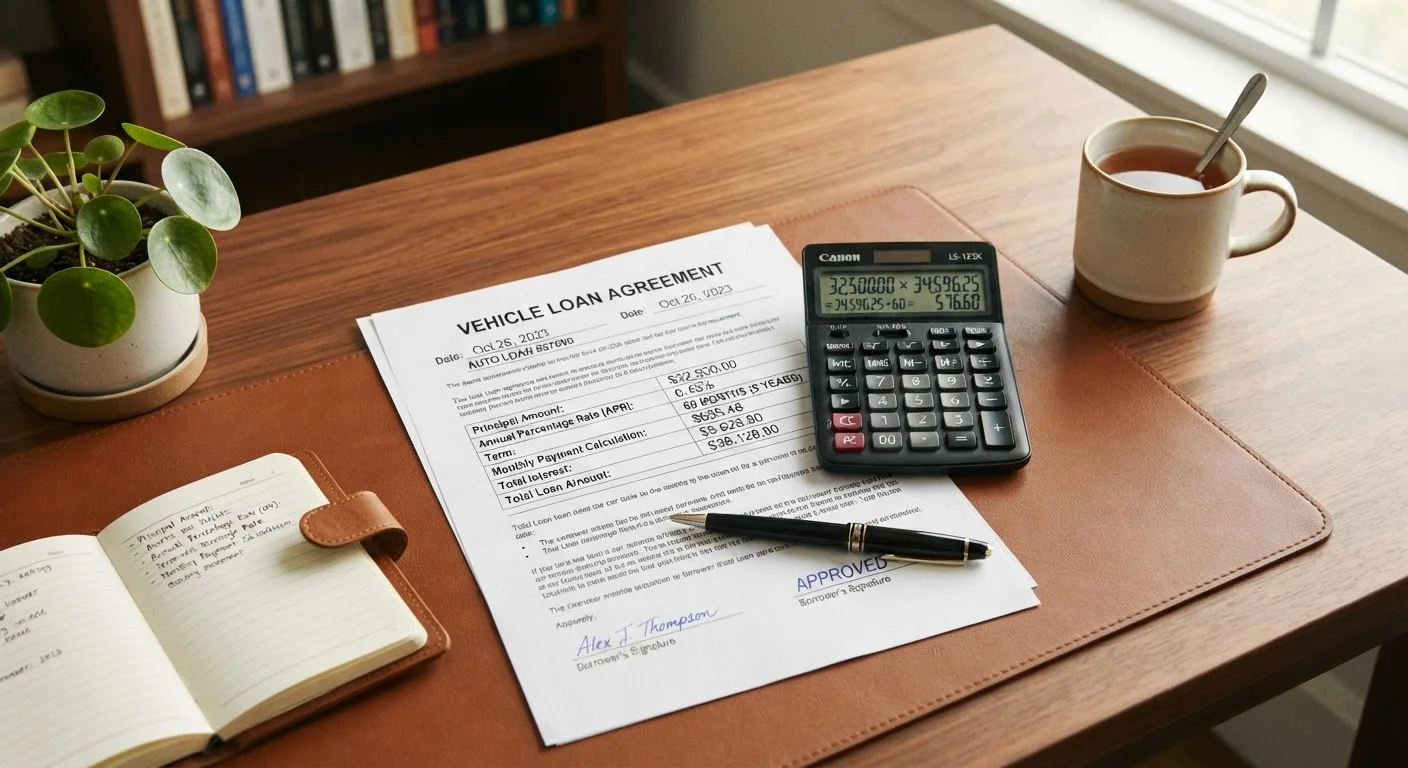
A car loan is a sum of money borrowed to purchase a vehicle, repaid in monthly installments over a set period. The principal is the original amount borrowed. Interest is the lender's charge for lending you that money, expressed as an annual percentage rate (APR). Your total loan cost is the sum of both.
Lenders use simple interest amortization for most auto loans, meaning each payment is split between interest owed on the remaining balance and principal reduction - so early payments are more interest-heavy than later ones.
What You're Actually Agreeing To When You Borrow
When you sign for an auto loan, you're agreeing to repay the lender the amount borrowed - called the principal - plus a fee for using their money, called interest. These two numbers, combined with the loan's term length, determine your monthly payment and what the vehicle actually costs you in total.
Many buyers focus almost entirely on the monthly payment, which is understandable. But that number doesn't reveal how much you'll ultimately spend. A $25,000 loan paid over 36 months will cost you far less in interest than the same loan stretched over 72 months, even if the longer term feels more affordable month to month.
Understanding these mechanics puts you in control of the conversation at the point of sale and when comparing offers from different lenders. See our guide to dealer vs. bank financing for a closer look at where you can actually obtain a loan.
How Interest Is Calculated - and Why It Front-Loads
Most auto loans in the U.S. use simple interest amortization. This means the lender calculates interest based on your remaining principal balance each month. Because your balance is highest at the start of the loan, early payments send a larger share to the lender as interest and a smaller share to reducing what you owe.
As you continue making payments and the principal decreases, more of each subsequent payment goes toward principal. This is why paying just a little extra - applied directly to principal - can noticeably reduce your total interest burden over the life of the loan.
72 months
Average new-car loan term in the U.S.
Experian's automotive finance data has tracked loan terms extending steadily, with six-year loans now among the most common for new vehicle purchases.
~$1,000+
Extra interest from extending a loan 12 months
Consumer financial analyses consistently show that adding a year to a typical auto loan term at common interest rates costs over $1,000 in additional interest, depending on the loan balance and rate.
3-4%
APR difference between top and average credit tiers
According to Experian's State of the Automotive Finance Market reports, borrowers in the prime credit tier routinely receive APRs several percentage points lower than those in subprime tiers.
Your APR (Annual Percentage Rate) is the most complete cost measure for comparing loans. Unlike the raw interest rate, APR folds in certain lender fees, giving you a truer sense of what you're paying to borrow. Always request the APR when reviewing any loan offer.
The Hidden Math: Total Cost vs. Monthly Payment
Consider this scenario: a $28,000 auto loan at a 7% APR. Over 48 months, you'd pay roughly $4,300 in total interest. Stretch that same loan to 72 months to lower your monthly payment, and total interest climbs to approximately $6,600 - nearly $2,300 more for the same vehicle.
That gap widens further when the interest rate is higher, which is common for buyers with lower credit scores. This is why your credit profile deserves attention well before you visit a dealership. Common assumptions that cost car buyers money explores how overlooking details like this quietly adds up.
Apply Extra Payments Directly to Principal
If your loan allows it, making even one or two extra payments per year - or rounding up monthly payments - reduces your principal faster. Less principal means less interest accrues each month, compressing your total loan cost. Always confirm with your lender that extra funds are applied to principal, not to future payments.
The total cost of a loan also intersects with vehicle depreciation. If your loan payoff lags behind the vehicle's declining value, you can end up owing more than the car is worth - a situation called being underwater or having negative equity. Our article on how depreciation shapes every car purchase explains this dynamic in full.
Factors That Shape Your Rate - and What You Can Influence
Lenders set your APR based on several variables. Some you control; some you don't.
- Credit score: The most influential factor. Higher scores generally yield lower rates. Lenders typically tier rates by credit bracket.
- Loan term: Longer terms often carry slightly higher rates because they represent greater risk to the lender over time.
- Loan amount: Very low or very high loan amounts may affect your rate depending on the lender's policies.
- Vehicle age: Used vehicles typically carry higher interest rates than new ones, reflecting increased risk and valuation uncertainty.
- Down payment: A larger down payment reduces the principal, which can improve your loan-to-value ratio and sometimes your rate.
Before applying, checking your credit report for errors and understanding your score range can help set realistic expectations. Our Credit & Banking hub covers these topics in detail.
This article provides general financial education and is not personalized financial advice. Consult a qualified financial professional before making decisions about borrowing or loan products.