

Key Takeaways
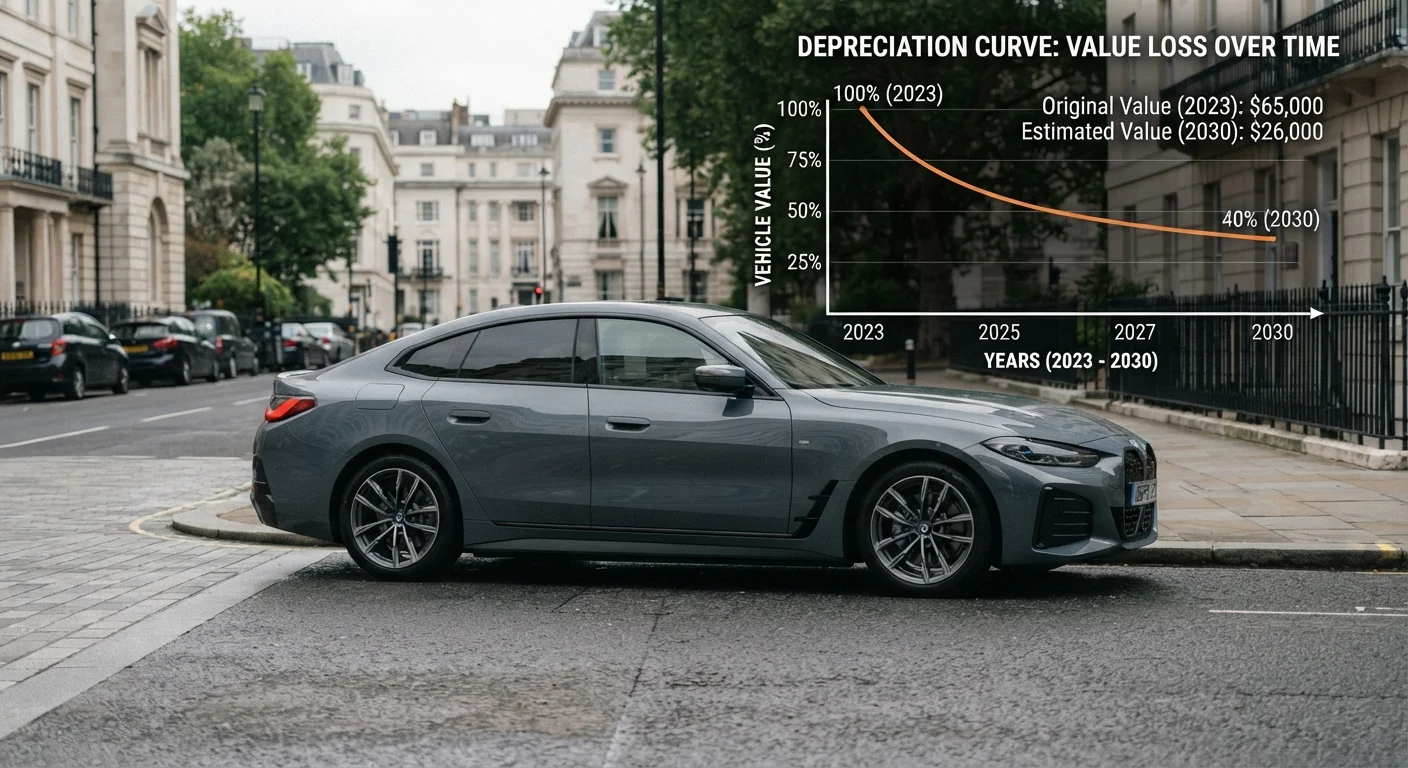
- A new car can lose 15-25% of its value in the first year alone.
- Depreciation directly affects whether you owe more on a loan than the car is worth.
- Some vehicle types and segments hold value better than others due to demand and supply dynamics.
- Buying a vehicle that's one to three years old can help reduce your exposure to the steepest depreciation.
- Depreciation is a real cost even if you never sell - it reduces your equity and future trade-in leverage.
- Understanding depreciation before you buy helps you evaluate the true total cost of ownership.
Vehicle Depreciation
Depreciation is the loss in a vehicle's market value that occurs over time. A car's worth begins declining the moment it leaves the dealership lot, and continues falling - often steeply - through the first few years of ownership. It is considered one of the largest, yet least visible, costs of owning a vehicle.
Depreciation is typically measured as the difference between a vehicle's original purchase price and its current market or resale value, sometimes expressed as an annual percentage rate of value loss.
What Depreciation Actually Means for Car Buyers
When you purchase a vehicle, you are not just paying for transportation - you are buying an asset that will steadily lose monetary value. That loss is called depreciation, and it begins the moment a new car is driven off the lot. Unlike a mortgage, where your property may appreciate over time, a car nearly always follows the opposite trajectory.
Depreciation is not arbitrary. It reflects supply and demand in the used-car market, the pace at which newer models replace older ones, consumer perceptions of reliability, and how a specific vehicle holds up relative to alternatives. Understanding these forces matters because depreciation is frequently the single largest component of the true cost of car ownership - often exceeding what you spend on fuel or insurance over the same period.
See our full breakdown of car ownership costs for a complete picture of what vehicle ownership actually involves financially.
The Depreciation Curve: Steepest at the Start
Depreciation does not happen at a steady, predictable pace. It front-loads heavily - meaning the largest percentage drops in value typically occur in the first one to three years of a vehicle's life. After that initial period, the rate of decline generally flattens, though the car continues to lose value each year.
15-25%
Average first-year new car value loss
Industry data consistently shows new vehicles lose a significant share of their value in year one, making the initial depreciation drop the steepest in a vehicle's life.
~50%
Typical value retained after five years
Many mainstream vehicles retain roughly half their original purchase price after five years, though this varies meaningfully by vehicle segment and market conditions.
72+ months
Loan term length increasing negative equity risk
Longer loan terms slow principal paydown, increasing the window during which a buyer may owe more on their loan than the vehicle's current market value.
This curve has a direct implication for buyers: a vehicle that is just one to three years old has already absorbed its most painful value losses, but may still look and drive very similarly to a brand-new equivalent. For many buyers, this window represents a practical way to get more vehicle for the price paid, without waiting for a car to age significantly.
For a balanced look at how this dynamic plays into the new-versus-used decision, see New Car vs. Used Car: Weighing the Real Trade-Offs.
Depreciation and Loan Equity: The Negative Equity Risk
One of the most consequential ways depreciation shapes a car purchase is through its relationship with your auto loan balance. When you finance a vehicle, you owe a fixed amount and pay it down gradually. Meanwhile, the car's value falls - often much faster than your loan balance decreases in the early months. The result can be negative equity, sometimes called being "upside down" on a loan.
In practical terms, this means you could owe $28,000 on a vehicle currently worth $22,000. If you need to sell, trade in, or if the car is totaled, that gap becomes a real financial liability you are responsible for covering. Longer loan terms - 72 or 84 months - increase this risk because they slow the pace of principal paydown relative to depreciation.
Protect Yourself With a Larger Down Payment
Putting 10-20% down on a vehicle purchase can help ensure your loan balance stays closer to - or below - the car's market value in the critical early months of ownership. This reduces the risk of falling into negative equity. It also lowers your total interest paid over the loan term. Speak with a qualified financial professional to determine what makes sense for your situation.
Understanding how loan structure interacts with depreciation is essential. Our article on the anatomy of a car loan explains how interest and principal work together over the life of a loan.
Which Vehicles Hold Value Better - and Why It Matters
Not all vehicles depreciate at the same rate. Factors that influence how well a vehicle holds its value include consumer demand for that segment in the used market, perceived reliability, fuel efficiency, towing or utility capability, and how frequently the manufacturer updates or redesigns the model. Trucks, certain SUVs, and vehicles with reputations for long-term durability have historically shown stronger residual values in many market conditions, though this can shift with economic changes and fuel prices.
Why does this matter when buying? A vehicle with strong projected resale value costs you less in depreciation per year of ownership - even if its sticker price is similar to a competing model. Over a five-year ownership period, the difference in depreciation between a strong-resale-value vehicle and a weak one can run into several thousand dollars.
Depreciation also shapes leasing. Lease payments are largely calculated on the vehicle's expected depreciation over the lease term. A vehicle that holds its value well typically produces a lower monthly lease payment for the same term and mileage allowance. To explore how this works in practice, see Owning vs. Leasing a Car: A Clear-Eyed Look at Both Paths.
Using Depreciation Knowledge to Make a More Informed Purchase
Factoring depreciation into your buying decision does not require a finance degree - it requires a few deliberate questions before you commit. What has this vehicle's resale value looked like over three to five years? How does the loan term I'm considering compare to the depreciation curve? Am I putting enough money down to avoid starting underwater?
Publicly available resources such as automotive valuation guides can give you a baseline sense of a specific vehicle's historical depreciation. Keep in mind that market conditions, regional demand, and vehicle condition all influence actual resale outcomes - no tool predicts the future with certainty.
Depreciation is also deeply connected to broader personal finance decisions. Managing the gap between what you owe and what an asset is worth is a core concept in managing debt responsibly. Treating your vehicle purchase as a financial decision - not just a lifestyle one - puts you in a stronger position before you ever set foot in a dealership.
This article is for general informational and educational purposes only and does not constitute financial or purchasing advice. Consult a qualified financial professional regarding decisions specific to your circumstances.