

Key Takeaways
- Fatal crash rates are significantly higher at night despite lower overall traffic volume.
- Human vision degrades substantially in low light, reducing hazard detection distance.
- Clean headlights, properly aimed beams, and increased following distance are essential adjustments.
- Driver fatigue and impaired drivers peak during nighttime hours, compounding the risk.
- Small habit changes before and during the drive can meaningfully reduce your exposure to nighttime risk.
What you will need
Why Nighttime Roads Are Statistically More Dangerous
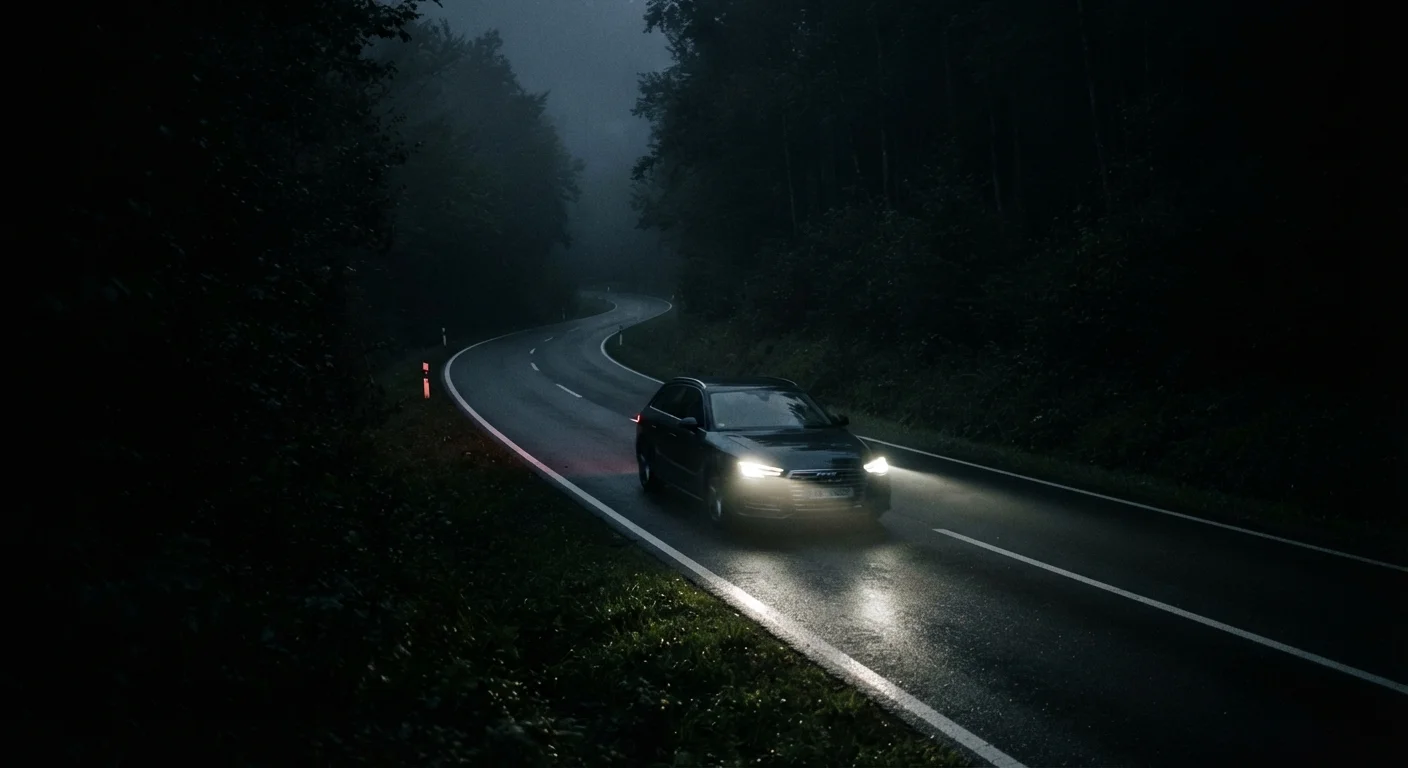
Traffic volume drops significantly after dark, yet the proportion of fatal crashes rises. According to the NHTSA, roughly half of all traffic fatalities in the U.S. occur at night, even though nighttime accounts for a far smaller share of total miles driven. Three factors drive that disparity: reduced visibility, driver fatigue, and a higher concentration of impaired drivers on the road.
Human eyes are not well adapted to low-light driving. The visual acuity we rely on during the day depends on cone cells, which function poorly in darkness. At night, peripheral rod cells take over, but they offer lower resolution and no color perception - making it harder to judge distances, read road edges, and detect movement. Even with headlights, the effective range of hazard detection shrinks dramatically compared to daylight conditions.
Fatigue compounds the problem. The body's natural circadian rhythm suppresses alertness during late-night and early-morning hours regardless of how rested you feel going into the drive. Combined with a statistically higher presence of alcohol- or drug-impaired drivers after midnight, the nighttime road environment demands a genuinely different approach - not just more caution, but specific, deliberate technique adjustments.
For drivers who are newer to independent driving, building these habits early matters. The fundamentals of safe driving from scratch provide an important foundation before layering on nighttime-specific skills.
Before You Drive: Preparation That Pays Off
Most nighttime driving errors are downstream of preparation failures - worn wiper blades, cloudy headlights, or a dirty windshield that was never noticed in daylight. Taking a few minutes before departure to address these issues is among the highest-impact safety steps available to any driver.
What you will need
Clean microfiber cloth
Wipe headlight lenses and windshield interior to maximize light transmission before driving.
Headlight restoration kit
Removes yellowing or oxidation from plastic headlight covers that reduce light output.
Anti-glare glasses (non-prescription)
Lightly tinted lenses designed to reduce harsh glare from oncoming headlights.
Vehicle preparation is only part of the equation. Your own physical state matters just as much. Avoid driving between midnight and 6 a.m. unless necessary, and never start a long nighttime drive already tired. If you've been awake for 18 hours or more, your reaction time may be impaired to a degree comparable to a blood alcohol level above the legal limit, according to sleep research.
Adapting Your Technique After Dark
Nighttime driving requires active adjustments to speed, following distance, gaze patterns, and distraction management - not merely the same habits applied more carefully. The steps below walk through each adjustment in sequence, from pre-drive checks through managing fatigue on longer trips.
Inspect and clean your headlights before departure
Dirt, road film, and oxidized plastic all reduce the light output your headlights deliver. Before a nighttime trip, wipe both headlight lenses with a damp cloth. If your lenses appear yellowed or hazy, a headlight restoration kit can restore significant clarity. Also verify that your low beams, high beams, and taillights are all operational - a quick walk-around takes less than two minutes.
Clean your windshield inside and out
Interior windshield film - a hazy buildup from off-gassing plastics and dust - scatters oncoming light into blinding streaks. Use a glass cleaner and a clean microfiber cloth to wipe the inside of your windshield thoroughly. Repeat on the outside, and top up your washer fluid so you can clear road spray during the drive.
Adjust your following distance
At night, your reaction window narrows because hazards appear later in your visual field. The standard three-second following distance used in daylight is a minimum - consider extending it to four or five seconds after dark, especially on unfamiliar roads or in areas where animals may cross. For more on why stopping distance is frequently underestimated, see our guide to following distance.
Use high beams strategically - and dim them appropriately
High beams can roughly double your visible range, from around 160 feet to over 350 feet. Use them on unlit rural roads whenever no oncoming traffic or vehicles ahead are within approximately 500 feet - this is the standard legal threshold in most U.S. states. Switch back to low beams promptly when another driver approaches. Leaving high beams on temporarily blinds oncoming drivers, increasing crash risk for everyone.
Reduce speed to match your sight distance
Speed limits are set for optimal conditions. At night, optimal conditions rarely apply. Reducing your speed by 5-10 mph below the posted limit on unlit or poorly marked roads gives you additional seconds to detect and respond to hazards - pedestrians, cyclists, animals, or road debris - that appear at the edge of your headlight range. This is the core concept behind not overdriving your headlights.
Minimize in-cabin distractions and dim your dashboard
A bright infotainment screen or cabin light can constrict your pupils, reducing your ability to see the dark road ahead. Dim your dashboard instruments to a comfortable but low level. Silence or pause non-essential notifications. Night driving demands more cognitive attention than daytime driving, so treat distractions as a magnified risk. For a broader look at distraction types and their measurable impact on reaction time, see our article on distracted driving.
Monitor yourself for fatigue and know when to stop
Fatigue impairs judgment, slows reaction time, and can produce microsleeps - brief, involuntary losses of consciousness lasting a second or more. Warning signs include heavy eyelids, lane drifting, difficulty remembering the last few miles, and yawning repeatedly. If you notice any of these, pull off at the next safe exit, rest area, or parking lot. Stimulants like caffeine can temporarily mask fatigue but do not restore full alertness or reaction capacity.
Use the Right Gaze Technique
Rather than staring at the center of your headlight beam, scan across the full width of the road and periodically check your mirrors. Keeping your eyes moving helps your brain detect motion and hazards at the edge of your light range before they become emergencies.
Don't Overdrive Your Headlights
"Overdriving your headlights" means traveling at a speed where your stopping distance exceeds what your headlights illuminate. At 60 mph, a typical low-beam headlight illuminates roughly 160 feet ahead - but stopping from that speed can require 300 feet or more. Slow down so you have enough road visible to react safely.
Fatigue Can Be as Dangerous as Impairment
Research from the National Highway Traffic Safety Administration (NHTSA) indicates that drowsy driving contributes to tens of thousands of crashes annually, many of them fatal. Your body's circadian rhythm produces peak sleepiness between roughly midnight and 6 a.m. If you feel yourself struggling to stay alert - drifting, missing exits, or blinking heavily - pull over safely and rest. No destination is worth the risk.
Pairing these nighttime-specific habits with a solid defensive driving foundation gives you the most complete approach to reducing risk after dark. And if your nighttime routes include wet pavement, fog, or other surface hazards, see our guide on adjusting for changing road surfaces for additional technique guidance.