

Key Takeaways
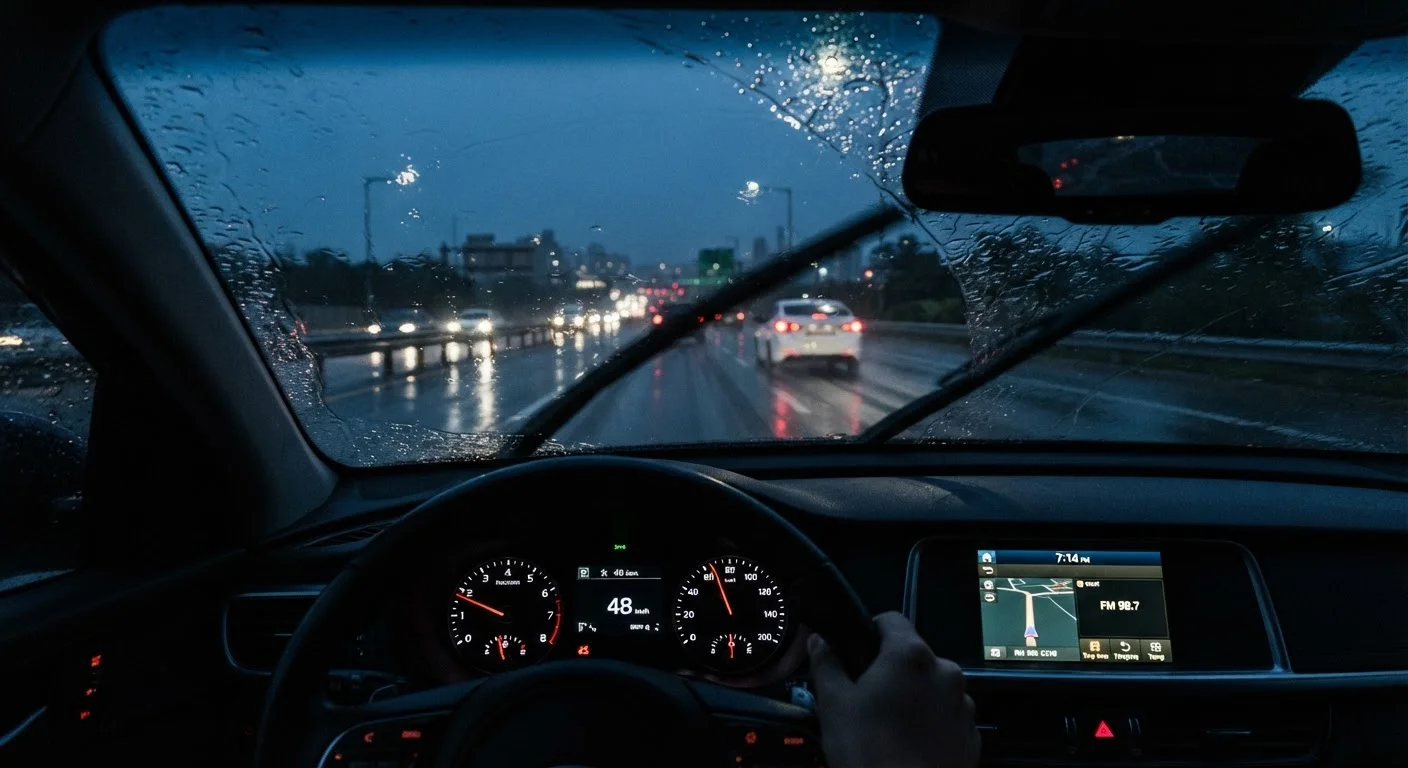
- Wet roads reduce tire grip significantly - increase your following distance and brake earlier.
- Black ice is nearly invisible; look for dull, dark pavement patches and reduce speed proactively.
- Gravel and loose surfaces require smooth, deliberate inputs - avoid sudden steering or braking.
- Transition zones between surfaces (wet-to-dry, asphalt-to-gravel) are especially hazardous.
- Maintaining properly inflated tires and adequate tread depth is the single most impactful preparation step.
What you will need
Why Surface Conditions Change Everything
Most drivers adjust their speed when it rains, but speed is only part of the equation. Road surface conditions affect every input you make - how your car steers around a corner, how quickly it stops, and how it responds when something unexpected happens. The gap between what a driver expects the car to do and what it actually does is where most loss-of-control incidents originate.
Wet asphalt, black ice, loose gravel, and transition zones between surfaces all reduce the friction your tires depend on. Understanding how each surface behaves - and adjusting your technique before you're on it - is the difference between reacting to a skid and preventing one.
These adjustments also carry practical benefits beyond safety. Smoother driving on low-traction surfaces reduces tire wear, lowers fuel consumption, and signals to insurers that you're a lower-risk driver. For a strong foundation across all driving contexts, the core habits guide for new and returning drivers covers the fundamentals that underpin every skill discussed here.
What you will need
What You Need Before You Start
Before adjusting your driving technique, make sure your vehicle is mechanically ready to respond the way you expect. The steps below assume your tires, brakes, and safety systems are in serviceable condition. If any of these are in question, address them with a qualified mechanic before driving in challenging surface conditions.
Tire Tread Depth Gauge
Measures remaining tread depth so you know whether your tires can channel water effectively on wet roads.
Tire Pressure Gauge
Verifies inflation matches the manufacturer's specification before driving in adverse surface conditions.
Vehicle Owner's Manual
Confirms which safety systems your vehicle has (ABS, traction control, AWD) and how they behave on low-traction surfaces.
Check Tire Pressure Before Seasonal Surface Changes
Tire pressure drops roughly 1 PSI for every 10°F decrease in temperature. Under-inflated tires have a larger, less controlled contact patch that handles unpredictably on wet or loose surfaces. Check your vehicle's recommended pressure - found on the driver's door jamb sticker, not the tire sidewall - before the seasons shift.
Step-by-Step: Adapting to Changing Road Surfaces
Work through these steps in order. The first step is preparation you do before driving; the remaining steps apply in real time as surfaces change. Each builds on the previous one - sound tire condition, for example, underpins every technique that follows.
Never Rely on ABS as a Safety Net
Anti-lock braking systems (ABS) help prevent wheel lockup but do not eliminate stopping distance - on gravel or loose surfaces, ABS can actually increase stopping distance compared to a controlled threshold brake. Understanding your vehicle's systems matters, but no technology replaces appropriate speed and following distance. Always adapt your technique to the surface, not just your car's features.
Verify your tires before conditions change
Grip begins with your tires. Before wet weather, cold snaps, or rural road trips arrive, check tread depth using a gauge or the quarter test: insert a quarter into a tread groove with Washington's head pointing down - if you can see the top of his head, tread is below 4/32" and wet-weather performance is compromised.
Also confirm inflation matches the pressure listed on the driver's door jamb sticker. Cold temperatures deflate tires gradually, reducing handling precision exactly when conditions demand the most from them.
Adjust speed and following distance for wet pavement
Water on the road reduces the friction between your tires and the surface. At highway speeds, even a thin film can cause hydroplaning - where the tire rides on water rather than road. Slow down progressively as rain intensifies, and increase your following distance to at least four seconds behind the vehicle ahead (more than the standard two-to-three seconds on dry roads).
Brake earlier and more gently than you normally would. The physics of stopping distance show that even modest speed reductions significantly cut the distance needed to stop safely.
Recognize and respond to black ice
Black ice is a thin, transparent glaze that takes on the color of the road beneath it - making it nearly impossible to spot until you're on it. It forms most often on bridge decks, overpasses, intersections, and shaded sections of road when air temperatures are at or below 32°F (0°C).
Slow down significantly in these conditions before you reach problem zones. If you begin to slide, resist the instinct to brake hard or jerk the wheel. Ease off the accelerator, keep your steering inputs small, and look where you want the vehicle to go.
Adapt your technique on gravel and loose surfaces
Gravel, dirt, and loose chip-seal roads behave very differently from asphalt. Loose material acts like ball bearings under your tires, reducing lateral grip and making it easy to oversteer or understeer. Follow these principles:
- Slow down before turns, not during them - cornering forces on loose gravel can cause rear-end slide.
- Increase following distance further - loose material kicked up by the vehicle ahead can damage your windshield or distract you.
- Brake early and progressively - threshold braking on gravel often locks wheels and reduces control.
- Ease back on cruise control - constant-speed systems can react poorly to sudden traction changes. See our guide on when to disable cruise control for more detail.
Manage surface transition zones carefully
One of the most overlooked hazards is the point where one surface type ends and another begins - dry pavement giving way to a wet patch, asphalt transitioning to gravel, or a shaded icy stretch on an otherwise clear road. At these transitions, your tires encounter mismatched grip levels that can cause the vehicle to pull or rotate unexpectedly.
The safest approach is to be in the right speed and gear before you reach the transition, not during it. Scan ahead, identify surface changes early, and allow more room than you think you need. Defensive driving habits - scanning far ahead and anticipating rather than reacting - are especially valuable here.
Use your vehicle's traction systems correctly
Traction control, stability control, and all-wheel drive (AWD) are tools, not substitutes for appropriate technique. Traction control reduces wheel spin during acceleration on low-grip surfaces - useful on wet roads and gravel. Stability control intervenes when the vehicle begins to slide - it cannot, however, defy physics at excessive speeds.
AWD improves acceleration traction but does not improve braking or cornering grip compared to a two-wheel-drive vehicle on the same tires. Drivers of AWD vehicles sometimes overestimate their stopping and cornering ability in poor conditions. Know what your systems do - and more importantly, what they cannot do.
Common Mistakes and How to Avoid Them
Even experienced drivers develop habits that work fine on dry roads but create risk when surfaces change. The most common errors include:
- Overconfidence in all-wheel drive: AWD helps you go, not stop. Adjust following distance as you would in any two-wheel-drive vehicle.
- Braking in a corner: On low-traction surfaces, braking while turning divides grip between two demands simultaneously. Slow before the corner, then use gentle acceleration through it.
- Ignoring surface color changes: A slightly shinier or darker patch of road often signals ice or water. Treat it as a hazard until proven otherwise.
- Using cruise control inappropriately: On wet or loose surfaces, cruise control can apply throttle at exactly the wrong moment. Our breakdown of when cruise control hurts more than it helps explains the specific scenarios to avoid.
Black Ice Offers No Warning Before Impact
Bridge decks, overpasses, and shaded road sections freeze well before open pavement does. If temperatures are near or below freezing and you notice the road looks unusually shiny or darker than surrounding pavement, reduce speed immediately with smooth, gradual braking. Do not make abrupt steering corrections if you begin to slide - ease off the accelerator and steer gently in the direction you want the front of the car to go.
Building these habits takes deliberate practice, but they quickly become second nature. Pair surface-awareness skills with good night driving technique - reduced visibility and low-traction surfaces are a combination that demands the most from any driver.