

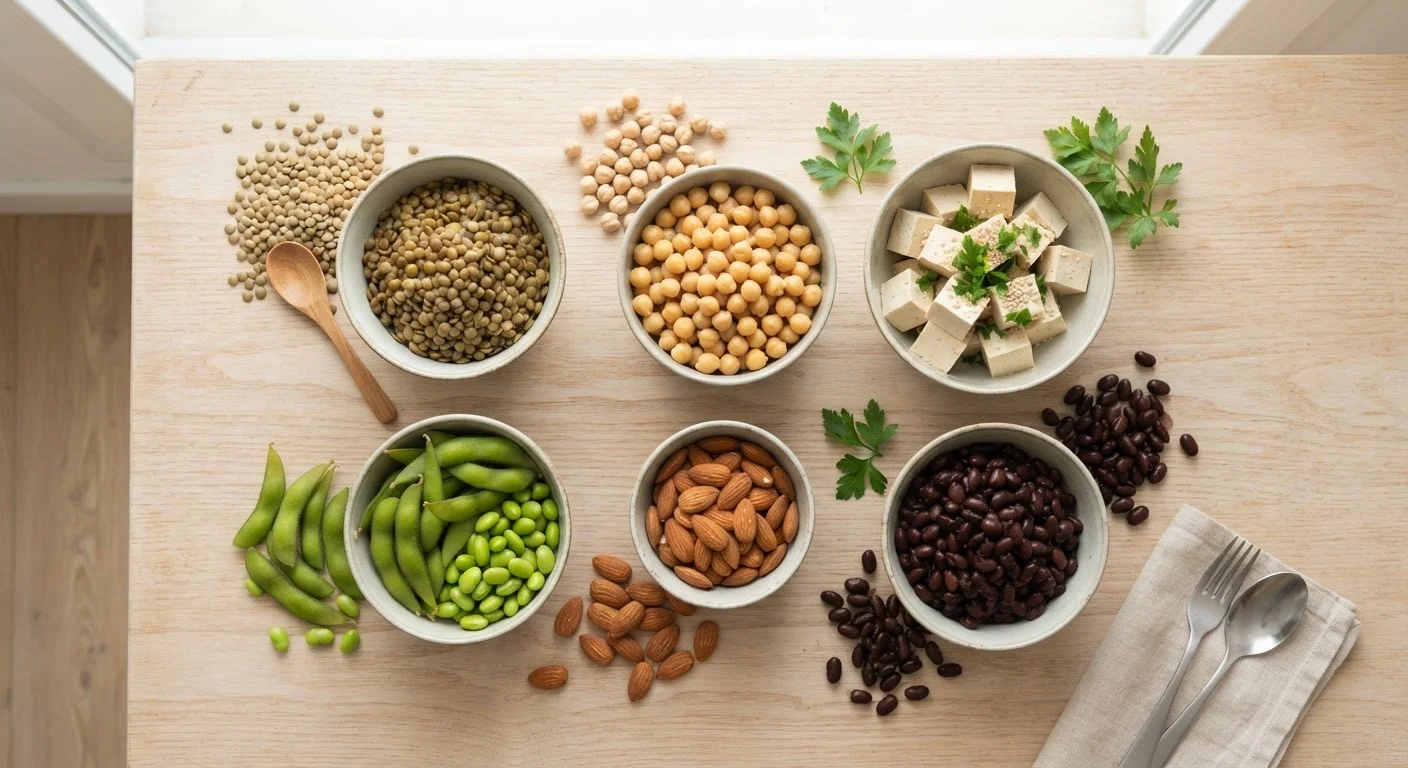
| Lentils (cooked, 1 cup) | ~18g protein; high in lysine, low in methionine (USDA FoodData Central) |
| Firm tofu (½ cup) | ~10g protein; complete amino acid profile (USDA FoodData Central) |
| Chickpeas (cooked, 1 cup) | ~15g protein; good source of lysine (USDA FoodData Central) |
| Quinoa (cooked, 1 cup) | ~8g protein; one of few complete plant proteins (USDA FoodData Central) |
| Tempeh (3 oz) | ~16g protein; complete protein, fermented (USDA FoodData Central) |
| Hemp seeds (3 tbsp) | ~10g protein; complete amino acid profile (USDA FoodData Central) |
| Black beans (cooked, 1 cup) | ~15g protein; pairs well with grains (USDA FoodData Central) |
| Edamame (1 cup, shelled) | ~17g protein; complete soy protein (USDA FoodData Central) |
What Makes a Protein Source 'Complete'?
Protein is built from amino acids - think of them as the individual links in a chain. Of the 20 amino acids the body uses, nine are considered essential, meaning the body cannot make them on its own and must get them from food. A protein source is called complete when it contains all nine essential amino acids in sufficient amounts.
Most animal proteins are complete. Most plant proteins are not - they tend to be lower in one or more essential amino acids. This used to be framed as a serious limitation of plant-based eating, but nutrition science has refined that picture considerably. As long as you eat a variety of plant proteins throughout the day, your body can assemble the full amino acid spectrum it needs. You don't have to combine specific foods at every single meal - daily variety is what matters.
A few plant sources - including soy (tofu, tempeh, edamame) and quinoa - are considered nutritionally complete on their own. They're worth knowing about, but they're not the only way to meet your protein needs without meat.
Essential amino acids
Nine amino acids the human body cannot synthesize on its own and must obtain through food. They are histidine, isoleucine, leucine, lysine, methionine, phenylalanine, threonine, tryptophan, and valine.
Complete protein
A food that contains all nine essential amino acids in amounts the body can use. Examples include eggs, dairy, meat, soy, and quinoa.
Complementary proteins
Two or more plant-based foods that, when eaten together or across the same day, supply the full range of essential amino acids. Classic pairings include legumes and grains.
Legume
A family of plants whose seeds grow in pods, including beans, lentils, chickpeas, and peas. Legumes are among the most protein-dense whole plant foods.
Tempeh
A fermented soy product made from whole soybeans pressed into a firm cake. It is a complete protein and tends to be higher in protein per serving than tofu.
Bioavailability
The proportion of a nutrient that the body actually absorbs and uses after digestion. Plant proteins are generally slightly lower in bioavailability than animal proteins, though a varied diet largely offsets this.
A Quick Reference to Common Plant Protein Sources
Different plant foods bring different strengths to the table. Here's a practical look at the most widely available options:
| Lentils (cooked, 1 cup) | ~18g protein; high in lysine, low in methionine (USDA FoodData Central) |
| Firm tofu (½ cup) | ~10g protein; complete amino acid profile (USDA FoodData Central) |
| Chickpeas (cooked, 1 cup) | ~15g protein; good source of lysine (USDA FoodData Central) |
| Quinoa (cooked, 1 cup) | ~8g protein; one of few complete plant proteins (USDA FoodData Central) |
| Tempeh (3 oz) | ~16g protein; complete protein, fermented (USDA FoodData Central) |
| Hemp seeds (3 tbsp) | ~10g protein; complete amino acid profile (USDA FoodData Central) |
| Black beans (cooked, 1 cup) | ~15g protein; pairs well with grains (USDA FoodData Central) |
| Edamame (1 cup, shelled) | ~17g protein; complete soy protein (USDA FoodData Central) |
When building meals, pairing legumes (beans, lentils, peas) with grains (rice, oats, bread) is one of the most time-tested combinations in global cuisines - each fills in what the other lacks. Think rice and beans, lentil soup with whole-grain bread, or hummus on pita. For a broader look at how these foods fit into overall eating patterns, see how Mediterranean and whole-foods diets are structured.
Meeting Daily Protein Needs on a Plant-Forward Diet
General public health guidance from organizations like the NIH suggests that most adults need roughly 0.8 grams of protein per kilogram of body weight per day as a baseline - though needs vary based on age, activity level, and health status. Always consult a healthcare provider or registered dietitian for guidance specific to your situation.
~0.8g/kg
General adult daily protein baseline
According to NIH Dietary Reference Intakes; individual needs vary based on age, activity, and health status.
74%
Of U.S. adults not meeting daily vegetable intake goals
Dietary Guidelines for Americans (2020-2025) report that most Americans fall short on nutrient-dense plant foods including legumes.
2-3x
More protein in legumes vs. most grains
Gram for gram, cooked legumes typically provide significantly more protein than cooked refined grains like white rice.
Practical strategies that tend to work well for plant-forward eaters include:
- Anchor each meal with a legume or soy food. A cup of cooked lentils or black beans provides roughly 15-18 grams of protein.
- Use nuts and seeds as functional toppings, not just snacks - hemp seeds, pumpkin seeds, and peanut butter add protein efficiently.
- Include whole grains rather than refined ones. Quinoa, oats, and farro contribute meaningful protein; white rice and white bread contribute much less.
- Don't overlook vegetables. Edamame, green peas, and broccoli offer more protein per serving than most produce.
Understanding how to read protein content on food packaging can also help. Our guide on reading a nutrition facts label walks through exactly what those numbers mean. And if you're newer to nutrition concepts overall, Nutrition from Scratch is a solid starting point. For how plant protein fits into a full plate, see Building a Balanced Plate.
This article provides general nutrition information and education only. It is not a substitute for personalized advice from a registered dietitian or qualified healthcare professional.