

Key Takeaways
- Water is essential for breaking down food and absorbing the nutrients your body needs.
- Dehydration can mimic hunger signals, making it harder to recognize true appetite.
- Water-soluble vitamins like B and C depend on adequate fluid levels to be transported through the body.
- Foods with high water content - fruits and vegetables - contribute meaningfully to daily fluid intake.
- Timing and balance matter: both very large and very small amounts of water around meals can affect digestion.
- Staying well-hydrated supports energy levels by helping cells convert nutrients into fuel efficiently.
Hydration and Nutrition
Hydration refers to maintaining enough water in your body to support its basic functions. When we talk about hydration and nutrition together, we mean the way water actively participates in digesting food, transporting nutrients, and converting what you eat into usable energy. These two aren't separate concerns - they work as a team inside your body every time you eat a meal.
Water serves as the solvent in which enzymatic and metabolic reactions occur; inadequate hydration can slow gastric motility and impair the absorption of both water-soluble vitamins and certain minerals.
Water Does More Than Quench Thirst
Most of us think of water as a simple thirst-quencher - something to reach for when our mouth feels dry. But inside your body, water is doing quiet, constant work that's directly tied to how well your body uses the food you eat.
Every step of digestion depends on water. Saliva - mostly water - begins breaking down carbohydrates the moment food enters your mouth. In your stomach, water helps form the acidic fluid that breaks food into smaller pieces. Further along, your intestines use water to absorb nutrients and move waste through. Without adequate hydration, this whole system slows down. This is part of why constipation is a common sign of insufficient fluid intake.
For a broader grounding in how nutrients work together, see this beginner's nutrition guide that covers food groups, portion size, and hydration in plain language.
~60%
Water content of the adult human body
According to the U.S. Geological Survey, water makes up approximately 60% of adult body weight, with variation based on age, sex, and body composition.
20%
Daily fluid intake from food
The National Academies of Sciences estimates that roughly 20% of daily water intake comes from food rather than beverages for most Americans.
1-2%
Body water loss that impairs performance
Research indicates that losing as little as 1-2% of body water through dehydration can begin to affect cognitive performance and physical endurance.
How Water Affects Nutrient Absorption
Not all nutrients are absorbed the same way, and water plays a starring role for a whole category of them. Water-soluble vitamins - including all the B vitamins and vitamin C - literally dissolve in water to be absorbed through the intestinal lining and carried through your bloodstream. If your body is running low on fluids, this transport process becomes less efficient.
Minerals like potassium, sodium, and magnesium are also distributed through bodily fluids, meaning hydration directly influences how well your body maintains electrolyte balance. Electrolytes aren't just a sports-drink concept - they regulate muscle function, nerve signals, and fluid balance at the cellular level.
Learn more about the specific roles these nutrients play in this guide to essential vitamins and minerals.
“Water is involved in every function of the body. It transports nutrients and oxygen into cells, and without sufficient intake, even a well-balanced diet can't perform optimally.”
— Registered Dietitian Nutritionist perspective, Commonly reflected position among clinical nutrition professionals and dietetic associations
The Hunger-Thirst Connection
One of the more surprising intersections of hydration and nutrition is that the brain doesn't always send perfectly clear signals distinguishing thirst from hunger. Both sensations are regulated by a region of the brain called the hypothalamus, and mild dehydration can produce signals that feel a lot like hunger - leading some people to eat when their body actually needs fluids.
This isn't a character flaw or a lack of willpower; it's simply biology. Recognizing this connection can be genuinely useful context for understanding your own appetite patterns, though it's worth remembering that real hunger is also a normal and important signal. The goal isn't to suppress eating by drinking water, but to understand that both needs are real and sometimes overlapping.
Many persistent misconceptions around eating and appetite are explored in this piece on nutrition myths, which separates popular beliefs from what the research actually supports.
Eating Your Water: Hydration Through Food
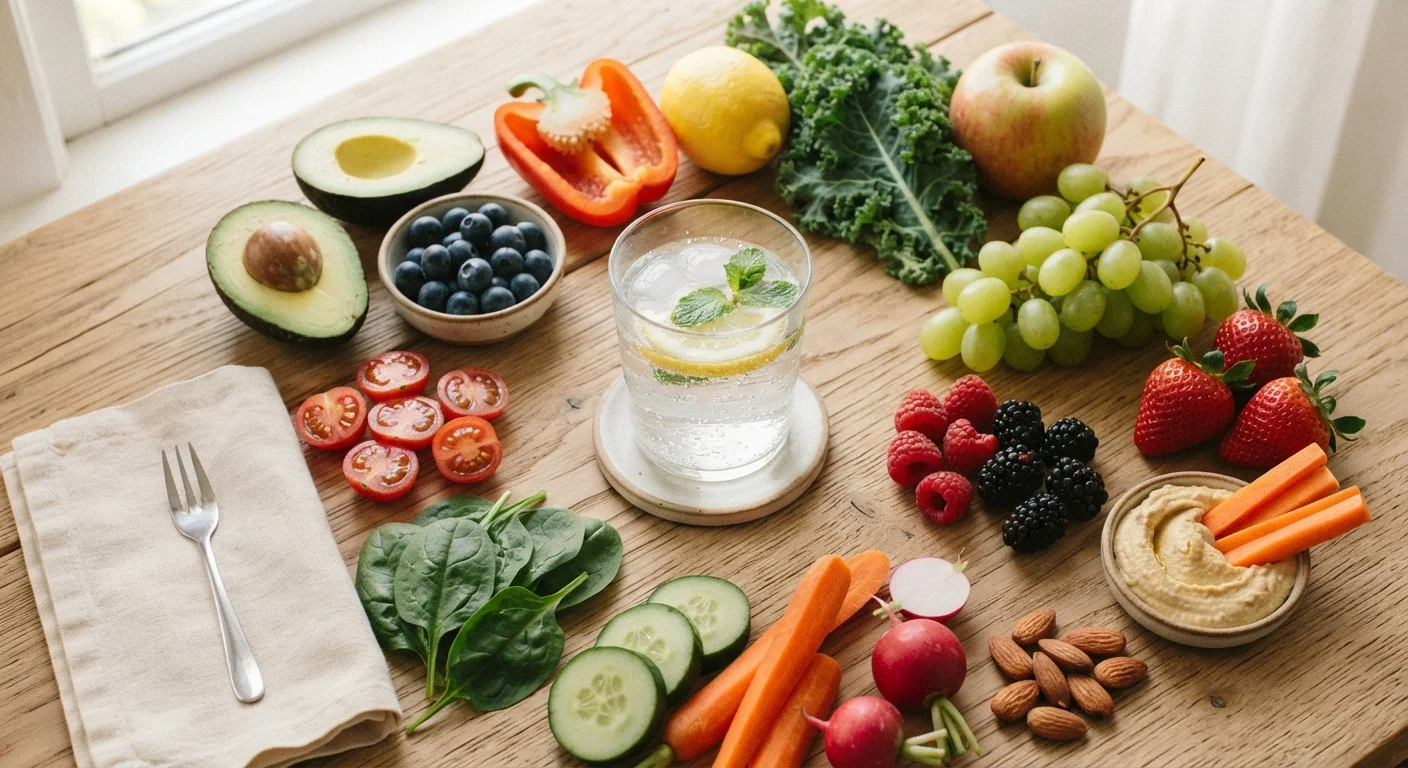
You don't get all your daily fluid from a glass - a meaningful portion comes from the food you eat. Fruits and vegetables in particular are naturally high in water content. Cucumbers, lettuce, strawberries, watermelon, and celery are mostly water by weight and provide fluid alongside fiber, vitamins, and minerals simultaneously.
This is one reason that diets rich in whole fruits and vegetables tend to support better hydration without any special effort. Highly processed foods, on the other hand, tend to be low in water content and high in sodium, which can actually increase fluid needs rather than contribute to them.
Understanding why some foods deliver more nutritional value overall connects to the concept of nutrient density - explored in detail in this explainer on nutrient versus calorie density.
A Simple Habit to Support Hydration
Keeping a reusable water bottle visible throughout the day is one of the most consistently recommended strategies for maintaining adequate fluid intake - not because of the container itself, but because visual cues prompt drinking. Pairing water-rich foods like fruit with meals is another effortless way to build hydration into your existing eating patterns.
This article is for general informational purposes only and is not a substitute for professional medical advice. If you have questions about your hydration needs or diet, please consult a qualified healthcare provider.