

Key Takeaways
- Serving size is the foundation of every number on the label - always check it first.
- The % Daily Value column shows how much a nutrient contributes to a 2,000-calorie reference diet.
- Limit added sugars, saturated fat, and sodium; prioritize fiber, vitamins, and minerals.
- Ingredient lists are ordered by weight - the first few ingredients dominate the product.
- Labels are a tool for comparison, not a verdict on whether a food is 'good' or 'bad'.
What you will need
Why the Label Exists - and What It's Actually Telling You
The Nutrition Facts label is a standardized panel required by the U.S. Food and Drug Administration (FDA) on most packaged foods. It was designed to give consumers a consistent, comparable snapshot of what they're eating. Think of it less as a report card and more as a reference sheet - a neutral set of data points you can use to make decisions that fit your own health goals.
If you've ever felt overwhelmed by all the rows of numbers, you're not alone. The key is knowing which numbers matter most for your situation, and in what order to read them. Once you understand the structure, the label becomes far less intimidating. For a complementary look at how food choices play out in the broader grocery environment, see our article on why your cart drifts toward ultra-processed foods.
What you will need
Step-by-Step: Reading Every Section of the Label
Work through the label from top to bottom. Each section builds on the one before it, so skipping ahead can lead to misreading the numbers that follow.
Start with the serving size
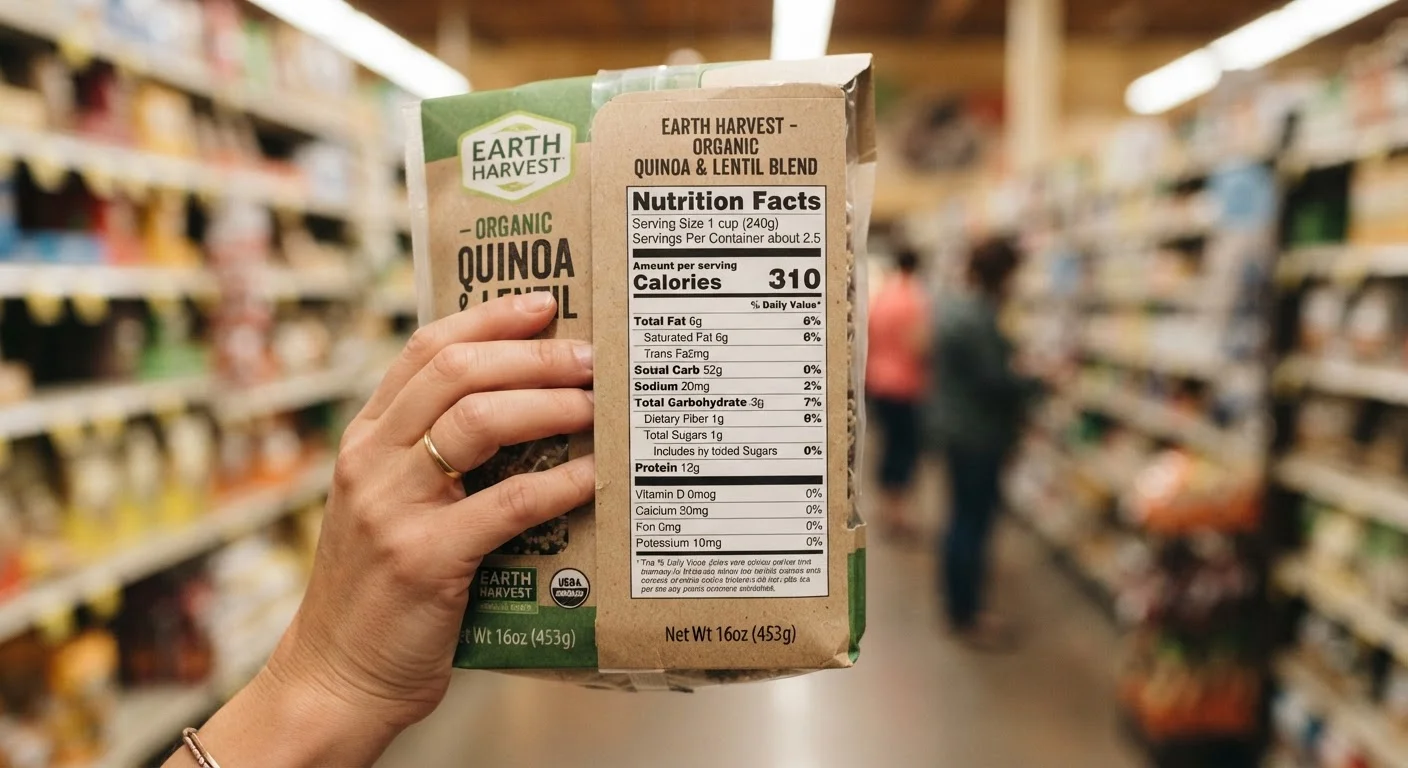
The very first line under 'Nutrition Facts' lists the serving size and the number of servings per container. Every single number on the rest of the label is based on this one serving amount - not the whole package. If a bag of chips lists a serving size of 1 oz (about 15 chips) but you eat 2 oz, every value on the label doubles for your actual intake.
Check the calorie count
The large, bold number beneath the serving size is the calories per serving. Calories measure the energy the food provides. This number on its own doesn't determine whether a food is healthful - a handful of almonds and a handful of crackers might have similar calorie counts but very different nutritional profiles.
Look at the nutrients to limit
The next section covers nutrients that many Americans consume in excess: saturated fat, trans fat, cholesterol, and sodium. Most U.S. dietary guidance recommends keeping these relatively low. Trans fat, in particular, has no established safe level and is largely phased out of the food supply, so a label showing 0g is expected rather than exceptional.
Find the nutrients to prioritize
Below the nutrients to limit, you'll see dietary fiber, vitamin D, calcium, iron, and potassium - nutrients that are commonly under-consumed in American diets. Higher %DV values here are generally favorable. Fiber, for example, supports digestive health and is associated with more sustained fullness after eating. If you're exploring plant-based eating, our guide on plant-based protein sources covers how to meet protein and micronutrient needs without meat.
Review total carbohydrates and added sugars
Total carbohydrates include starches, dietary fiber, and sugars. Pay particular attention to the added sugars sub-line, introduced in the updated FDA label format. Added sugars are those incorporated during processing - distinct from naturally occurring sugars found in fruit or dairy. U.S. dietary guidance recommends keeping added sugars to less than 10% of total daily calories as a general population target.
Making Sense of % Daily Value - and When It Matters
The % Daily Value (%DV) column appears on the right side of the label. It reflects how much of a nutrient a single serving contributes toward a reference intake of 2,000 calories per day. A general rule of thumb established by the FDA: 5% DV or less is considered low for a nutrient, while 20% DV or more is considered high.
Use %DV to quickly compare products or to see whether a food is a meaningful source of a nutrient you're trying to get more of - like fiber, calcium, or vitamin D. For a deeper look at which micronutrients matter most and why, see our guide on vitamins and minerals every adult should know.
Use %DV to Compare, Not Judge
The %DV column is most useful when you're comparing two similar products side by side. It lets you quickly see which option delivers more fiber or less sodium per serving, without doing any mental math. Remember that the 2,000-calorie reference diet won't match everyone's actual needs - use it as a relative benchmark rather than a personal prescription.
It's also worth understanding the difference between total calories and nutritional value. Two foods with identical calorie counts can vary enormously in how much they contribute to your overall health - a concept explored in our article on nutrient density vs. calorie density.
The Ingredient List: A Different Kind of Information
Just below the Nutrition Facts panel, you'll typically find the ingredient list. This section follows a different logic: ingredients are listed in descending order by weight. Whatever appears first makes up the largest proportion of the product by weight.
This means a bread listing "enriched flour" first and "whole wheat flour" fourth is primarily made from refined flour, regardless of how it's marketed on the front of the package. Scanning the first three to five ingredients gives you a practical read on what the food is mostly made of.
Keep an eye out for multiple names for the same ingredient - added sugars, for instance, can appear as corn syrup, dextrose, maltose, cane juice, or fruit concentrate, among others. If several of these appear across the list, the product's total sugar content may be higher than any single entry suggests. This kind of label literacy connects directly to the broader challenge of navigating ultra-processed food choices at the store.
Front-of-Package Claims Can Be Misleading
Words like 'natural,' 'multigrain,' or 'low-fat' on the front of a package are marketing terms, not regulated nutritional claims in the same way the Nutrition Facts panel is. Always flip to the back and read the actual label rather than relying on front-of-package language. A 'low-fat' product, for example, may compensate with significantly more added sugar.
This article is for general informational purposes only and is not a substitute for personalized nutrition or medical advice. If you have specific dietary needs or health conditions, consult a registered dietitian or qualified healthcare provider.