

Key Takeaways
- Added sugars are sweeteners introduced during food processing, not naturally present in whole ingredients.
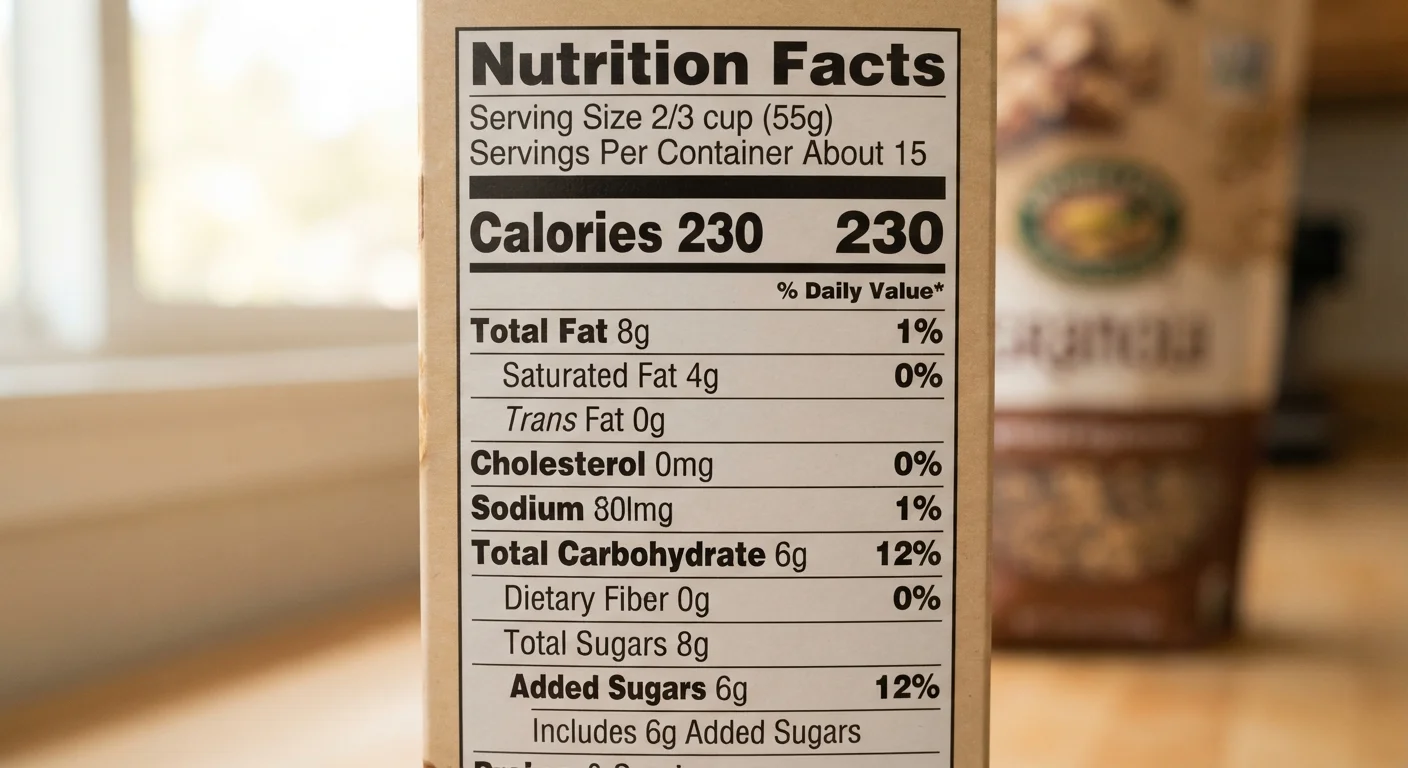
- The FDA requires added sugars to appear separately beneath 'Total Sugars' on Nutrition Facts labels.
- Natural sugars in fruit, vegetables, and dairy come packaged with fiber, vitamins, and minerals that affect how your body processes them.
- Added sugars hide under many names on ingredient lists, including dextrose, maltose, and evaporated cane juice.
- Health organizations generally recommend limiting added sugar intake, though individual needs vary - consult a healthcare provider for personalized guidance.
Added Sugars
Added sugars are any sugars or sweeteners that are put into a food or drink during processing or preparation - they are not naturally present in the ingredient itself. This includes table sugar, honey, maple syrup, high-fructose corn syrup, and dozens of other sweeteners manufacturers use to enhance flavor or extend shelf life. Unlike the natural sugars found in fruit or milk, added sugars provide calories without accompanying nutrients like fiber or vitamins.
The FDA requires added sugars to be listed as a sub-item under Total Sugars on the Nutrition Facts label, expressed in grams and as a percentage of the Daily Value, based on a 50g reference intake per day for a 2,000-calorie diet.
The Reason Two Sugar Lines Exist on the Label
If you've ever looked at a Nutrition Facts label and noticed that 'Added Sugars' appears indented beneath 'Total Sugars,' you may have wondered why there are two entries instead of one. The short answer is that not all sugars behave the same way - and not all of them are put there intentionally by a manufacturer.
Total Sugars captures every gram of sugar in the food, whether it arrived naturally or was stirred in during production. Added Sugars, listed underneath, tells you only what was deliberately introduced. The FDA updated the Nutrition Facts label format to include this breakdown specifically to give consumers more transparency about what's in their food.
For a broader look at how to interpret each section of a nutrition label, see our guide to reading a Nutrition Facts label - it walks through what each row actually means in practical terms.
17 tsp
Average daily added sugar consumed by U.S. adults
According to the American Heart Association, many Americans consume well above the recommended limit of added sugars each day.
60+
Names used for added sugars on ingredient lists
Research published in nutrition science literature identifies more than 60 distinct names manufacturers may use to describe added sugars on labels.
2020
Year the updated FDA label format took effect
The FDA's updated Nutrition Facts label requiring a separate Added Sugars line became mandatory for most manufacturers starting in January 2020.
Natural Sugars vs. Added Sugars: Why the Difference Matters
A medium banana contains roughly 14 grams of sugar, yet most nutrition professionals wouldn't flag that as a concern. That's because the sugar in whole fruit comes bundled with fiber, water, vitamins, and minerals that slow digestion and contribute to overall nutritional value. The context of the sugar matters - not just the number.
Added sugars, by contrast, arrive without those accompanying nutrients. When manufacturers add corn syrup to a salad dressing or cane sugar to a granola bar, those calories come along for the ride without fiber or micronutrients to balance them. Over time, consistently consuming foods with high amounts of added sugar - especially in beverages - has been associated in research with various metabolic health concerns, though individual responses vary considerably.
It's worth noting that fruit juice, even 100% juice, occupies a middle ground: it contains naturally occurring sugars but has lost much of the whole fruit's fiber, which changes how quickly those sugars enter the bloodstream.
Spotting Hidden Added Sugars on Ingredient Lists
The Nutrition Facts label tells you how many grams of added sugar a product contains, but the ingredient list tells you what form that sugar takes. Manufacturers use more than 60 recognized names for added sugars, which can make spotting them tricky.
Common ones to look for include:
- Names ending in '-ose': fructose, dextrose, maltose, sucrose, lactose (when added to non-dairy products)
- Syrups: high-fructose corn syrup, rice syrup, malt syrup, agave syrup
- Concentrated sweeteners: fruit juice concentrate, evaporated cane juice, molasses, honey, maple syrup
Because ingredients are listed by weight - with the heaviest listed first - a product that lists three different sweeteners in positions four, five, and six may actually contain a significant combined amount of added sugar, even though no single sweetener appears near the top.
A Quick Trick for Comparing Products
When scanning labels quickly, focus on the % Daily Value next to Added Sugars rather than the gram number alone. A product with 5% DV or less is generally considered low in added sugars, while 20% DV or more is considered high. This single number makes side-by-side comparisons much faster while you're standing in the grocery aisle.
Putting It All Together in Your Grocery Routine
Understanding added sugars on a label isn't about eliminating sweetness from your diet - it's about making informed choices with a clearer picture of what you're eating. Foods like flavored yogurts, pasta sauces, breakfast cereals, and even some breads frequently contain added sugars that aren't immediately obvious from taste alone.
When comparing two similar products, checking the Added Sugars line - rather than Total Sugars alone - gives you a more accurate sense of which product relies more heavily on sweeteners. A plain yogurt with 10g of total sugars and 0g added sugars is nutritionally quite different from a flavored variety with 10g total sugars and 8g added sugars, even though the total number looks the same.
Health decisions involving diet and nutrition are personal, and what works for one person may not be appropriate for another. If you have questions about how sugar intake fits into your overall health picture, a registered dietitian or your primary care provider is the best resource for guidance tailored to your situation.
This article is for general informational and educational purposes only and is not a substitute for professional medical or nutritional advice. Always consult a qualified healthcare provider before making changes to your diet.