

Key Takeaways
- Refining strips away the bran and germ, removing most of a grain's fiber, vitamins, and minerals.
- The endosperm that remains in refined grains is primarily starch with significantly less nutritional value.
- Enrichment adds back some B vitamins and iron, but not fiber or many other lost nutrients.
- Whole grains are linked in research to better blood sugar regulation and digestive health.
- Food labels can be misleading - look for 'whole grain' as the first ingredient to confirm what you're getting.
Option A
Whole Grains
The complete, minimally processed original.
Best for: People looking to maximize fiber, vitamins, and sustained energy from their grain-based foods.
Option B
Refined Grains
The streamlined, longer-shelf-life alternative.
Best for: Situations where texture, palatability, or shelf stability take priority, with nutritional trade-offs to keep in mind.
If you want to support long-term digestive and metabolic health
Whole Grains
The fiber and intact nutrients in whole grains are consistently associated with healthier blood sugar levels and gut function in nutritional research.
If texture or recipe requirements are your primary concern
Refined Grains
Refined flours produce lighter, softer results in baking and cooking - a practical trade-off for occasional use in an otherwise balanced diet.
If you're managing blood sugar or following a high-fiber eating pattern
Whole Grains
Whole grains digest more slowly due to their fiber content, which can help moderate post-meal blood sugar spikes compared to refined alternatives.
The Anatomy of a Grain
Every grain kernel - whether wheat, rice, oats, or corn - is made up of three distinct layers, each with its own nutritional role.
- Bran: The outer layer, rich in dietary fiber, B vitamins, and antioxidants.
- Germ: The nutrient-dense core that contains healthy fats, vitamin E, B vitamins, and minerals like magnesium and zinc.
- Endosperm: The starchy middle section that makes up the bulk of the kernel. It provides carbohydrates and a small amount of protein, but holds very little fiber or micronutrients.
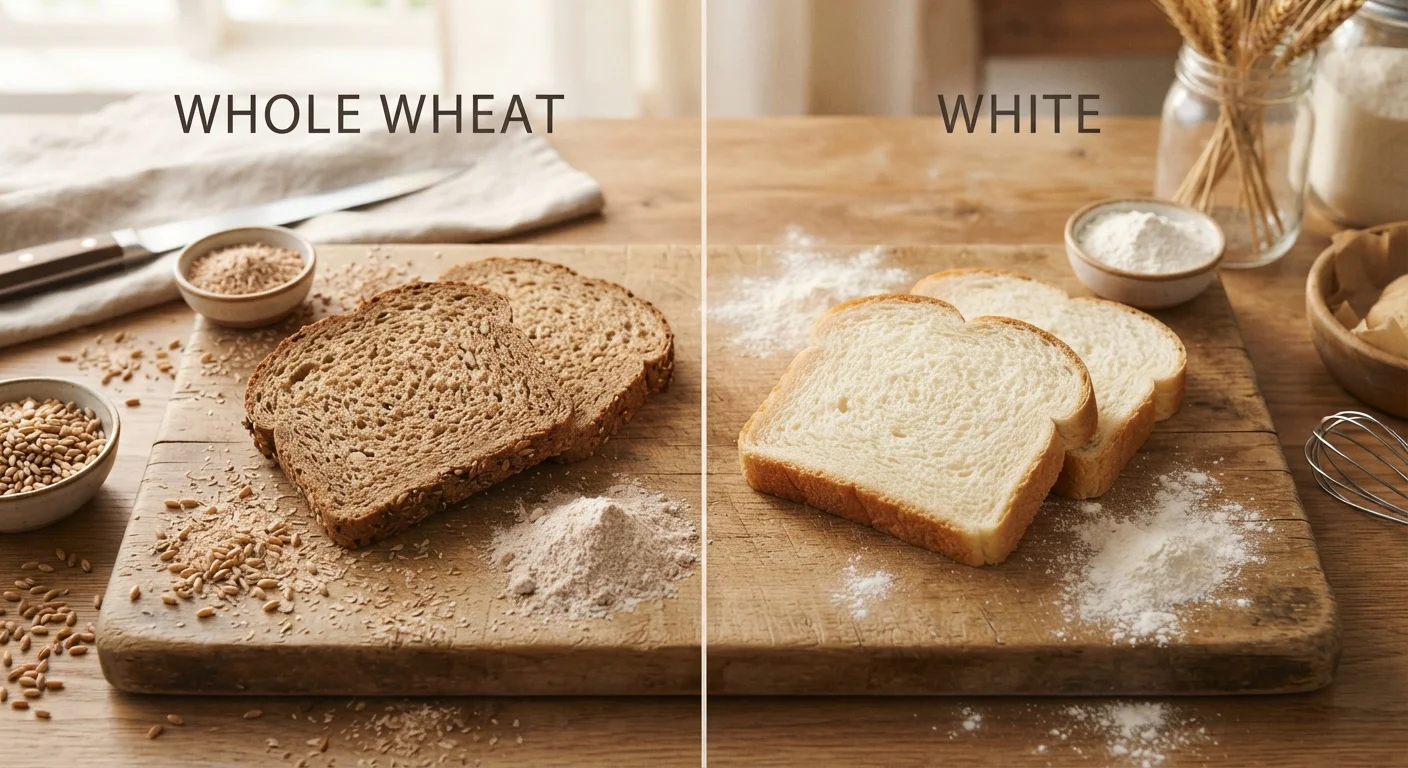
A whole grain product retains all three layers in their original proportions. A refined grain has had the bran and germ milled away, leaving only the endosperm. That seemingly simple step has significant nutritional consequences.
What the Refining Process Actually Removes
Milling grains into white flour or polished white rice is efficient and extends shelf life - the oils in the germ can cause whole grain products to go rancid faster. But the trade-off is substantial.
| Criterion | Whole Grains | Refined Grains |
|---|---|---|
| Bran layer | Intact | Removed |
| Germ layer | Intact | Removed |
| Dietary fiber | High | Very low |
| B vitamins (natural) | Naturally present | Partially added back via enrichment |
| Vitamin E & magnesium | Present | Largely removed, not restored |
| Glycemic response | More gradual | Faster, sharper spike |
| Shelf life | Shorter (oils in germ) | Longer |
| Texture in baking | Denser, heartier | Lighter, softer |
Research from institutions like the Harvard T.H. Chan School of Public Health has consistently shown that refining wheat, for example, can remove up to 25% of a grain's protein and significantly reduce levels of B vitamins, iron, zinc, and fiber. The process also reduces the amount of phytochemicals - plant compounds associated with various health benefits.
It's worth noting that many refined grain products in the U.S. are enriched, meaning manufacturers add back certain B vitamins (thiamin, riboflavin, niacin, and folic acid) and iron after processing. However, enrichment does not restore fiber, vitamin E, magnesium, zinc, or the many other nutrients lost during milling.
What 'Enriched' Actually Means
When you see 'enriched wheat flour' on a label, it means the grain was refined and then had certain nutrients added back - specifically thiamin, riboflavin, niacin, folic acid, and iron. This process was introduced decades ago to address deficiency diseases. However, enrichment does not restore fiber, vitamin E, magnesium, potassium, or the full spectrum of phytochemicals present in the original whole grain. Think of it as a partial restoration, not a complete one.
How Processing Affects Your Body
The fiber in whole grains does more than support digestive regularity. It slows the digestion of carbohydrates, which means glucose enters the bloodstream more gradually. This results in a more moderate rise in blood sugar after eating - a dynamic measured by what's known as the glycemic index (GI), a scale that ranks how quickly a food raises blood sugar.
Whole grain bread typically has a lower GI than white bread, and research published in journals such as The Lancet and Nutrition Reviews has associated higher whole grain intake with reduced risk of type 2 diabetes, cardiovascular disease, and certain digestive conditions. These are population-level associations, and individual responses to food vary - but the pattern in the science is consistent.
25%
Protein lost during wheat refining
Milling whole wheat into white flour can reduce protein content by roughly 25%, along with significant losses in fiber and micronutrients, according to nutritional analyses of grain processing.
3x
More fiber in whole vs. refined grains
Whole wheat bread generally contains around three times the dietary fiber of white bread made from refined flour, based on standard USDA nutritional data.
90%+
Of Americans fall short on whole grain intake
Dietary Guidelines for Americans data suggest the vast majority of U.S. adults consume less than the recommended amount of whole grains daily.
Refined grains, stripped of fiber, digest faster and can cause sharper spikes in blood glucose, which over time and at high intake levels may contribute to metabolic challenges. That said, a single serving of white rice or white bread in an otherwise varied diet is unlikely to be harmful for most healthy adults. Context and overall eating patterns matter.
If you're concerned about how grain choices might affect a specific health condition, speaking with a registered dietitian or your healthcare provider is always a good step. This article offers general nutrition education, not personalized medical advice.
Reading Labels Without Getting Confused
Grocery store shelves can make this harder than it should be. Terms like "multigrain," "made with whole grain," or "wheat bread" do not necessarily mean a product is primarily whole grain. These phrases can legally appear on products that contain only a small proportion of whole grains.
A more reliable approach: check the ingredient list and look for a whole grain - such as "whole wheat flour," "whole oat flour," or "brown rice" - listed first. If a refined flour (like "enriched wheat flour" or "bleached flour") appears before any whole grain ingredient, refined grains make up the majority of the product.
The Whole Grain Stamp, issued by the Whole Grains Council, is another useful signal. Products carrying the 100% stamp contain a full serving of whole grains per portion with no refined grains mixed in.
Understanding how ingredients are listed is one part of a broader skill set for making sense of packaged food. If you want to explore how food manufacturing shapes your choices on a deeper level, our piece on why your grocery cart keeps drifting toward ultra-processed foods offers helpful context.
This article is for general informational and educational purposes only and is not a substitute for personalized medical or nutritional advice. Please consult a qualified healthcare professional before making significant changes to your diet.