

Key Takeaways
- Ultra-processed foods are engineered for maximum appeal, making them harder to resist through willpower alone.
- Misleading front-of-package claims can make nutritionally poor foods appear healthy at a glance.
- Small, systematic shopping habits-like a written list and label literacy-can meaningfully shift your food choices.
- Reducing ultra-processed food intake is a gradual process; all-or-nothing thinking often backfires.
- Consulting a registered dietitian can provide personalized guidance that generic advice cannot.
What Makes Ultra-Processed Foods So Hard to Resist
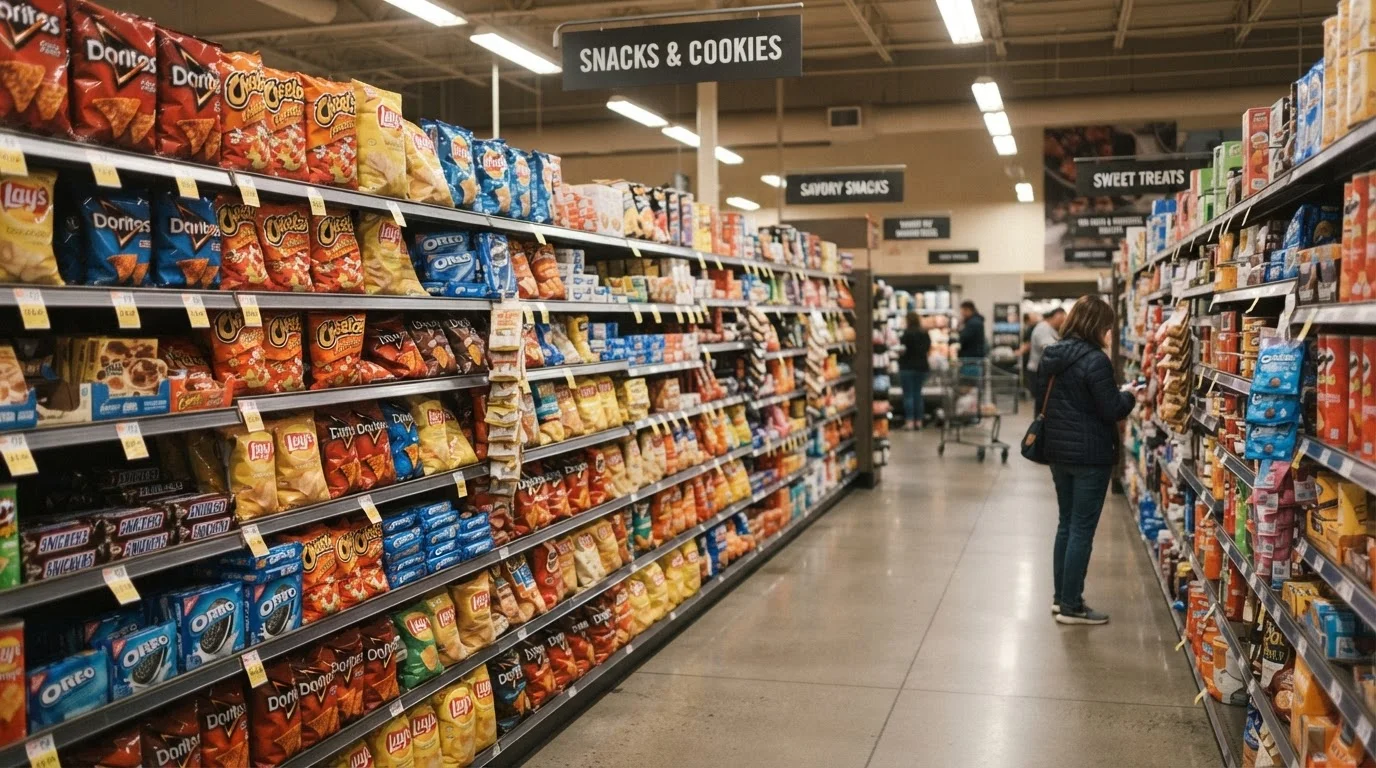
Ultra-processed foods - a category defined by researchers as industrially manufactured products containing ingredients rarely used in home cooking, such as emulsifiers, flavor enhancers, and modified starches - now make up more than half of the average American's daily calorie intake, according to research published in nutrition epidemiology journals. That's not an accident. These products are designed with a precise combination of salt, sugar, fat, and texture engineered to maximize what food scientists call "palatability" - the brain's reward response to eating.
Understanding why your cart keeps drifting toward these items isn't about blaming yourself. It's about recognizing the structural forces at play so you can make more deliberate decisions. Several common mistakes make it even easier to reach for ultra-processed options - and most of them are entirely fixable.
Shopping hungry and without a plan, leaving food decisions to impulse.
Why it happens: When blood sugar is low and a plan is absent, the brain naturally gravitates toward high-calorie, fast-reward options - which ultra-processed foods are specifically designed to be.
Trusting front-of-package health claims without reading the ingredient list.
Why it happens: Labels like "natural," "multigrain," or "low-fat" create a health halo effect - a well-documented cognitive bias where one positive trait leads us to assume the whole product is nutritious.
Treating all processed foods as equally harmful and quitting in frustration.
Why it happens: The term "processed" is broadly applied, leading many people to lump minimally processed foods - like canned beans, frozen vegetables, or plain yogurt - in with heavily engineered snack products.
Relying on convenience foods without building any quick whole-food alternatives.
Why it happens: Many people turn to ultra-processed foods because of genuine time constraints. Without ready-to-eat alternatives, the processed option is simply the only one available when life gets busy.
Ignoring how store layout and marketing guide your shopping path.
Why it happens: Grocery stores are intentionally designed to maximize exposure to high-margin ultra-processed products. End-cap displays, eye-level placement, and checkout-lane snacks are deliberate sales strategies, not neutral arrangements.
Building Habits That Make Whole Foods the Easier Choice
Reducing your reliance on ultra-processed foods doesn't require a dramatic overhaul of your diet overnight. Research on habit formation consistently shows that small, consistent environmental changes outperform willpower-based approaches. Start by restructuring your shopping routine rather than your entire pantry.
One of the most evidence-supported strategies is shopping with a written list built around the store's perimeter - where fresh produce, proteins, and dairy tend to live - before moving into center aisles. Pair this with stronger label literacy: learning to read a Nutrition Facts panel critically is one of the most practical skills you can build. Our guide on reading a nutrition facts label without getting lost breaks down exactly what each section means.
It's also worth examining what eating patterns have the strongest research backing. Comparing approaches like Mediterranean, DASH, and whole-foods diets can give you a practical framework for what a lower-processed eating style actually looks like day-to-day.
All-or-Nothing Thinking Can Backfire
Trying to eliminate every processed food at once often leads to burnout and a return to old habits. Research on dietary behavior change suggests that gradual substitution - swapping one or two items per shopping trip - leads to more durable results than total overnight overhauls. Give yourself room to make progress incrementally.
This article is for general informational and educational purposes only and is not a substitute for professional medical or dietary advice. Speak with a qualified healthcare provider or registered dietitian before making significant changes to your diet.