

Key Takeaways
- More insulation doesn't always mean better performance - proper air sealing matters just as much.
- Attic insulation alone won't stop drafts caused by gaps in walls, floors, or around windows.
- Older insulation doesn't become harmful simply with age; check condition, not just vintage.
- R-value requirements vary by climate zone and location within your home.
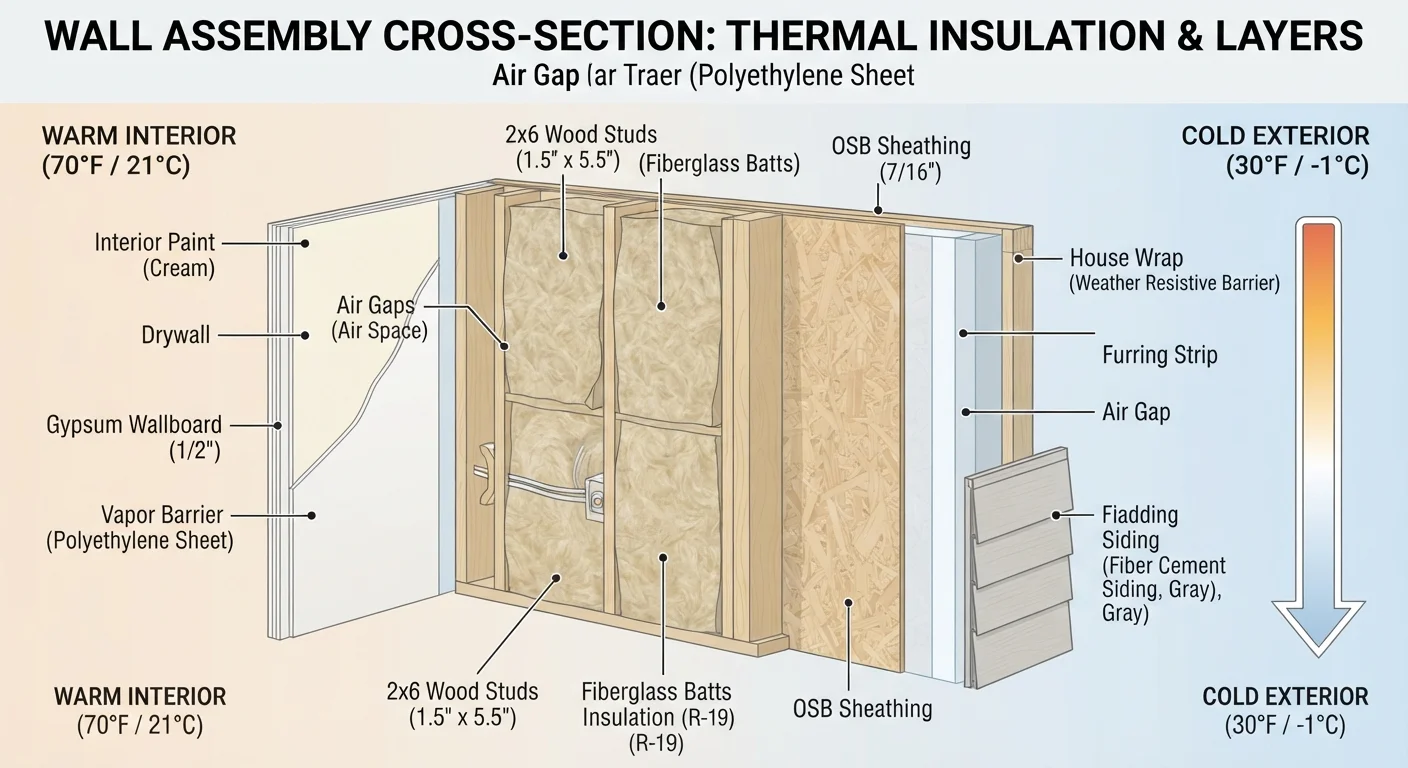
- Vapor barriers are not universally required and can cause moisture damage if misapplied.
Why Insulation Myths Cost Homeowners Money
Insulation is one of the most impactful upgrades a homeowner can make - but it's also one of the most misunderstood. Widely repeated myths lead people to spend on upgrades that don't solve their problem, skip measures that would make a real difference, or install materials incorrectly. The result is ongoing energy waste and comfort problems that persist even after significant investment.
Understanding what insulation actually does - and doesn't do - puts you in a far better position to make smart decisions about your home. Many of the same critical-thinking habits apply whether you're evaluating common home maintenance myths or sorting through insulation advice.
~11%
of U.S. homes are under-insulated
The U.S. Department of Energy estimates that a substantial share of American homes lack adequate insulation, contributing to unnecessary heating and cooling costs.
15%
energy savings from air sealing alone
According to the U.S. Environmental Protection Agency's ENERGY STAR program, sealing air leaks can reduce heating and cooling costs by around 15% on average.
44%
of home energy use goes to heating and cooling
The U.S. Energy Information Administration reports that space heating and cooling account for the largest share of energy consumption in a typical American home.
The Most Common Insulation Misconceptions, Corrected
The myths below are among the most frequently repeated - and they directly lead to wasted energy, wasted money, or both. Each correction comes with the reasoning behind it, so you can apply the same logic to related decisions in your home.
Myth
More insulation always means a more energy-efficient home.
Fact
Beyond a climate-appropriate R-value, adding more insulation yields diminishing returns and can create moisture or ventilation problems.
R-value measures thermal resistance, and each climate zone has a recommended target - hitting that target is the goal, not exceeding it indefinitely. Piling on insulation past the recommended level can compress lower layers, reducing their effectiveness, and may block necessary ventilation in spaces like attics. For guidance on what R-values are appropriate for your region, see our article on R-value and why location changes everything.
Myth
Insulating the attic is enough to fix a drafty, cold house.
Fact
Attic insulation addresses heat loss through the ceiling but does nothing for drafts entering through walls, floors, windows, or door gaps.
Heat escapes through every under-insulated or unsealed surface, not just the ceiling. A comprehensive approach includes insulating exterior walls, rim joists, and crawl spaces, and sealing air gaps at the same time. Drafts around windows and doors are typically a weatherstripping or caulking issue - separate from insulation entirely. Learn more in our guide on caulk vs. weatherstripping.
Myth
Old insulation always needs to be replaced.
Fact
Insulation that is dry, intact, and free of pest damage can remain effective for decades regardless of age.
The real indicators are physical condition and performance, not age alone. Fiberglass batts that are compressed, wet, or contaminated with rodent debris should be removed. Loose-fill insulation that has settled significantly may need topping up. But insulation that looks and tests fine can keep doing its job. Have a certified energy auditor assess your existing insulation before committing to a full replacement project.
Myth
Every home needs a vapor barrier behind its insulation.
Fact
Vapor barrier requirements depend on climate, building assembly, and where in the home the insulation is installed.
In cold climates, a vapor retarder on the warm side of wall insulation can help prevent condensation inside the wall cavity. In hot, humid climates, the strategy may be reversed - or omitted altogether. Installing a vapor barrier incorrectly can trap moisture and accelerate mold growth or rot. Local building codes and the U.S. Department of Energy's climate zone maps are the best starting points for determining what your home actually needs.
Myth
Insulation keeps a home warm by generating heat.
Fact
Insulation is passive - it slows the transfer of heat but does not produce any heat of its own.
This is a fundamental misunderstanding of how insulation works. Your heating system generates warmth; insulation simply slows how quickly that warmth escapes to the outdoors. In summer, the same principle applies in reverse - insulation slows outdoor heat from entering your conditioned space. Thinking of insulation as a heat source leads homeowners to over-rely on it and under-invest in air sealing and proper HVAC sizing.
Myth
Spray foam insulation solves all energy loss problems in one step.
Fact
Spray foam is an effective air barrier and insulator, but improper application or coverage gaps can still leave significant energy problems unresolved.
Spray foam - particularly closed-cell - does offer high R-value per inch and excellent air sealing. However, it must be applied correctly to every penetration and gap to perform as expected. Missed areas around electrical boxes, pipes, or structural members can remain significant leakage points. Spray foam also requires professional installation in most cases, and some formulations have off-gassing considerations that require adequate ventilation during and after application.
For a fuller picture of how winter energy loss happens, our guide on winterizing your home covers the most common seasonal mistakes and how to avoid them.
Air Sealing and Insulation Work Together
Insulation slows heat transfer, but it doesn't stop air movement on its own. If your home has significant air leaks - around outlets, plumbing penetrations, or rim joists - adding insulation without sealing those gaps first can leave you with disappointing results. Always address air sealing before or alongside insulation upgrades.
Getting an Accurate Picture of Your Home's Insulation Needs
The most reliable way to assess your home's insulation performance is a professional energy audit. An auditor uses tools like a blower door test and infrared camera to locate where your home is losing heat or drawing in cold air - results that visual inspection alone often misses.
Don't Insulate Over Existing Moisture Problems
Adding new insulation over damp or moldy existing material traps moisture and accelerates structural damage. Before installing any insulation, inspect the area for signs of water intrusion, condensation, or mold. Resolve the moisture source first, and consult a professional if mold is present. Covering problems rather than fixing them can lead to costly repairs down the road.
Once you have an accurate diagnosis, you can prioritize improvements in the right order: air sealing first, then insulation upgrades targeted to the areas with the greatest measured loss. This sequence consistently delivers better outcomes than guessing based on which upgrade sounds most impressive. Tracking your utility bills before and after improvements is one practical way to gauge whether the work made a measurable difference - though results vary based on home size, climate, and existing conditions.
Insulation decisions are part of a broader home maintenance mindset. Visit our Home Maintenance hub for practical guidance on keeping your home safe, efficient, and comfortable year-round.