

Key Takeaways
- Uninsulated pipes in unheated spaces are among the most common causes of winter water damage.
- Gaps around doors, windows, and utility penetrations quietly drive up heating bills all season.
- Clogged gutters can cause ice dams that damage roofing, siding, and interior walls.
- Many winterizing mistakes stem from incomplete prep rather than complete neglect.
- Knowing what to check - and when - prevents expensive emergency repairs in the coldest months.
Why Winterizing Mistakes Are So Costly
Most winter home damage doesn't happen all at once - it builds quietly from overlooked details. A small crack around a pipe chase, a forgotten garden hose bib, a clogged downspout: each one is easy to dismiss in October and expensive to regret in January. Understanding where homeowners typically go wrong is the first step toward a warmer, drier season.
For a broader look at fall and winter upkeep tasks, our quarterly home maintenance checklist walks through what to inspect as temperatures shift.
Leaving garden hoses connected to outdoor faucets through the first freeze.
Why it happens: Homeowners often assume a frost-free bib handles everything, not realizing a connected hose traps water and negates that protection.
Skipping air-sealing and relying on insulation alone to hold heat.
Why it happens: Insulation is visible and tangible, so it gets attention. Air leaks around outlets, pipes, and trim are invisible and easy to underestimate.
Forgetting to have the heating system serviced before cold weather arrives.
Why it happens: When the furnace worked fine last spring, it feels unnecessary to schedule a checkup. But minor issues compound over a summer of disuse.
Cleaning gutters too early in the fall, before trees have finished dropping leaves.
Why it happens: Homeowners check gutters off the list in September, then a full round of leaves falls in October and November with no follow-up.
Leaving pipes in unheated spaces - garages, crawl spaces, or vacation homes - without insulation or draining.
Why it happens: These areas feel separate from the main living space, so their plumbing is often out of sight and out of mind until something fails.
Ignoring the attic hatch as a major source of heat loss.
Why it happens: Attic hatches look small and insignificant, and most insulation projects focus on the attic floor itself rather than the door or hatch cover.
The Hidden Energy Drains Most Homeowners Overlook
Heat loss is gradual and invisible, which is exactly why it's so often ignored until energy bills spike. Air leaks around window frames, electrical outlets on exterior walls, and gaps where pipes or wires enter the home can collectively account for significant energy waste - often more than inadequate insulation alone. Many homeowners invest in insulation while overlooking these penetrations entirely.
Don't Seal Your Home Too Tightly Without Ventilation
While reducing air leaks is important, a home sealed without adequate ventilation can trap moisture and lead to mold growth or indoor air quality issues. Modern homes generally need mechanical ventilation if they are tightened significantly. If you're undertaking major air-sealing work, consult a building performance contractor about balanced ventilation options.
Pay particular attention to the attic hatch: it's one of the most under-sealed openings in the average home, yet it connects your living space directly to unheated attic air. Weatherstripping and a rigid foam cover can make a measurable difference. For a deeper look at where insulation assumptions go wrong, see our article on common home insulation myths.
Pipe Failures and Water Damage: What Sets Them Up
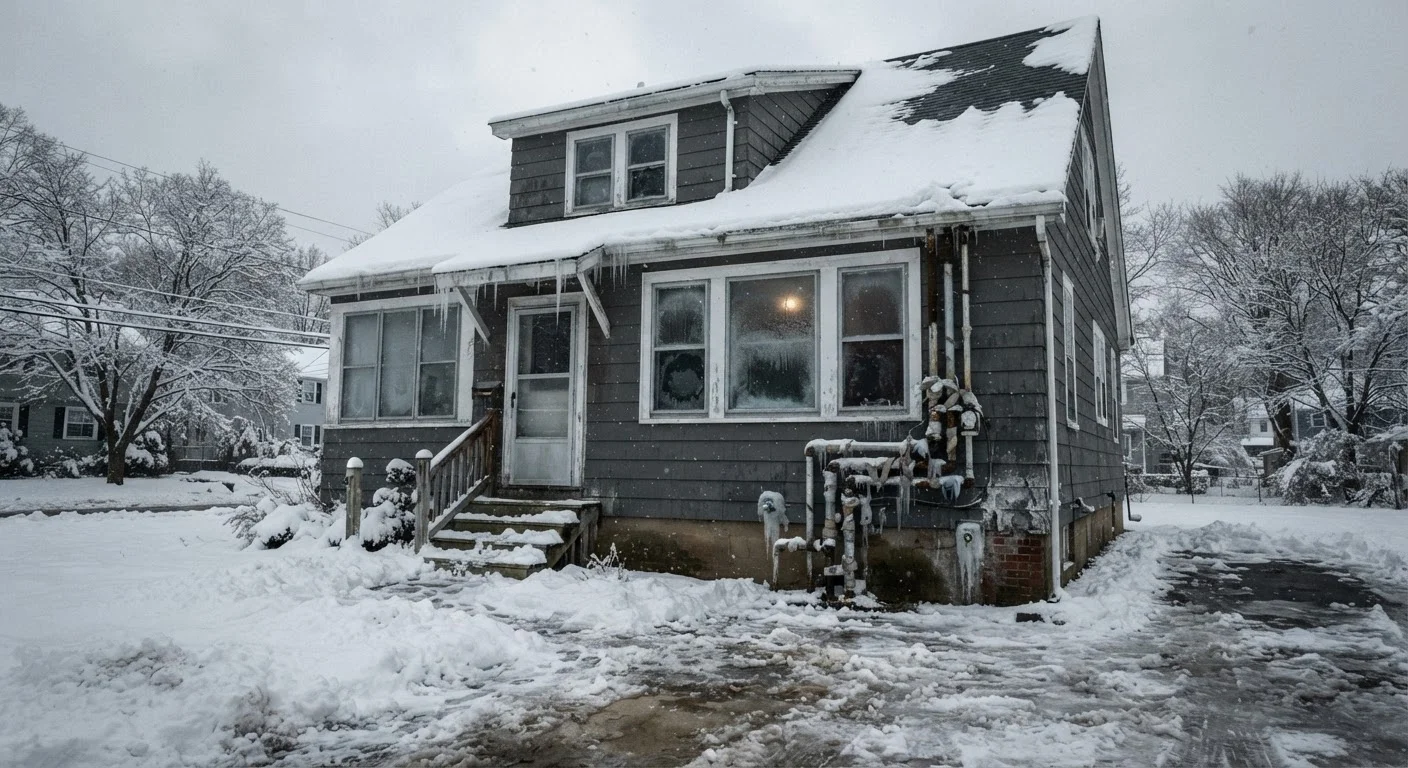
Frozen pipes are not just a problem for unheated cabins - they happen regularly in attached garages, crawl spaces, and even interior walls that border an uninsulated exterior. When water expands as it freezes, even a small pipe crack can release dozens of gallons before anyone notices. The resulting water damage can spread behind walls and under floors before it becomes visible.
Frozen Pipes Can Burst Without Warning
A pipe does not have to be fully frozen to crack - partial freezing can generate enough pressure to split copper or PVC. If you suspect a pipe has frozen, do not apply an open flame to thaw it. Turn off the main water supply and contact a licensed plumber. Attempting to force-thaw a pipe incorrectly can cause it to burst or create a fire hazard.
Disconnecting and draining outdoor hoses before the first hard freeze is one of the simplest preventive steps, yet it's frequently missed. Leaving a hose connected traps water in the bib and the supply pipe behind it. Similarly, any irrigation system that isn't properly blown out and drained is at risk. Our guide to spotting water damage before it spreads explains what to look for if you suspect something has already gone wrong.
Gutters, Drainage, and the Ice Dam Problem
Gutters clogged with fall leaves are one of the most direct paths to ice dams - ridges of ice that form at roof edges when heat escapes through the roof, melts snow, and refreezes at the cold eaves. Water backing up behind an ice dam can work its way under shingles and into the home's interior. Cleaning gutters after the last leaves have fallen, rather than before, ensures debris doesn't accumulate over winter.
Downspout extensions also matter: water discharged close to the foundation can refreeze and cause drainage problems. For more on why gutters deserve serious attention, see why gutters matter more than you think. And if your roof's condition concerns you, our overview of your home's four critical systems covers what to watch for.
$5,000+
Average cost of a frozen pipe repair
According to the Insurance Information Institute, water damage from burst pipes is among the most common and costly homeowner insurance claims.
25-30%
Home heat lost through air leaks
The U.S. Department of Energy estimates that drafts around windows, doors, and other openings account for roughly 25-30% of heating energy loss in a typical home.