

Key Takeaways
- A tripped breaker is a warning signal, not just an inconvenience - find the cause before resetting it.
- Double-tapping (two wires on one breaker terminal) is a code violation in most situations and a fire hazard.
- Panels older than 25-30 years may not meet current safety standards and should be professionally evaluated.
- Some panel issues - like a burning smell or scorch marks - require an immediate call to a licensed electrician.
- Homeowners can safely reset breakers and read the panel, but internal wiring work must be done by a licensed professional.
Electrical Panel (Breaker Box)
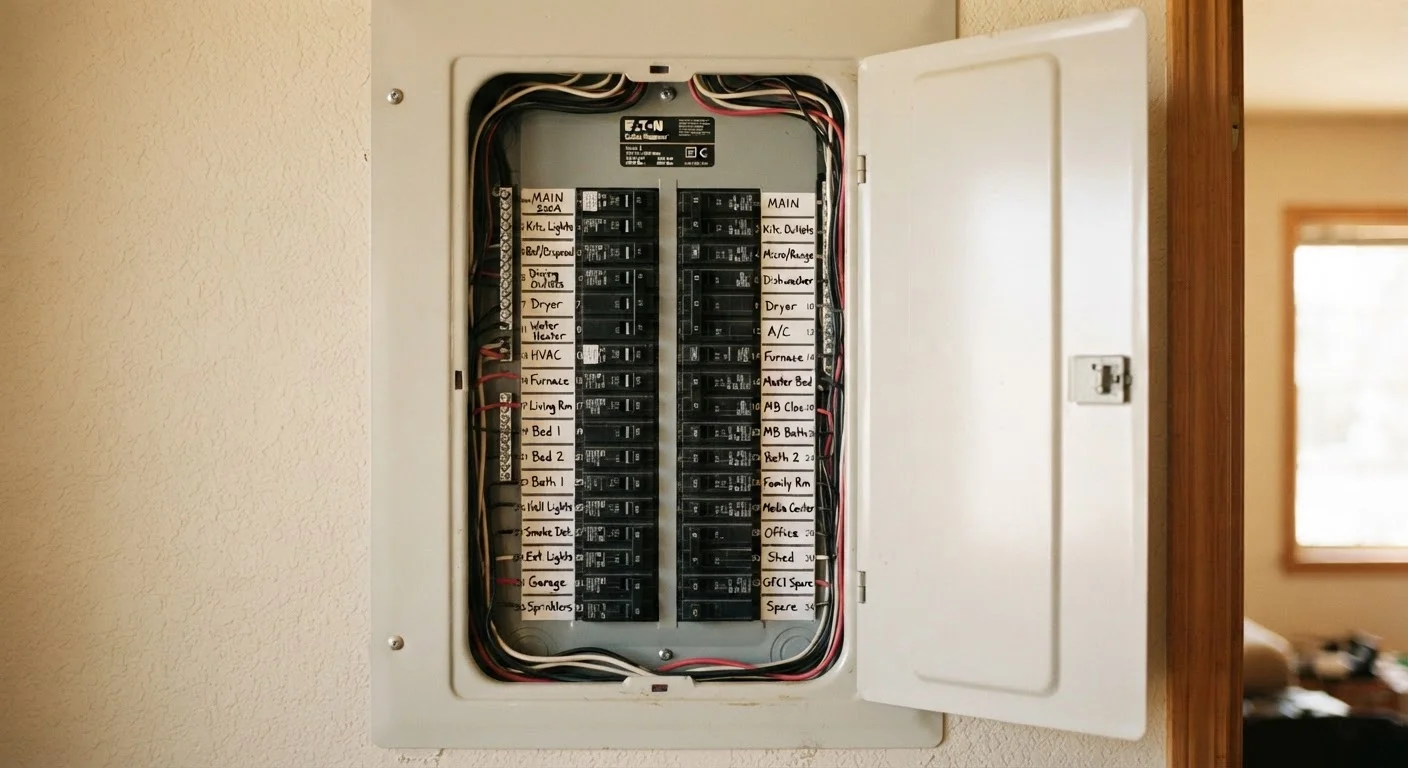
An electrical panel, sometimes called a breaker box or load center, is the hub that distributes electricity from your utility provider to every circuit in your home. It houses circuit breakers - switches that automatically shut off power to a circuit when something goes wrong, protecting your wiring and appliances from damage. Think of it as your home's electrical traffic controller.
Panels are rated by amperage capacity - most modern homes use 100-amp or 200-amp service. The panel's amperage determines how much total electrical load your home can safely carry at one time.
How Your Panel Actually Works
Power arrives at your home from the utility grid through a meter and feeds directly into the electrical panel. Inside, it splits into individual circuits - one for the kitchen, one for the master bedroom, one for the HVAC system, and so on. Each circuit is protected by a breaker rated for a specific amperage, such as 15 or 20 amps for standard household circuits, and 30-50 amps for high-draw appliances like dryers or electric ranges.
When a circuit draws more current than its breaker is rated for - because of a faulty appliance, too many devices running at once, or a wiring problem - the breaker trips. It flips to a middle or off position, cutting power before wires overheat. That's not a malfunction; that's the breaker doing exactly what it's supposed to do.
What 'Amperage' Actually Means for You
Amperage is simply a measure of how much electrical current a circuit or panel can handle at once. Running too many high-draw devices simultaneously - space heaters, hair dryers, microwaves - on a single circuit is one of the most common causes of nuisance tripping. Spreading loads across different circuits helps prevent this. A 200-amp service panel is now standard in new construction and is generally sufficient for most modern households.
Reading the Warning Signs
Your panel communicates through a handful of clear signals. Learning to recognize them helps you decide whether you're dealing with a minor nuisance or a genuine safety issue.
- Frequently tripping breakers: A circuit that trips repeatedly under normal use is telling you the load exceeds the breaker's capacity, or that there's a fault in the wiring or a connected device. Don't just keep resetting it - investigate.
- Flickering or dimming lights: Occasional flicker when a large appliance kicks on is normal. Persistent dimming across multiple rooms can indicate a loose connection or inadequate service capacity.
- Burning smell or scorch marks: This is an emergency. A burning odor from the panel, discoloration around breakers, or visible scorch marks can signal arcing or overheating. Cut power if safe to do so and call a licensed electrician immediately.
- A warm panel door: Some warmth is expected near high-amperage breakers, but a panel that feels hot to the touch warrants prompt professional attention.
- Breakers that won't stay reset: If a breaker trips again as soon as you reset it, the fault driving the trip is still present. Forcing it back on risks damaging wiring or appliances.
Label Your Circuit Directory Now
Many homeowners inherit a panel with a blank or inaccurate directory. Spend 30 minutes with a helper: have one person flip breakers while the other notes which outlets and fixtures lose power. Accurate labels make troubleshooting much faster - and safer - during an actual problem. Use a pencil first, then permanent marker once you've confirmed each circuit.
Common Problems Electricians Find
Beyond tripped breakers, professionals commonly flag these issues during panel inspections:
- Double-tapping
- Two wires landed on a single breaker terminal that's designed for one. This creates loose, unpredictable connections and is a code violation in most jurisdictions. The fix typically involves adding a tandem breaker or a subpanel - not something to DIY.
- Oversized breakers
- A 20-amp breaker protecting a circuit wired with 14-gauge wire (rated for 15 amps) is a fire hazard. The breaker won't trip until the wire is already dangerously overloaded.
- Outdated or recalled panels
- Certain panel brands manufactured in earlier decades have documented failure histories and have been the subject of recalls or insurance concerns. A licensed electrician can identify whether your panel falls into this category.
- Missing knockout fill-ins
- Open holes in the panel enclosure allow pests and debris to enter - and expose live components. These are inexpensive to correct but easy to overlook.
For a broader look at how your electrical system fits alongside plumbing, HVAC, and structural components, see understanding your home's four critical systems.
What Homeowners Can - and Cannot - Do
There's a clear line between what's safe for homeowners to handle and what belongs in the hands of a licensed electrician.
You can safely:
- Reset a tripped breaker after unplugging devices on that circuit
- Read your panel's circuit directory and update labels
- Identify which breaker controls which room using a non-contact voltage tester
Always hire a licensed electrician for:
- Any internal wiring work, including replacing breakers
- Upgrading panel amperage or adding circuits
- Addressing burning smells, scorching, or breakers that won't hold
- Panel replacement or installation of a subpanel
Most panel work requires a permit and inspection in the U.S. - verify requirements with your local building department. If you're preparing to bring in a professional, questions to ask before hiring a contractor can help you evaluate who to trust and what to expect from the job.
~51,000
Home electrical fires reported annually in the U.S.
According to the U.S. Fire Administration, electrical fires are among the leading causes of home fire deaths each year.
40+ years
Typical age of panels flagged for replacement
Panels from the 1970s and 1980s were not designed for today's electrical loads and may use components that no longer meet current safety standards.
200 amps
Standard service for new U.S. construction
The National Electrical Code and most local jurisdictions now require 200-amp service in new residential builds to accommodate modern electrical demands.