
Roof, Plumbing, HVAC, and Foundation: Understanding Your Home's Four Critical Systems

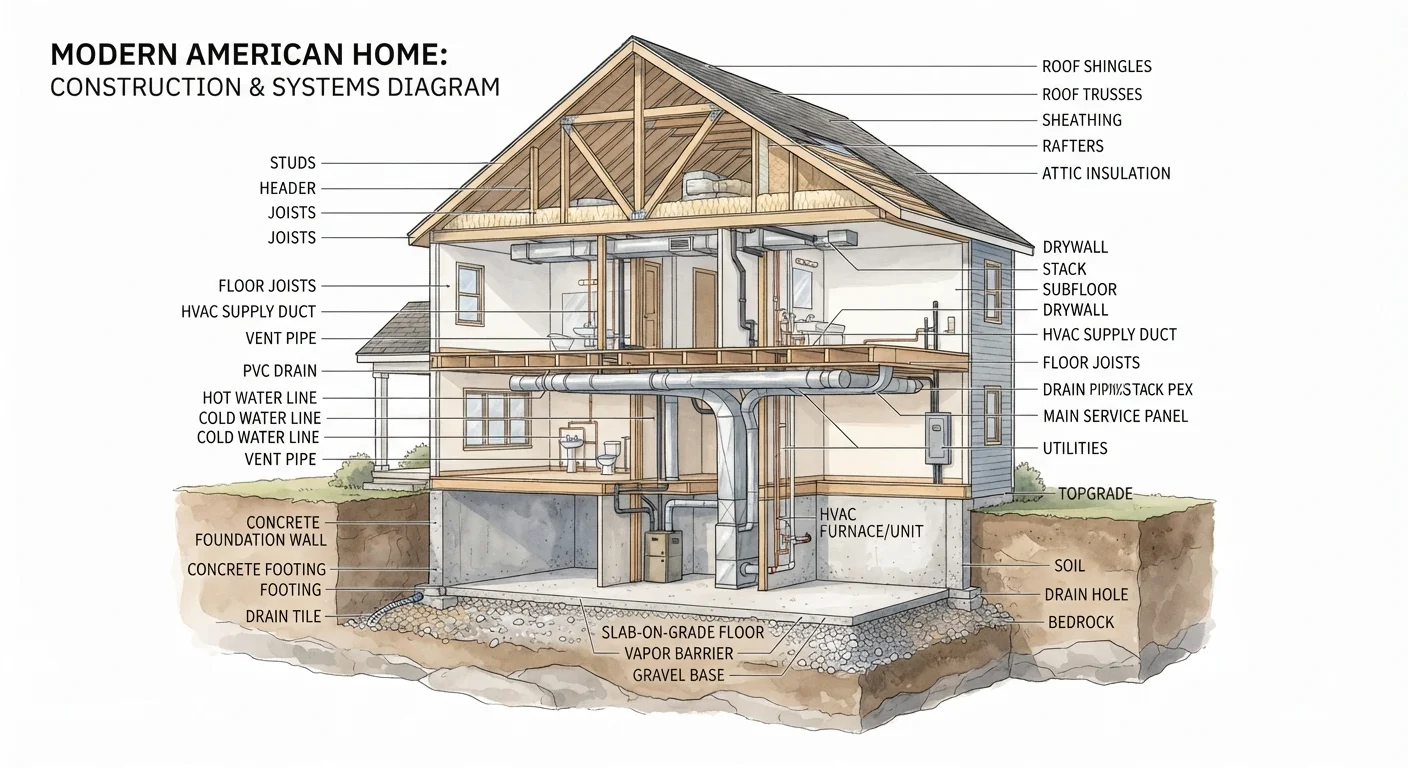
Key Takeaways
- Roof, plumbing, HVAC, and foundation failures account for the majority of costly home repairs.
- Early warning signs are usually visible long before a system fully breaks down.
- Most hazardous repairs-electrical, gas, structural-require a licensed professional.
- Routine inspections every season dramatically reduce the chance of surprise failures.
- Understanding how these systems interact helps you trace problems to their true source.
Why These Four Systems Matter Most
A house is made of dozens of interlocking parts, but four systems do the heaviest lifting: the roof, plumbing, HVAC (heating, ventilation, and air conditioning), and foundation. When any one of them fails, the consequences ripple outward-water intrusion, mold, structural damage, and repair bills that can climb into the tens of thousands of dollars.
Understanding what each system does, what it looks like when it's healthy, and what early warning signs feel like puts you in control. You don't need to be a contractor to recognize that a hairline crack running horizontally across a basement wall is more worrying than a vertical one, or that a musty smell from vents warrants a closer look. This guide walks you through each system so you can catch small problems before they become large ones.
For a broader look at keeping up with your home across all seasons, see our quarterly maintenance checklist.
Your Roof: The First Line of Defense
The roof shields everything below it from rain, wind, UV radiation, and temperature extremes. Most residential roofs use asphalt shingles, which typically last 20-30 years depending on climate, ventilation, and installation quality-though no specific outcome is guaranteed.
What to Look For
- Missing or curling shingles - exposed underlayment absorbs water quickly.
- Granule loss - check gutters for a buildup of coarse, sand-like granules, a sign shingles are aging.
- Dark stains or algae streaks - these won't immediately destroy a roof but indicate moisture retention.
- Sagging areas - a soft or wavy roofline can signal rotted decking or structural stress.
- Flashing failures - metal flashing around chimneys, skylights, and vents is a common entry point for water if it lifts or rusts.
When to Call a Professional
Walking on a roof is genuinely dangerous. A qualified roofing contractor can safely inspect and document conditions. Any repair involving structural decking or full replacement should be handled by a licensed professional, and many jurisdictions require a permit for full re-roofing work. Verify local requirements before any major project begins.
Take photographs of any new cracks or damage with a coin for scale, then re-photograph the same spot every few months. A crack that hasn't grown is usually far less urgent than one that has widened even slightly.
Visual documentation over time gives you and any professional you consult a clearer picture of whether a problem is stable or actively progressing-making triage much easier.
When evaluating roof health, look at attic ventilation first. Inadequate airflow traps heat and moisture that degrade shingles from the inside out, often years before exterior damage becomes visible.
Many premature roof failures trace back to poor attic ventilation rather than the shingles themselves-an interior factor most homeowners overlook during exterior-only inspections.
Install a whole-house water leak detector near your main shutoff valve. These inexpensive devices can alert you to slow leaks before they cause hidden structural damage.
Insurance claims data consistently shows that water damage is among the most common and costly home insurance claims; early detection dramatically limits scope and cost.
Plumbing: What Runs Behind Every Wall
Your plumbing system is two systems in one: a supply side that brings pressurized fresh water in, and a drain-waste-vent (DWV) side that removes used water and sewer gases out. Problems in either side can cause significant damage rapidly.
Common Warning Signs
- Slow drains - a single slow drain usually points to a localized clog; multiple slow drains at once can indicate a main-line issue.
- Low water pressure - can signal a partially closed shutoff valve, a failing pressure regulator, or a hidden leak.
- Discolored water - brownish or rusty water may indicate corroding pipes or a water heater nearing end of life.
- Unexplained spikes in your water bill - a consistent increase without changed habits is a classic sign of a slow leak.
- Wet spots or bubbling paint - moisture behind walls often shows up on surfaces before a full leak develops.
Winter brings particular risk. See our guide on avoiding frozen pipe mistakes to prepare before temperatures drop.
Important note: Work involving the main water shutoff, gas lines near water heaters, or soldering copper pipes should be handled by a licensed plumber. Improper repairs can void homeowner's insurance coverage or create unsafe conditions.
HVAC: Comfort, Air Quality, and Efficiency
Your HVAC system controls temperature, humidity, and air circulation throughout the home. It typically includes a furnace or heat pump, a central air conditioner or cooling coil, ductwork, and a thermostat. These components work together, so a problem in one part affects the whole system.
Signs Your HVAC Needs Attention
- Uneven temperatures room to room - can point to duct leaks, blocked vents, or an undersized system.
- Unusual noises - banging, squealing, or rattling often indicates a loose or failing mechanical component.
- Frequent cycling - a system that turns on and off rapidly (called short-cycling) is often working harder than it should.
- Musty or burning smells - musty odors may suggest mold in the ducts; a burning smell at startup could indicate dust burn-off or, more seriously, an electrical issue.
- Rising utility bills without clear cause - a declining-efficiency system draws more energy to do the same work.
What Homeowners Can Do
Replacing air filters regularly-typically every 1-3 months for standard 1-inch filters-is one of the highest-impact maintenance tasks any homeowner can do. Keep outdoor condenser units clear of debris and maintain at least 2 feet of clearance around them. Annual professional tune-ups help catch refrigerant leaks, combustion issues, and failing components before they cause breakdowns. Work involving gas lines, refrigerant, or electrical components inside the air handler must be performed by a licensed HVAC technician.
Never Ignore a Burning Smell from Vents
A faint dusty smell at the start of heating season is often just dust burning off heat exchanger surfaces. However, a persistent burning or electrical odor is a potential fire hazard that warrants turning off the system and calling a licensed HVAC technician immediately. Do not attempt to inspect internal electrical components yourself.
Foundation: The Ground Your Home Stands On
The foundation transfers the weight of your entire home to the earth below. Most homes in the U.S. sit on a poured concrete slab, a crawl space, or a full basement-each with its own maintenance considerations.
Reading Foundation Cracks
Not every crack is a crisis, but knowing the difference matters:
- Hairline vertical cracks - common as concrete cures; generally low concern but worth monitoring.
- Diagonal cracks at corners of windows or doors - often caused by settling; monitor for growth.
- Horizontal cracks in basement walls - potentially serious; they can indicate lateral soil pressure and warrant professional evaluation promptly.
- Stair-step cracks in brick or block walls - follow the mortar joints and may signal differential settlement.
Other Warning Signs
- Doors or windows that suddenly stick or no longer close squarely
- Floors that feel springy, sloped, or noticeably uneven
- Water pooling consistently near the base of exterior walls
- Gaps forming between walls and ceilings or floors
Grading (the slope of soil away from the house) and gutter drainage are directly tied to foundation health. Water that pools against the foundation accelerates damage over time. This is one reason the systems in your home are deeply interconnected-a clogged gutter on the roof affects the foundation below.
How the Four Systems Interact
These systems don't operate in isolation. A roof leak introduces moisture that can corrode plumbing connections in the attic, reduce HVAC efficiency by soaking insulation, and eventually reach the foundation through wall cavities. A foundation crack that allows groundwater in can spike indoor humidity levels, forcing your HVAC system to work harder and promoting mold growth in ducts. Plumbing leaks inside walls can soften structural framing that the roof load depends on.
Thinking about these systems as interconnected rather than separate helps you trace a symptom-say, a musty smell or sticky doors-back to its actual source. This systems-thinking approach also helps you prioritize: a slow drain is inconvenient, but water actively pooling against your foundation or entering through a roof gap is urgent.
It's also worth revisiting some common assumptions about home upkeep. Our article on common home maintenance myths addresses misconceptions that can lead homeowners to delay necessary repairs or tackle problems incorrectly.
1 in 50
Homes with water damage claims each year
According to the Insurance Information Institute, water damage and freezing is one of the most frequently filed homeowner insurance claims in the U.S.
20-30 years
Typical lifespan of asphalt shingle roofs
The National Roofing Contractors Association notes this range varies significantly based on climate, ventilation quality, and installation.
Up to 25%
Energy lost through leaky ductwork
The U.S. Department of Energy estimates that duct leaks in a typical home can account for a significant portion of heating and cooling energy loss.
Staying Ahead of Problems
The most effective homeowners treat maintenance as a calendar habit rather than a reaction to emergencies. Building a simple schedule around these four systems reduces the likelihood of surprise failures and helps you budget for repairs before they become crises.
A Practical Starting Framework
- Annually
- Professional HVAC tune-up; roof inspection (especially after severe storms); gutter cleaning in fall; foundation perimeter walk-through.
- Every 1-3 months
- HVAC filter replacement; visual check under sinks for moisture; test smoke and carbon monoxide detectors.
- Every few years
- Water heater flush; plumbing pressure check; crawl space or basement moisture inspection.
If you're newer to homeownership, our first-year maintenance roadmap breaks down which tasks to prioritize in year one. And when a repair is beyond DIY territory, knowing the right questions to ask protects you-our guide on what to ask before calling a contractor walks you through that process.
Staying informed, inspecting regularly, and calling in licensed professionals for hazardous or permitted work are the foundations of responsible homeownership.
This article is for general informational and educational purposes only. It does not constitute professional engineering, contracting, or legal advice. Always verify local permit requirements and consult a licensed professional before undertaking structural, electrical, gas, or plumbing work in your home.