

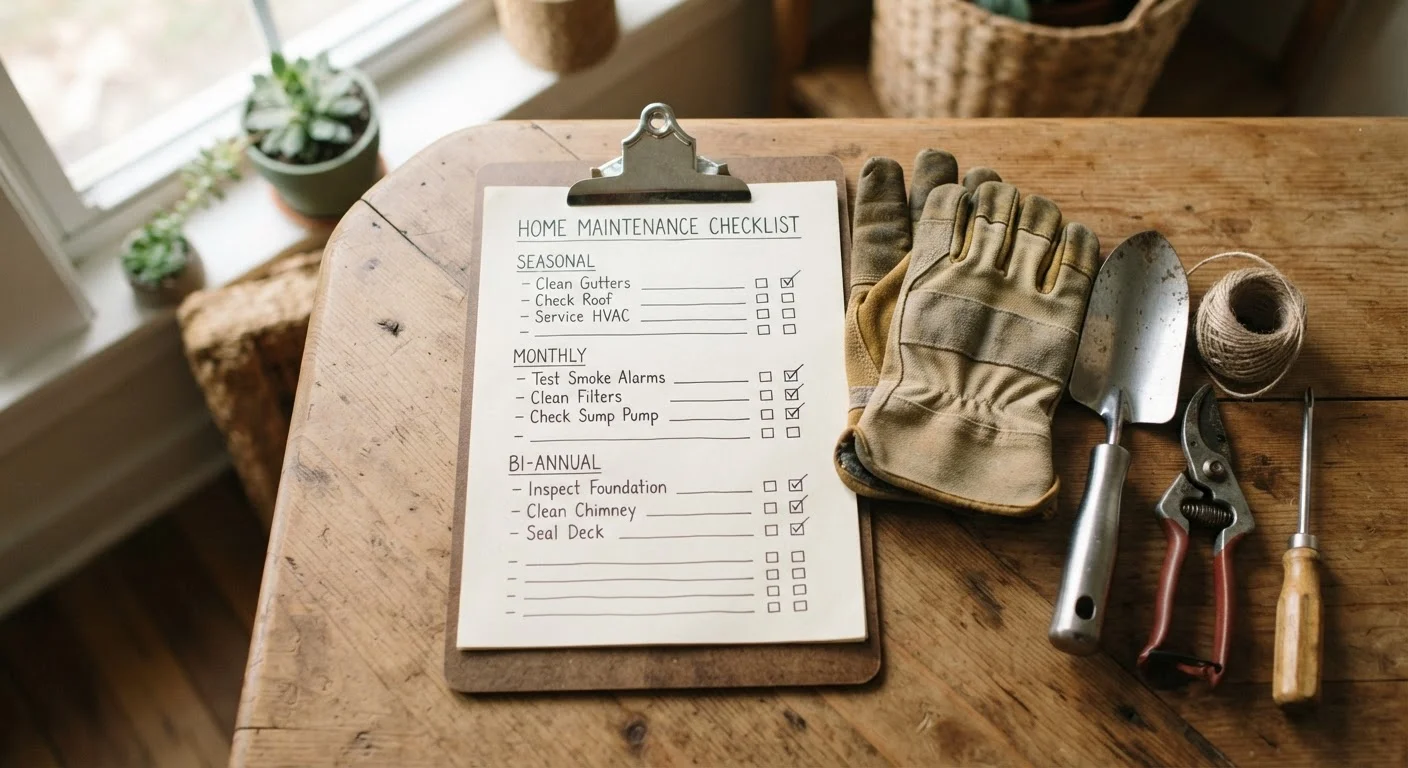
Why a Monthly Schedule Beats a Vague 'Do It When It Breaks' Approach
Most home repairs become expensive because small problems go unnoticed until they escalate. A cracked caulk line lets moisture in; a clogged dryer vent becomes a fire hazard; a slow roof leak rots framing for years before anyone sees a stain on the ceiling. A month-by-month maintenance schedule turns reactive panic into predictable, manageable tasks.
Think of it less like a chore list and more like a living document - one that keeps your home performing the way it should while protecting your investment. If you're just getting started, see our new homeowner maintenance roadmap for a year-one foundation. And if you've been relying on advice passed down over the years, it's worth checking what's actually true with a look at common home maintenance myths before you start.
Month-by-Month Task Breakdown
January - February: Winter Interior Focus
- Test smoke and carbon monoxide detectors; replace batteries if needed.
- Check attic insulation for moisture or pest intrusion after heavy snow or rain.
- Flush water heater sediment by briefly opening the drain valve - consult manufacturer instructions first.
- Inspect weatherstripping on exterior doors and windows; replace any that has cracked or compressed flat.
March - April: Pre-Spring Prep
- Clean gutters and downspouts after winter debris accumulation.
- Walk the roof perimeter from the ground - look for lifted shingles, missing flashing, or sagging sections. For any repairs, hire a licensed roofing contractor.
- Service the HVAC system: replace filters, clear debris from outdoor units, and schedule a professional tune-up before cooling season.
- Check exterior caulking around windows, doors, and penetrations; re-caulk where it has shrunk or pulled away.
May - June: Outdoor Systems
- Inspect the irrigation or sprinkler system for broken heads or leaks before heavy use begins.
- Clean dryer vent from the exterior - lint buildup is a documented fire risk.
- Test GFCI outlets in bathrooms, kitchens, and garages by pressing the test and reset buttons.
- Check decks and exterior stairs for loose boards, corroded fasteners, or soft spots indicating rot.
July - August: Mid-Year Mechanical Check
- Inspect window and door screens; patch or replace to keep insects out and ventilation efficient.
- Clear condensate drain lines on the AC unit with a diluted vinegar flush to prevent clogs.
- Check sump pump operation if you have a basement - pour water into the pit to confirm it activates.
September - October: Winterization Prep
- Have the heating system professionally serviced before the first cold snap.
- Drain and shut off exterior hose bibs to prevent pipe freezing.
- Clean gutters again after leaves have fallen.
- Caulk and seal any gaps in the foundation sill plate and around basement windows.
November - December: Year-End Safety and Systems
- Test the fireplace damper and, if wood-burning, have the chimney swept and inspected annually by a certified chimney sweep.
- Check and replenish emergency supplies (flashlights, batteries, first aid kit).
- Review your home maintenance log and note anything deferred that needs attention in the coming year.
When to Call a Licensed Professional
Some tasks on this list - particularly anything involving gas lines, electrical panels, structural elements, or roofing - should always be handled by a licensed, insured contractor. Permit and inspection requirements vary by municipality, so confirm local rules before beginning any renovation or repair that goes beyond routine maintenance.
Keeping the Schedule Realistic and Budgeted
No schedule works if it's overwhelming. Group smaller tasks together on weekends and flag the ones that require a licensed professional - electrical panels, gas lines, structural repairs, and permitted work should never be DIY projects. For a broader look at how seasons shape your priorities, compare this monthly view with our seasonal home maintenance checklist, which takes a quarterly approach.
On the financial side, a common rule of thumb suggests setting aside roughly 1% of your home's purchase price per year for maintenance, though actual costs vary by home age, condition, and region. Folding maintenance savings into your household budget proactively - rather than scrambling after an emergency - is a core principle of sound household budgeting. Costs will vary; get multiple quotes for any professional work and confirm licensing and insurance before hiring.