

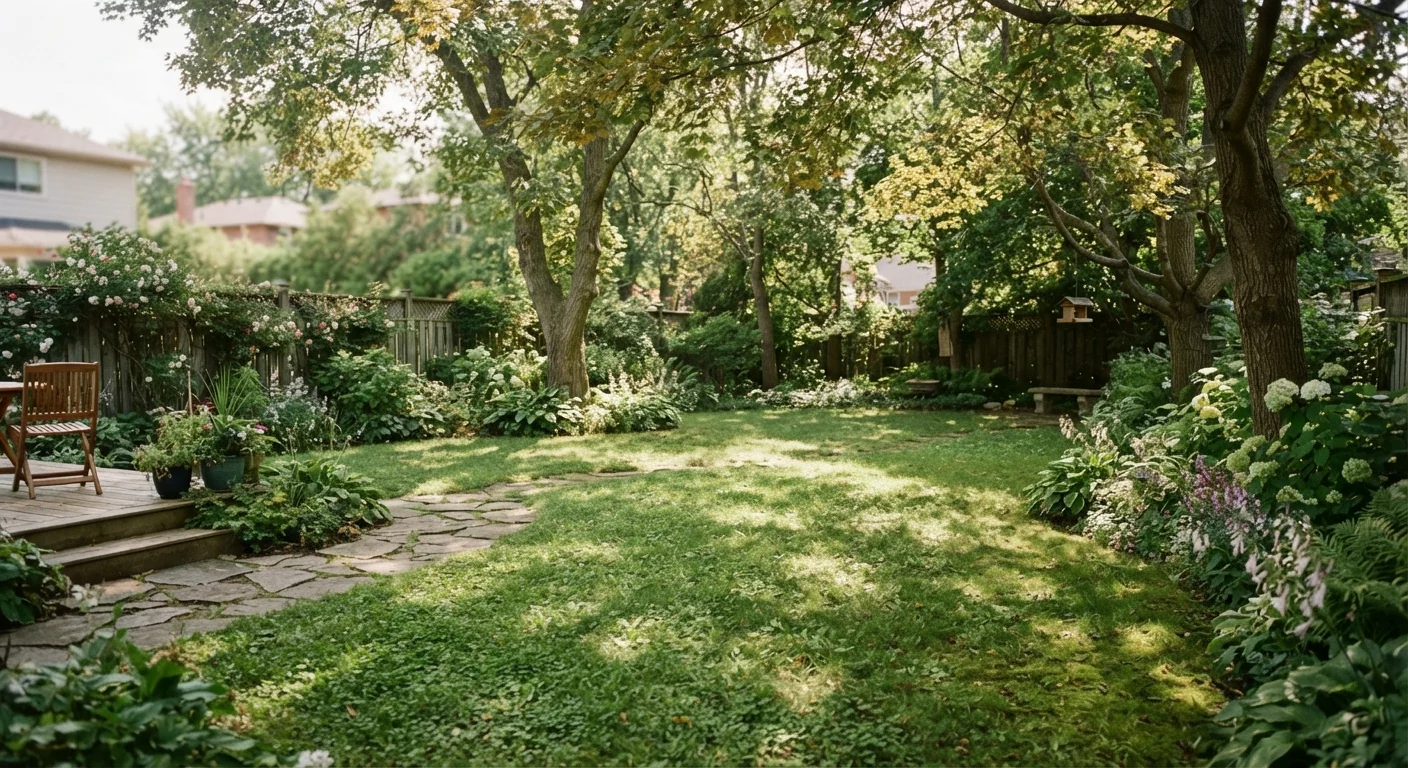
Key Takeaways
- Shade-tolerant grass species like fine fescue and St. Augustine perform far better than sun-loving varieties under tree canopies.
- Improving soil quality and reducing root competition from trees gives new grass seed a real chance to establish.
- Mowing high and watering deeply - but less frequently - helps shaded grass stay competitive.
- When shade is too dense for any grass to thrive, ground covers are a practical, attractive alternative.
- Trimming lower tree limbs to let in more filtered light can meaningfully improve turf success under trees.
What you will need
Why Shade Makes Growing Grass So Difficult
Grass is fundamentally a sun-loving plant. It relies on photosynthesis to produce the energy needed for root development, blade growth, and recovery from stress. When shade reduces available sunlight - especially beneath dense tree canopies - grass plants become stretched, thin, and vulnerable to disease and foot traffic damage.
The challenge compounds under trees because roots from large trees aggressively compete with grass for both water and nutrients in the top few inches of soil. The result is a double handicap: low light and resource competition. Understanding this helps explain why simply throwing seed at a shaded patch rarely works without addressing the underlying conditions first.
Not all shade is equal. Dappled shade from high-canopied trees is far more manageable than the dense, low-canopied shade from a Norway spruce or the permanent shade cast by a north-facing fence. The type, density, and source of shade should guide every decision you make - from grass selection to whether grass is a realistic goal at all. If turf ultimately won't take hold, ground covers beyond grass offer attractive, low-maintenance alternatives.
Know When to Stop Trying
If a shaded area receives fewer than two to three hours of direct or filtered sunlight daily, no grass variety will thrive there long-term. Continuing to reseed these spots wastes time and money. Consider transitioning to shade-adapted ground covers or mulched beds instead - your lawn will look better and require far less effort.
What You'll Need Before You Start
Gathering the right materials before you begin saves multiple trips and keeps your project moving efficiently. Shade lawn work involves both soil preparation and seeding, so plan to have everything on hand at once.
What you will need
Soil test kit or lab service
Determines pH and nutrient levels so you can amend the soil appropriately before seeding.
Shade-tolerant grass seed
The primary input - choose a variety matched to your climate and shade level.
Broadcast or drop spreader
Distributes seed evenly across the shaded area for consistent coverage.
Leaf rake
Used to lightly scratch the soil surface before seeding and to work seed into contact with soil afterward.
Slow-release, low-nitrogen fertilizer
Feeds new grass without promoting excessive leafy growth that strains shaded plants.
Pruning saw or pole saw
Removes lower tree limbs to allow more filtered light to reach the ground beneath.
Garden hose with adjustable nozzle
Allows gentle, targeted watering that keeps seedbed moist without washing seed away.
Step-by-Step: How to Establish Grass in a Shaded Area
Follow these steps in order - skipping soil preparation or choosing the wrong seed type are the two most common reasons shaded lawn projects fail. For a broader look at seasonal lawn readiness, including overseeding timing, see our spring lawn readiness walkthrough.
Time Your Seeding for Success
For cool-season grasses like fine fescue, early fall is the best seeding window - soil is warm enough for germination but cooler air reduces heat stress. Warm-season varieties like St. Augustine establish best in late spring. Seeding at the right time dramatically improves your chances in challenging shaded spots.
Assess the shade level honestly
Walk the area at several times of day and note how many hours of direct sunlight actually reach the soil. Grass generally needs a minimum of three to four hours of sunlight to survive - even shade-tolerant varieties. Fewer than two hours and you should plan for an alternative ground cover. Also note whether the shade is cast by a building (permanent) or deciduous trees (seasonal and variable).
Select a shade-tolerant grass variety
Grass type matters more than almost any other factor in shaded areas. For cool-season climates (the northern half of the US), fine fescues - including creeping red, chewings, and hard fescue - are the strongest shade performers. In warm-season climates (the South), St. Augustine grass handles shade better than bermuda or zoysia. For transition zones, consider a fine fescue blend. Avoid seeding shade areas with full-sun varieties like tall fescue in dense shade or bermuda grass in any significant shade - they will thin out and fail.
Improve the soil before seeding
Shaded areas under trees face double competition: low light and shallow, nutrient-hungry tree roots. Test your soil pH first - most grass varieties prefer a pH of 6.0 to 7.0. See our guide to soil pH for testing and amendment steps. Spread a half-inch layer of finished compost over the area and work it lightly into the top inch of soil with a rake. This improves moisture retention and gives seeds a nutrient boost independent of tree root competition.
Thin lower tree branches to let in light
Removing the lowest limbs on trees - a practice called crown raising - can significantly increase the filtered light reaching the ground. Target branches below eight to ten feet off the ground. Make clean cuts just outside the branch collar (the slightly swollen area where the branch meets the trunk) to promote healthy healing. For branches larger than four inches in diameter, hire a certified arborist. Even modest light improvement can be the difference between struggling and thriving turf.
Seed, fertilize, and establish contact
Use a spreader to apply seed at the rate shown on the label for overseeding (typically half the new-lawn rate). After spreading, use the back of a leaf rake to gently press seed into the soil - good seed-to-soil contact is critical for germination. Apply a slow-release, low-nitrogen starter fertilizer according to package directions. Shaded grass needs less nitrogen than full-sun turf; too much promotes weak, disease-prone growth.
Water carefully during establishment
Keep the seedbed consistently moist - not waterlogged - for the first two to three weeks. Light, frequent watering (a few minutes twice daily) works best during germination. Once grass reaches two to three inches, transition to deeper, less frequent watering: aim for about an inch per week. Shaded soil dries out more slowly than sunny areas, so always check moisture before running the hose to avoid overwatering and fungal issues.
Adjust your ongoing lawn care routine
Shaded grass needs different ongoing maintenance than its sun-grown counterpart. Mow at the highest recommended setting for your grass type - taller blades capture more light. Reduce foot traffic on shaded turf, which is inherently weaker and slower to recover from wear. Overseed each season as needed; shaded areas thin out faster. For compacted soil under heavy tree canopies, annual aeration helps - our lawn aeration guide explains when and how to do it effectively.
When Grass Isn't the Right Answer
Some spots simply cannot support turf, regardless of effort. Areas receiving fewer than two hours of light per day, spots directly beneath shallow-rooted trees like silver maples, or high-traffic pathways through dense shade are strong candidates for a different approach entirely.
Mulched beds with shade-loving perennials, moss gardens, or low-growing ground covers like creeping pachysandra or ajuga can be beautiful, durable alternatives that actually thrive in the conditions that defeat grass. These options also reduce the annual labor of reseeding. Think of making this switch not as giving up, but as choosing the right plant for the right place - a principle that underlies all successful gardening.