

Key Takeaways
- Perennials return each year from the same root system, reducing replanting costs over time.
- Annuals complete their full life cycle in one season, delivering continuous color until frost.
- Combining both types creates a garden with reliable structure and flexible seasonal interest.
- Perennials typically require a larger upfront cost but lower long-term maintenance effort.
- Annuals give you the freedom to adjust your garden's look without a multi-year commitment.
- Soil preparation and spacing decisions affect how well perennials and annuals grow together.
Option A
Perennials
The long-term investment that returns season after season.
Best for: Homeowners who want a low-maintenance garden framework that fills in and matures over multiple years.
Option B
Annuals
The flexible, season-long color boost you can change each year.
Best for: Gardeners who enjoy experimenting with color, variety, and fresh looks every growing season.
If you want a low-effort garden that largely takes care of itself
Perennials
Once established, perennials regrow on their own each spring, requiring only periodic division and light maintenance rather than annual replanting.
If you love changing your garden's color palette each season
Annuals
Annuals let you completely refresh your garden's look year to year, giving you creative control without a long-term planting commitment.
If you're building a new garden from scratch on a budget
Perennials
Though upfront costs are higher per plant, perennials eliminate the recurring expense of replacing an entire bed every season.
If you want maximum visual impact during a specific event or season
Annuals
Annuals bloom reliably and continuously for an entire growing season, making them ideal when you need sustained, showy color for a set period.
If you want the best of both and are willing to plan thoughtfully
Perennials
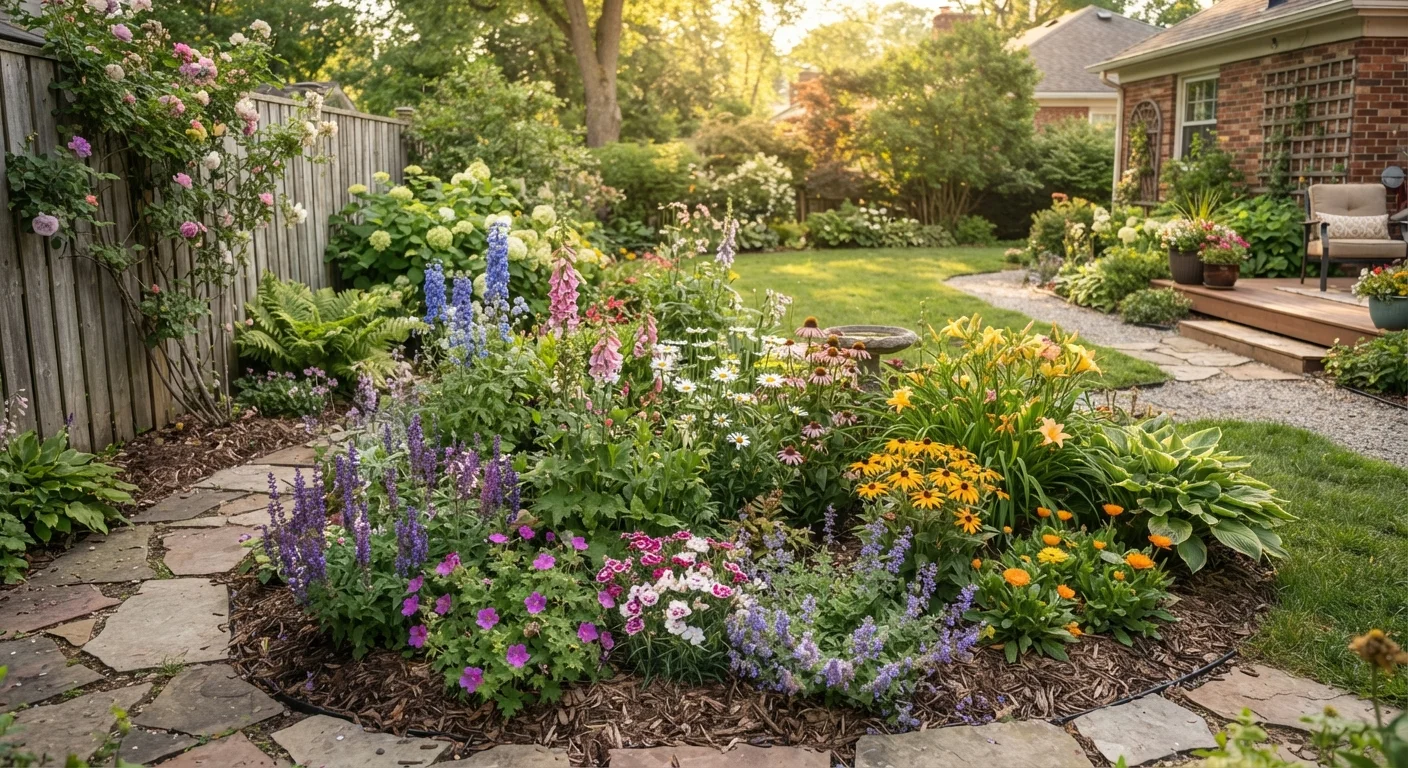
Use perennials as your garden's permanent backbone, then tuck annuals into gaps for season-long color - a strategy most experienced home gardeners rely on.
What Sets Perennials and Annuals Apart
The distinction between perennials and annuals comes down to one word: lifespan. A perennial is a plant that lives for more than two years, dying back to its roots in winter (in most climates) and resprouting each spring. A annual completes its entire life cycle - germination, flowering, seed production, and death - within a single growing season.
This difference has real consequences for how you plan, plant, and budget your garden. Perennials like coneflowers, hostas, and black-eyed Susans grow slowly at first, but reward patience by spreading, maturing, and returning reliably year after year. Annuals like impatiens, marigolds, and petunias grow fast, bloom prolifically, and give you a full season of color - then need to be replanted the following year.
A third category worth knowing: biennials, which live two years (growing leaves in year one, flowering in year two). They're less common in typical home gardens but behave somewhat like perennials in the early stages.
| Criterion | Perennials | Annuals |
|---|---|---|
| Lifespan | Returns each year | One growing season only |
| Bloom duration | 2-6 weeks per season | Spring through frost |
| Upfront cost | Higher per plant | Lower per plant |
| Long-term cost | Lower (no annual replanting) | Higher (replanted each year) |
| Maintenance | Division every few years | Replant each season |
| Design flexibility | Fixed placement long-term | Change look each year |
| Establishment time | 2-3 seasons to fill in | Fills in within weeks |
| Best used for | Garden structure, backbone | Color, containers, borders |
The Case for Perennials: Structure and Long-Term Value
Perennials form the backbone of a well-designed garden. As they establish over two to three growing seasons, they fill in bare areas, create visual depth, and reduce the soil disturbance that invites weeds. Because you're not replanting them each spring, they also reduce the yearly time and cost commitment of maintaining a bed.
That said, perennials have a narrower bloom window than annuals - most flower for two to six weeks per season. Strategic plant selection helps: choose varieties that bloom at different times so something is always in flower from early spring through fall. For example, pairing early-blooming irises with mid-season coneflowers and late-season asters keeps a bed visually active across the growing season.
Perennials also tend to need periodic division - digging up and separating crowded clumps every three to five years - to stay healthy and vigorous. This is actually a benefit: divisions give you free plants to expand other areas of your yard.
To avoid common setup missteps, see our guide to garden planning mistakes before you start digging.
2-3 years
Time for perennials to fully establish
Most perennial plants reach their mature size and full flowering potential two to three growing seasons after planting.
4-6 months
Typical annual bloom window in U.S. climates
In many regions of the United States, annuals planted after last frost will bloom continuously until the first fall frost arrives.
3-5 years
Recommended division interval for perennials
Horticultural guidelines generally suggest dividing established perennial clumps every three to five years to maintain plant health and vigor.
The Case for Annuals: Flexibility and Season-Long Color
Where perennials provide structure, annuals provide color continuity. Most annuals bloom from planting until the first frost - a span of four to six months in many U.S. climates. That sustained visual impact is difficult to achieve with perennials alone, which is why the two types work so well together.
Annuals also give you design flexibility that perennials can't match. If a color scheme doesn't work, or if your taste changes, you simply plant something different next year. This makes annuals especially useful in containers, window boxes, and border edges where you want precise control over appearance.
On the cost side, annuals are generally less expensive per plant at purchase, but that cost repeats every season. Over five years, a bed of annuals can cost considerably more than a bed of perennials that simply needs occasional division and mulching. If garden budgeting is a concern, consider our overview of raised beds vs. in-ground planting to understand how your planting setup affects overall costs.
How to Blend Both for a Garden That Works Year-Round
The most effective home gardens don't choose between perennials and annuals - they use both intentionally. A practical framework:
- Start with perennials as anchors. Plant them in groups of three or five (odd numbers look more natural), leaving space for them to spread over two to three seasons.
- Fill gaps with annuals. In the first year or two, perennial beds often have empty space as plants establish. Annuals fill those gaps beautifully while the perennials grow in.
- Plan for bloom succession. Map out which perennials bloom in spring, summer, and fall. Use annuals to cover any gaps in that timeline, especially during the long stretch of midsummer heat when many perennials take a break.
- Use annuals for containers and edges. Reserve the most visually prominent spots - pots, window boxes, front border edges - for annuals, where you want reliable, showy color all season long.
Getting your soil and timing right before planting matters enormously. Our spring lawn readiness walkthrough covers the prep steps that set any planting season up for success.
A Note on Climate and Plant Hardiness
Whether a plant is truly perennial in your yard depends on your USDA Plant Hardiness Zone. A plant labeled as a perennial in the South may behave as an annual in colder northern climates where winters are too harsh for it to survive. Before purchasing, check the hardiness zone listed on the plant tag and confirm it matches your local zone. Your local cooperative extension office is a reliable, free resource for region-specific planting guidance.