

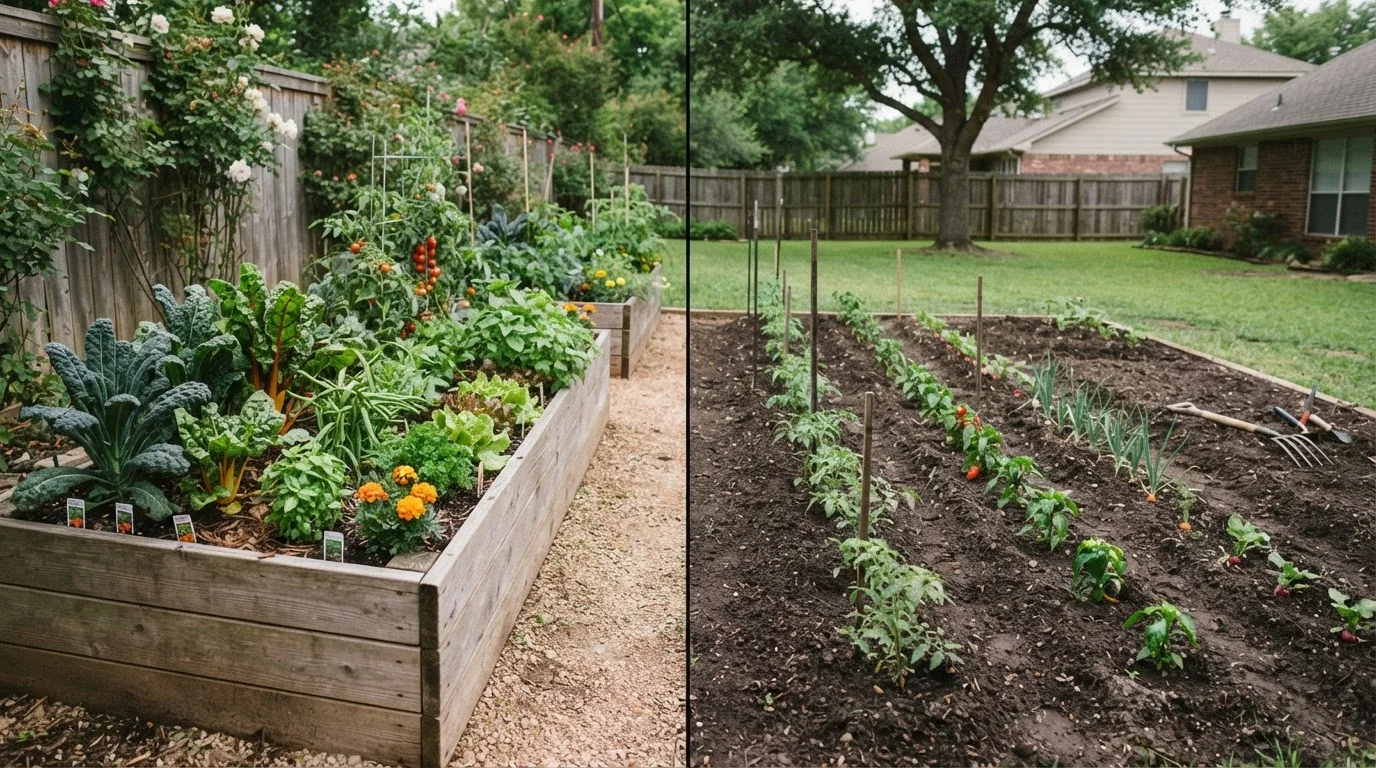
Key Takeaways
- Raised beds give you control over soil quality, drainage, and pest pressure - but require upfront investment.
- In-ground planting is lower cost to start and scales well, but success depends heavily on native soil quality.
- Raised beds warm up faster in spring, extending your growing season by a few weeks in many climates.
- Poor native soil with clay, compaction, or contamination is a strong reason to favor raised beds.
- Many home gardeners find a combination of both methods works better than committing to just one.
Option A
Raised Beds
The controlled, high-performance growing environment.
Best for: Gardeners dealing with poor native soil, drainage problems, physical limitations, or limited yard space who want precise control over growing conditions.
Option B
In-Ground Planting
The traditional, scalable approach for established yards.
Best for: Homeowners with decent native soil and space who want a low-cost, low-setup method that can expand easily each season.
If your native soil is rocky, clay-heavy, or compacted
Raised Beds
You can fill a raised bed with a custom soil mix right away, bypassing the years it might take to amend poor ground soil to a workable state.
If you want to start a large garden on a tight budget
In-Ground Planting
In-ground gardens require no frame materials or bulk purchased soil, making them significantly cheaper to establish across a wide area.
If you have back, knee, or mobility concerns
Raised Beds
A raised bed built to a comfortable height reduces bending and kneeling, making gardening more accessible and sustainable long-term.
If you're growing trees, large shrubs, or sprawling vines
In-Ground Planting
Deep-rooted and wide-spreading plants need more room than most raised beds offer; in-ground planting accommodates their natural root growth.
If you want to extend your growing season in a cooler climate
Raised Beds
Raised beds drain quickly and warm up faster in spring, letting you plant earlier and often push the season a few extra weeks compared to ground-level plots.
What Sets These Two Approaches Apart
At its core, the difference between raised beds and in-ground planting comes down to where your plant roots live - and how much control you have over that environment. A raised bed is a contained growing structure, typically made from wood, metal, or composite materials, filled with imported or blended soil that sits above the native ground level. In-ground planting, by contrast, works directly with your existing yard soil, amended as needed with compost, fertilizer, or other organic matter.
Neither method is universally superior. Each suits different yard conditions, budgets, and gardening goals. Before choosing, it helps to honestly assess what you're starting with: your native soil quality, the size of the space you want to cultivate, your physical comfort level, and how much you're willing to invest at the outset. Skipping that honest assessment is one of the most common garden planning mistakes homeowners make.
| Criterion | Raised Beds | In-Ground Planting |
|---|---|---|
| Upfront cost | Higher (materials + soil) | Lower (soil amendments only) |
| Soil control | Full control from day one | Dependent on native soil quality |
| Drainage | Excellent; dries quickly | Varies by native soil type |
| Spring warm-up speed | Faster; earlier planting possible | Slower; follows ground temps |
| Weed pressure | Generally lower at first | Higher; ongoing management needed |
| Scalability | Limited by frame footprint | Easily expanded each season |
| Deep-root plant suitability | Limited by bed depth | Unrestricted root spread |
| Ergonomics | Better with taller builds | Requires bending and kneeling |
| Watering frequency | More frequent needed | Less frequent; more moisture retention |
The Case for Raised Beds
Raised beds shine in yards where native soil is the problem. Clay-heavy soil that drains poorly, sandy soil that can't hold moisture, or ground that may have been compacted by construction - all of these are easier to work around by building up rather than digging in. You control what goes into a raised bed from the start, typically a blend of topsoil, compost, and other amendments that gives plants an immediate advantage.
Soil temperature is another real benefit. Because raised beds are exposed on multiple sides, they warm up faster in spring than ground-level plots. This can translate to planting a week or more earlier depending on your region, which matters if you're trying to maximize a short growing season. Pair a raised bed with a simple row cover and you can extend that window further.
Weed pressure is also generally lower in raised beds, especially in the first few seasons, because you're not working with weed-seed-laden native soil. Drainage tends to be better, reducing the risk of root rot in heavy rain periods. And from an ergonomic standpoint, a bed built 18-24 inches tall makes gardening considerably easier on your back and knees.
The trade-offs are real, though. Building and filling raised beds involves upfront costs - lumber or metal framing, bulk soil or compost, and hardware. A single 4×8-foot bed can range in cost depending on materials, and large-scale raised bed gardens add up quickly. Raised beds also dry out faster than in-ground plots, which may mean more frequent watering. A drip irrigation system is often worth considering for raised beds to manage moisture efficiently.
6-8 inches
Minimum raised bed depth for most vegetables
University cooperative extension programs generally recommend at least 6-8 inches of soil depth for root vegetables and 12 inches for deeper-rooted crops like tomatoes.
2-4 weeks
Earlier planting window raised beds can offer
Raised bed soil warms faster than ground soil in spring, potentially allowing earlier planting in cooler US climates according to general horticultural guidance.
4×4 or 4×8 ft
Most common raised bed dimensions
A width of 4 feet is widely recommended so gardeners can reach the center from either side without stepping in and compacting the soil.
The Case for In-Ground Planting
In-ground planting is the default for good reason: when your native soil is reasonably workable, it's a low-barrier way to grow a productive garden. There are no frames to build, no bulk soil to haul in, and no defined footprint limiting how far your garden can expand. If you're starting small and plan to grow the garden over several seasons, in-ground planting allows that kind of organic expansion without major replanning.
Soil moisture tends to stay more consistent in-ground, since the surrounding earth acts as a buffer against rapid drying. Deep-rooted plants - squash, melons, tomatoes, most perennials and shrubs - have room to spread their roots naturally, which can support stronger growth than a contained bed allows. And if you're thinking long-term about mixing perennials with seasonal annuals, in-ground plots give perennials the space they need to establish over years.
The main challenge with in-ground planting is the soil itself. Native soil across much of the US is far from ideal - it may be compacted, nutrient-poor, or drain poorly. Improving it takes consistent effort: adding compost each season, aerating compacted areas, and adjusting pH as needed. Home composting is one of the most effective and affordable ways to build in-ground soil quality over time. Weeds are also a persistent in-ground reality, and choosing the right mulch type for your beds can make a meaningful difference in suppression and moisture retention.
Making the Decision for Your Yard
The right setup often comes down to three questions: What is your soil actually like? What is your budget for setup? And what do you plan to grow? If your answers point in different directions - decent soil but a tight budget, or a generous budget but a shady, clay-heavy corner - a hybrid approach may serve you best. Many experienced home gardeners run raised beds for vegetables and herbs, where soil precision matters most, while reserving in-ground space for perennials, flowering plants, and larger crops.
Whichever method you choose, a seasonal planting plan will help you make the most of your setup from the first planting date of the year to the last. Think of your garden layout as a long-term investment - one that rewards consistent attention to soil health, water management, and thoughtful plant selection more than any particular structure you build.
A Note on Soil Contamination
If your property has older painted structures, heavy vehicle traffic history, or was previously industrial land, your native soil may contain lead or other contaminants. In these situations, raised beds filled with clean, imported soil are not just a preference - they're a genuine safety measure. Contact your local cooperative extension office or a soil testing lab to get your soil tested before planting edibles in-ground.