

Key Takeaways
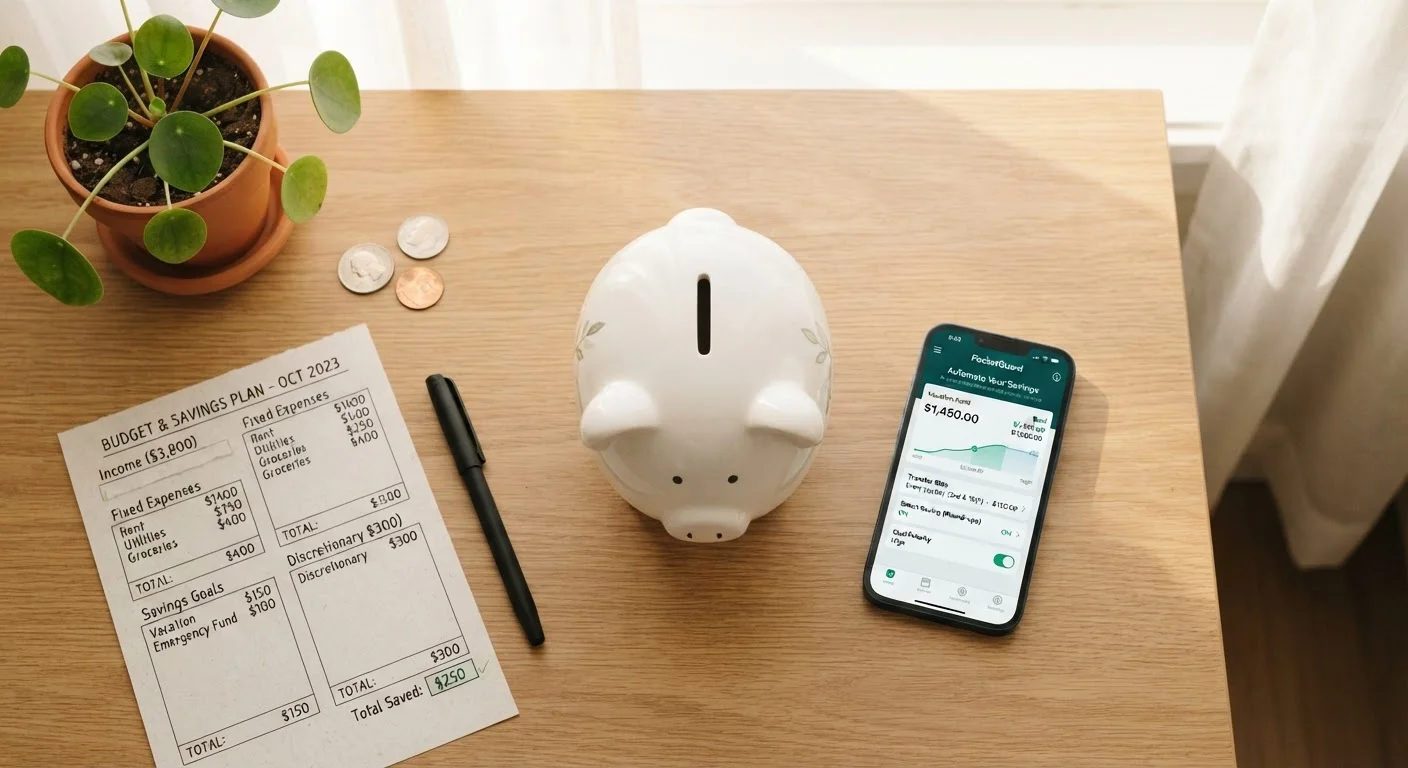
- Automated savings works by scheduling transfers so money moves before you have a chance to spend it.
- The behavioral principle behind automation is removing active decision-making from each savings event.
- Automation is most effective when your income is stable and your checking account balance is consistently healthy.
- Manual saving may be smarter during months with irregular income or unusually high expenses.
- Setting the right transfer amount matters - too aggressive a setting can trigger overdrafts.
- Automation complements a budget but does not replace one; periodic reviews keep it working correctly.
Automated Savings
Automated savings is the process of scheduling recurring, rule-based transfers that move money from a checking account into a savings account - or another designated account - without requiring any manual action each time. You set the amount, frequency, and destination once, and the transfer happens automatically on the schedule you choose. The goal is to remove the daily decision of whether to save, making consistent saving the default behavior rather than something that requires ongoing willpower.
Most banks and credit unions offer automated transfer features through online banking portals or mobile apps. Some employers also allow direct deposit splits, routing a portion of each paycheck directly to a savings account before it ever reaches checking.
How Automated Savings Actually Works
At its core, automated saving relies on a simple mechanism: a standing instruction that moves money on a schedule without you needing to initiate each transfer. You define the rules once - amount, frequency, destination account - and the financial system executes them repeatedly.
There are two common setups. The first is a bank-to-bank recurring transfer, which you configure through your bank's online portal or mobile app. The second - and arguably more effective - is a direct deposit split, where your employer deposits a portion of your paycheck directly into savings and the remainder into checking. The distinction matters: with a direct deposit split, the savings amount never touches your checking account, making it psychologically and practically harder to spend.
For a solid foundation on how checking and savings accounts interact in this process, see our explainer on checking vs. savings accounts.
73%
Americans who say saving is a financial priority
According to Federal Reserve data on household financial well-being, a large majority of Americans identify saving as important - yet many report difficulty doing so consistently without structure.
~40%
U.S. adults who could not cover a $400 emergency from savings
The Federal Reserve's Report on the Economic Well-Being of U.S. Households has consistently found that a significant share of Americans lack accessible liquid savings, underscoring why automation-driven saving habits matter.
3-6 months
Recommended emergency fund coverage in expenses
Most mainstream personal finance guidance, including from consumer financial education organizations, suggests an emergency fund covering three to six months of essential living expenses as a foundational savings target.
The Behavioral Science Behind 'Set It and Forget It'
Automation works not because it changes your math - it changes your behavior. Research in behavioral economics consistently shows that people are more likely to save when saving requires no active choice at the point of the decision. This principle is sometimes called default bias: humans tend to accept whatever option is presented as the default and stick with it.
When saving is manual, every paycheck creates an opportunity to rationalize skipping it. Unexpected expenses, a desire to spend now rather than later, or simply forgetting are all barriers. Automation sidesteps all of them. The transfer happens regardless of your mood, your spending impulses, or what else is going on in a given week.
This is also why employer-sponsored retirement plans with automatic enrollment tend to generate higher participation rates than opt-in plans - the default is already set to save.
“The best way to save is to do it automatically. If you don't see the money, you don't miss it - and over time it adds up in ways that manual saving rarely does.”
— Personal Finance Editorial Team, General principle reflected across behavioral economics research on savings defaults
When Automation Works Well - and When to Be Careful
Automated savings is most effective under specific conditions. It performs best when your income is predictable and consistent - a salaried employee, for example, knows exactly when and how much each paycheck will be, making it easy to set a transfer that won't strain the checking account. It also works better once your essential monthly expenses (rent, utilities, debt payments) are fully mapped out, so you know what genuinely remains available to save.
But automation is not a one-size-fits-all tool. Here are situations where caution is warranted:
- Irregular income: Freelancers and gig workers whose monthly earnings vary significantly may find a fixed automated transfer too aggressive in slow months, potentially triggering overdrafts or requiring the transfer to be reversed - which defeats the purpose.
- High-interest debt: If you're carrying expensive revolving debt, the question of whether to prioritize saving or debt repayment involves real trade-offs. Our guide on saving and paying down debt simultaneously walks through that decision in detail.
- Thin checking account buffers: If your checking balance is consistently close to zero after expenses, an automated transfer adds overdraft risk. Reviewing your overdraft protection options is a useful step before enabling automation.
None of these situations means you shouldn't save - they mean a rigid automated amount may need to be adjusted or supplemented with intentional manual saving during challenging months.
Building an Automated System That Stays on Track
Setting up automation is the beginning, not the end. A few practices help keep it functioning as intended over time:
- Start smaller than you think you need to. A transfer you never have to pause or reverse builds a stronger habit than an ambitious amount that repeatedly causes problems. You can always increase it as your income or expenses stabilize.
- Align timing with paydays. Schedule the transfer for the day after your direct deposit arrives - or the same day. The less time money sits in checking, the less opportunity there is to spend it first.
- Review quarterly. Life changes - income goes up, a new bill appears, a loan gets paid off. Reviewing your automated amount every few months ensures it still reflects reality. This review also fits naturally into a broader budgeting routine.
- Direct savings to the right account. A high-yield savings account will earn more interest than a standard savings account, which matters over time even if individual transfer amounts are modest.
If you're new to building these habits from scratch, our beginner's guide to saving and debt basics provides helpful context for getting started.
This article provides general financial information and education only. It is not personalized financial, investment, or tax advice. For guidance specific to your financial situation, consult a qualified financial adviser.