

Key Takeaways
- Short, positive grooming sessions work better than infrequent marathon attempts with a resistant cat.
- Reading your cat's body language helps you stop before stress escalates into scratching or biting.
- Nail trims every two to three weeks prevent overgrowth and reduce furniture damage.
- Ear checks should be gentle visual inspections - never insert anything into the ear canal.
- Consistency from kittenhood makes grooming significantly easier for both cat and owner.
What you will need
Why At-Home Grooming Matters
Cats are famously self-cleaning, but that does not mean they have no need for human help. Regular grooming reduces shedding and hairballs, helps prevent painful matting in long-haired breeds, and gives you a chance to notice early signs of skin problems, lumps, or parasites. Nail overgrowth can curve back into the paw pad - a painful condition that is entirely preventable with routine trimming. Ear checks catch infections before they become serious. Beyond the health benefits, grooming sessions build trust. Cats that accept handling calmly are easier to examine at the vet and less reactive during stressful situations at home.
If you are weighing whether to handle all grooming yourself or bring in professional help for some tasks, our article on the home vs. professional grooming decision walks through how to think about that trade-off.
What you will need
Tools You Will Need
Having the right equipment on hand before you start prevents mid-session scrambling that unsettles your cat. The list below covers the core items for a complete at-home grooming routine. You do not need to invest in every optional item on day one - start with the essentials and expand as you learn what works for your specific cat.
Slicker brush or wide-tooth comb
Removes loose fur, detangles, and distributes skin oils through the coat.
Cat nail clippers
Trim sharp nail tips cleanly without crushing the nail the way human clippers can.
Styptic powder
Stops minor bleeding quickly if you accidentally cut the quick during nail trimming.
Cotton balls
Used to gently wipe the outer ear flap during routine ear checks.
High-value treats
Reinforces calm behavior and builds a positive association with grooming sessions.
Grooming glove
An alternative to brushes for cats that are sensitive to tools touching their coat.
Step-by-Step Grooming Instructions
The steps below address brushing, nail trimming, and ear checks - the three components of a complete home grooming routine. Work through them in the order listed, pausing or ending early whenever your cat shows signs of stress. Understanding your cat's signals before diving into grooming will make each step easier; our guide on cat body language is a useful companion resource.
Choose the right time and setting
Begin when your cat is naturally relaxed - after a meal or a nap is ideal. Choose a quiet room with minimal foot traffic and close the door to reduce distractions. Place a non-slip mat or folded towel on a stable surface at a comfortable height for you. Avoid grooming when your cat is already agitated, playful, or showing flattened ears and a lashing tail. Reading your cat's mood before you start is the single most effective way to prevent a difficult session. Our guide on reading your cat's body language can help you identify the right moment.
Introduce tools gradually
Let your cat sniff the brush, comb, or nail clippers before using them. Place the tool near your cat for a day or two before the first session if your pet is particularly wary. For cats new to grooming, begin by simply touching them with the back of the brush without stroking, then work up to light passes. Pair every exposure with a treat so the tool becomes a neutral or positive cue rather than a threat. Rushing this step is the most common reason grooming sessions turn adversarial.
Brush the coat
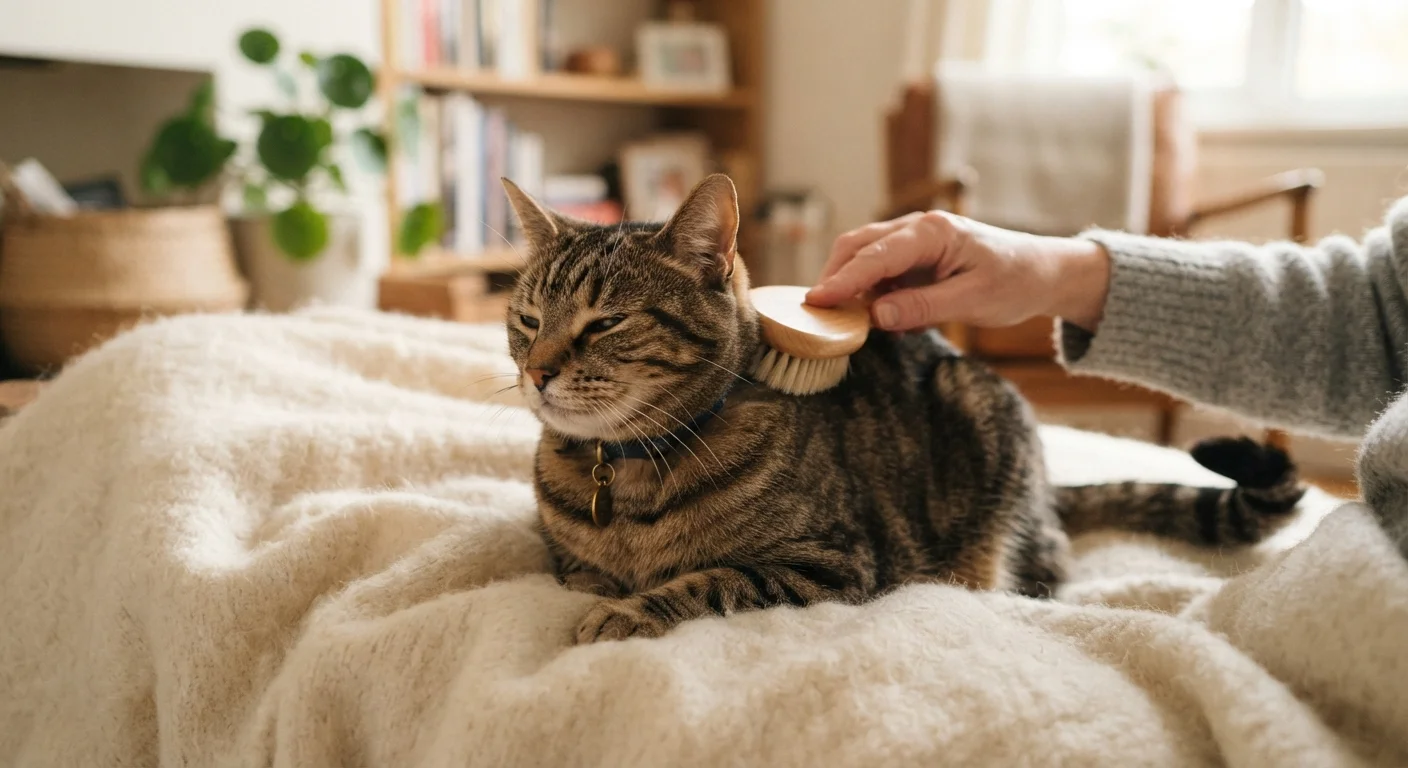
Work in the direction of fur growth using gentle, short strokes. Start at the neck and shoulders - areas most cats enjoy - then move toward the back and sides. Approach the belly and inner legs last, as these are typically more sensitive. For short-haired cats, a weekly brushing is usually sufficient. Long-haired cats benefit from brushing several times per week to prevent mats. If you encounter a mat, hold the fur at the base with your fingers before combing to avoid pulling the skin. Severe mats may require professional help rather than home detangling. Keep sessions to five or ten minutes, ending while your cat is still calm.
Trim the nails
Gently press one paw pad between your thumb and forefinger to extend the claw. Identify the pink quick - the blood vessel inside the nail - and clip only the clear, curved tip, staying at least two millimeters from the quick. Trim one or two nails per session if your cat tolerates it, or spread the full trim across several days. You do not need to trim all nails in one sitting. If you accidentally cut the quick and see bleeding, apply a small amount of styptic powder and gentle pressure. Most cats need trims every two to three weeks.
Check and clean the ears
In good lighting, gently fold back each ear flap and look inside. Healthy ears appear light pink, are odor-free, and have minimal debris. A small amount of pale tan wax is normal. Use a dry cotton ball to wipe only the outer flap and the visible creases - do not insert anything into the ear canal. If you notice dark brown or black discharge, a strong odor, redness, or your cat shaking its head frequently, these may indicate an infection or mite infestation and warrant a veterinary visit rather than home treatment. Ear checks are observation and light cleaning only.
End on a positive note and reward generously
Stop the session before your cat signals she has had enough - look for tail flicking, skin twitching, or turning the head toward your hand. Offer a treat immediately after you finish, while your cat is still calm. Follow grooming with a brief play session or simply let your cat rest undisturbed. Over repeated sessions this reward pattern teaches your cat that grooming ends predictably and pleasantly. Cats with consistent early grooming exposure tend to accept the routine with far less resistance as adults - a good reason to start gentle handling early if you have a kitten. See our new cat setup guide for more on building positive habits from the start.
Shorter Sessions Beat Longer Ones
A five-minute grooming session that ends positively does far more for your cat's long-term tolerance than a twenty-minute session that ends in a standoff. Aim for brief, frequent contact rather than covering everything in one go. Most cats acclimate to grooming within a few weeks when sessions are kept short and rewards are consistent.
When to Involve a Veterinarian or Professional Groomer
Some grooming situations fall outside what most owners can or should handle at home. Severely matted fur - especially when close to the skin - may require professional clipping under sedation to avoid cutting the cat. Skin wounds, inflamed areas, or signs of parasites discovered during brushing should prompt a veterinary call rather than home treatment. Cats that remain highly reactive despite patient desensitization efforts may benefit from a veterinary behavioral consultation or a professional groomer experienced with difficult cats.
If your cat consistently shows signs of pain or extreme fear during routine handling, review our article on signs your cat may be in pain - what looks like stubbornness can sometimes signal an underlying health issue. Building a calm, consistent routine at home remains the goal, but recognizing the limits of home care is equally important.
This article is for general informational purposes only and does not constitute veterinary advice. Always consult a licensed veterinarian for concerns about your cat's health, behavior, or specific medical needs.