

Key Takeaways
- A cat's tail position is one of the most reliable indicators of their current emotional state.
- Ear and eye signals together give a clearer picture than either cue alone.
- Context matters - the same signal can mean different things in different situations.
- Slow blinking from your cat is generally a sign of trust and relaxed comfort.
- Stress signals like flattened ears or a puffed tail warrant a calm, low-pressure response.
- Persistent unusual body language may signal pain or illness and deserves veterinary attention.
Feline Body Language
Feline body language is the system of physical signals - tail position, ear orientation, eye shape, posture, and whisker placement - that cats use to communicate their emotional state. Unlike dogs, cats evolved as both predator and prey, which makes their signals more subtle and context-dependent. Learning to read these cues helps owners respond to their cat's needs more accurately and build a stronger bond.
Cats have a broader behavioral repertoire for intraspecies communication than for human interaction; many signals were not originally 'designed' for us to read, which is why misinterpretation is so common.
The Tail: Your Cat's Emotional Barometer
If you want to start reading your cat, start at the tail. It's one of the most expressive parts of a cat's body and changes position rapidly in response to mood.
- Tail held high, tip slightly curled: A confident, friendly cat. This is a greeting signal - cats raise their tails when approaching someone they trust.
- Tail low or tucked: Submission, fear, or discomfort. A cat carrying their tail low is not feeling secure in the moment.
- Puffed or bristled tail: Fear or agitation. The cat is trying to appear larger - give them space.
- Slow, gentle sway: Focused attention, often seen while watching prey or something interesting.
- Rapid lashing: Irritation or overstimulation. Stop what you're doing and let the cat decompress.
For a deeper look at how tail signals connect to broader feline behavior patterns, see our article on why cats knock things off tables and other quirky behaviors explained.
Practice Reading Your Cat Daily
Pick a quiet moment each day to simply observe your cat without interacting. Notice their default ear position, how they carry their tail when moving through the house, and what their eyes look like when fully relaxed. Building this baseline makes it much easier to spot changes that might signal stress or discomfort.
Ears and Eyes: Reading Mood From the Face
A cat's ears and eyes work together to paint a clear picture of how they're feeling. Neither signal should be read in isolation.
Ear Positions
- Forward-facing ears: Alert, curious, and engaged.
- Slightly rotated outward: Mild uncertainty or monitoring for sound.
- Flattened sideways ("airplane ears"): Anxiety or growing irritation.
- Pinned flat against the head: Fear, aggression, or defensive posture. Approach cautiously or not at all.
Eye Signals
- Dilated pupils: Excitement, fear, or play mode - context determines which. Low light also dilates pupils naturally.
- Constricted pupils in normal light: Confidence, contentment, or occasionally aggression if paired with a hard stare.
- Slow blink: A well-documented signal of trust and relaxation. Researchers have studied this response and found that slow blinking by owners can encourage cats to approach - a simple way to build rapport.
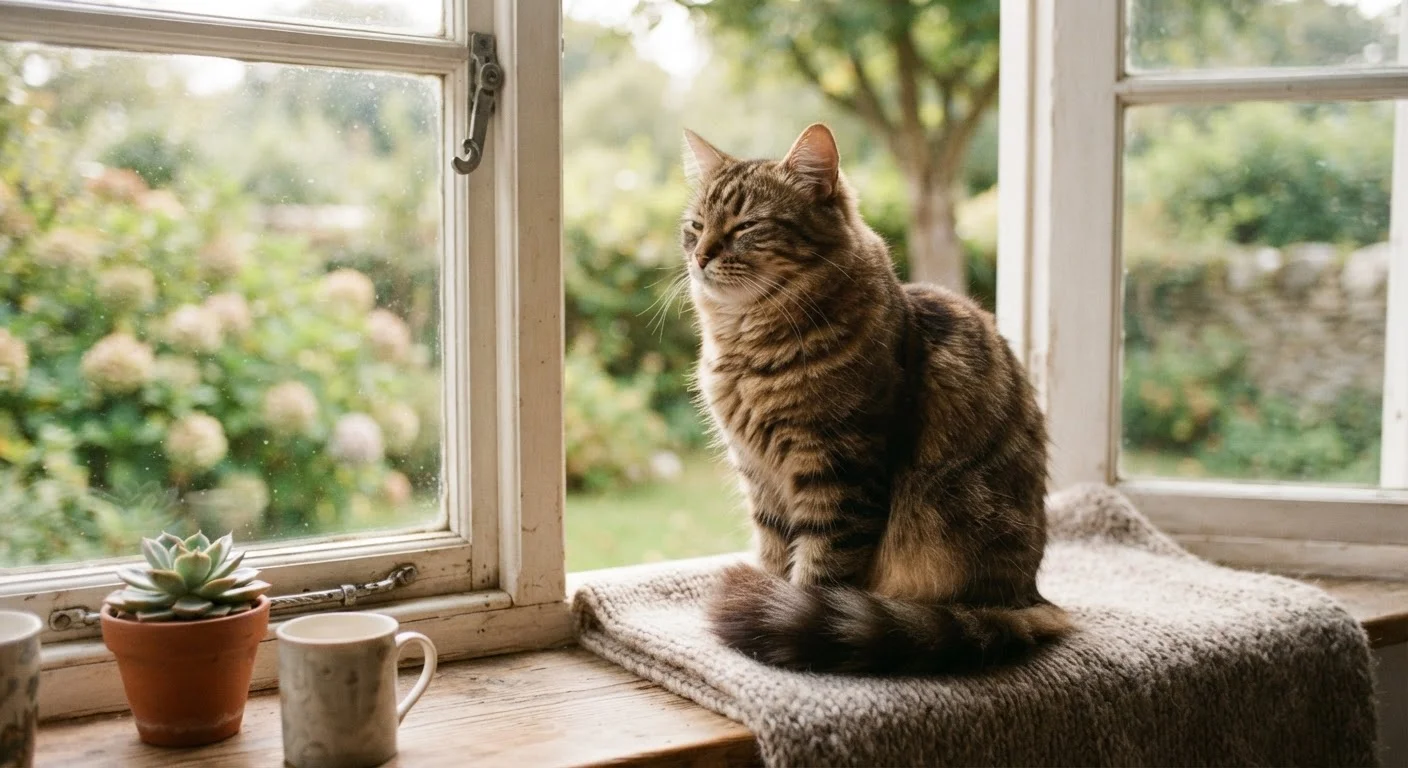
- Half-closed eyes while resting: Deeply comfortable and at ease.
Slow Blinking: What the Research Says
A study published in Scientific Reports found that cats were more likely to approach an unfamiliar person who had performed slow blinks toward them compared to a person who maintained a neutral expression. While this is a single study and more research is ongoing, the slow blink remains a widely observed and discussed signal among animal behaviorists.
Posture and Touch: What the Whole Body Says
Tail and face tell most of the story, but the rest of your cat's body fills in the details.
Relaxed and Comfortable
A cat lying stretched out, curled in a loaf position, or rolling onto their side is signaling they feel safe. A belly-up posture is a high-trust signal - but it doesn't automatically mean your cat wants to be touched there. Many cats will swat if their stomach is rubbed, even while appearing relaxed.
Defensive or Aroused
An arched back paired with a puffed tail and sideways stance is the classic fear-aggression display. This cat is trying to look big because they feel threatened. A crouched, low posture with the head pulled in often signals anxiety or submission rather than aggression.
Headbutting and Rubbing
When your cat presses their head or cheek against you, they're scent-marking - depositing pheromones from facial glands as a sign of affiliation. It's an active expression of belonging and comfort with your presence.
Changes in normal body language can sometimes signal physical discomfort. Our article on signs your cat may be in pain covers the behavioral changes to watch for and when to contact a vet.
Putting It All Together: Context Is Everything
Body language signals rarely appear in isolation. A cat with dilated pupils, forward ears, and a high tail is likely excited and playful. The same dilated pupils combined with flat ears and a low posture suggest fear. Always scan the full body before drawing a conclusion.
Knowing your individual cat is equally important. Some cats are naturally more vocal or demonstrative; others communicate in barely-perceptible shifts. Spend time observing your cat in calm, everyday situations - that baseline makes it much easier to notice when something is off.
If you notice sudden changes in your cat's typical body language - especially withdrawal, hunched posture, or unusual reactions to touch - that can be a signal worth discussing with a veterinarian. Cats are skilled at hiding discomfort, and behavioral shifts are often the earliest sign that something needs attention. You can also explore litter box problems most cat owners misread as another area where cat behavior often carries overlooked meaning.
This article provides general educational information about cat behavior and is not a substitute for professional veterinary advice. If you have concerns about your cat's health or behavior, consult a licensed veterinarian.