

Key Takeaways
- Never introduce cats face-to-face immediately - scent exchange comes first.
- Keep the new cat in a separate room for at least several days before any visual contact.
- Hissing and swatting during early meetings is normal; sustained aggression is not.
- The entire introduction process typically takes two to four weeks, sometimes longer.
- Each cat should have its own food bowl, litter box, and resting spots throughout the home.
- Rushing the process is the most common reason introductions fail.
What you will need
Why the Slow Introduction Method Works
Cats are territorial animals that rely heavily on scent to map their environment and assess safety. When a new cat is suddenly placed in an established cat's territory, the resident cat experiences it as a direct threat - even if the newcomer is friendly and non-aggressive. The result is often prolonged hiding, stress-related illness, or outright fighting.
The structured, phased approach used in this guide works because it gives both cats time to process each other's presence in a low-stakes way before any physical contact occurs. Research in feline behavior consistently supports gradual introductions as the most effective way to reduce long-term conflict between cats sharing a home.
It's worth noting that this process isn't just about preventing aggression - it's about reducing anxiety for both animals. Stress in cats can manifest as changes in appetite, litter box avoidance, over-grooming, or hiding. Keeping the introduction pace comfortable for each individual cat minimizes these stress indicators significantly.
Vet Check Before You Begin
Before bringing a new cat home, have it examined by a veterinarian and confirm it is up to date on vaccinations and free of parasites or contagious illness. Introducing a sick cat to a resident cat puts both animals at risk. Keep veterinary records for both cats accessible in case health concerns arise during the transition.
If you are also navigating other household changes alongside a new cat - such as a new baby - see our guide to preparing your cat for a new baby for additional strategies on managing multiple transitions at once.
What You'll Need Before You Start
Gathering the right resources before the new cat arrives makes every subsequent phase easier to manage. Review the prerequisites and tool list below, and set up the new cat's room fully before bringing the animal home.
What you will need
Soft cloths or socks for scent swapping
Used to transfer each cat's scent to the other's environment without direct contact.
Tall baby gate or screen door
Allows cats to see and smell each other at a safe distance during the visual introduction phase.
Interactive wand toy
Keeps both cats engaged in positive play during supervised shared-space sessions.
High-value treats
Used to build positive associations during scent swapping and supervised face-to-face meetings.
One frequently overlooked detail: if your resident cat has had the home to itself for a long time, it may take longer to adjust than a cat that has previously lived with other animals. Cats accustomed to being the sole pet may need extra patience and enrichment during the transition period.
Step-by-Step: The Introduction Process
Follow the steps below in order. Resist the urge to move forward before both cats are genuinely ready - the most common reason introductions fail is rushing from one phase to the next too quickly.
Set up a dedicated space for the new cat
Before the new cat arrives, prepare a separate room - a spare bedroom or bathroom works well - with everything it needs: food, fresh water, a litter box, bedding, and a few toys. This room will serve as the new cat's home base for the first phase of the introduction. Keep the door closed at all times so the resident cat cannot enter.
Allow scent exchange under the door
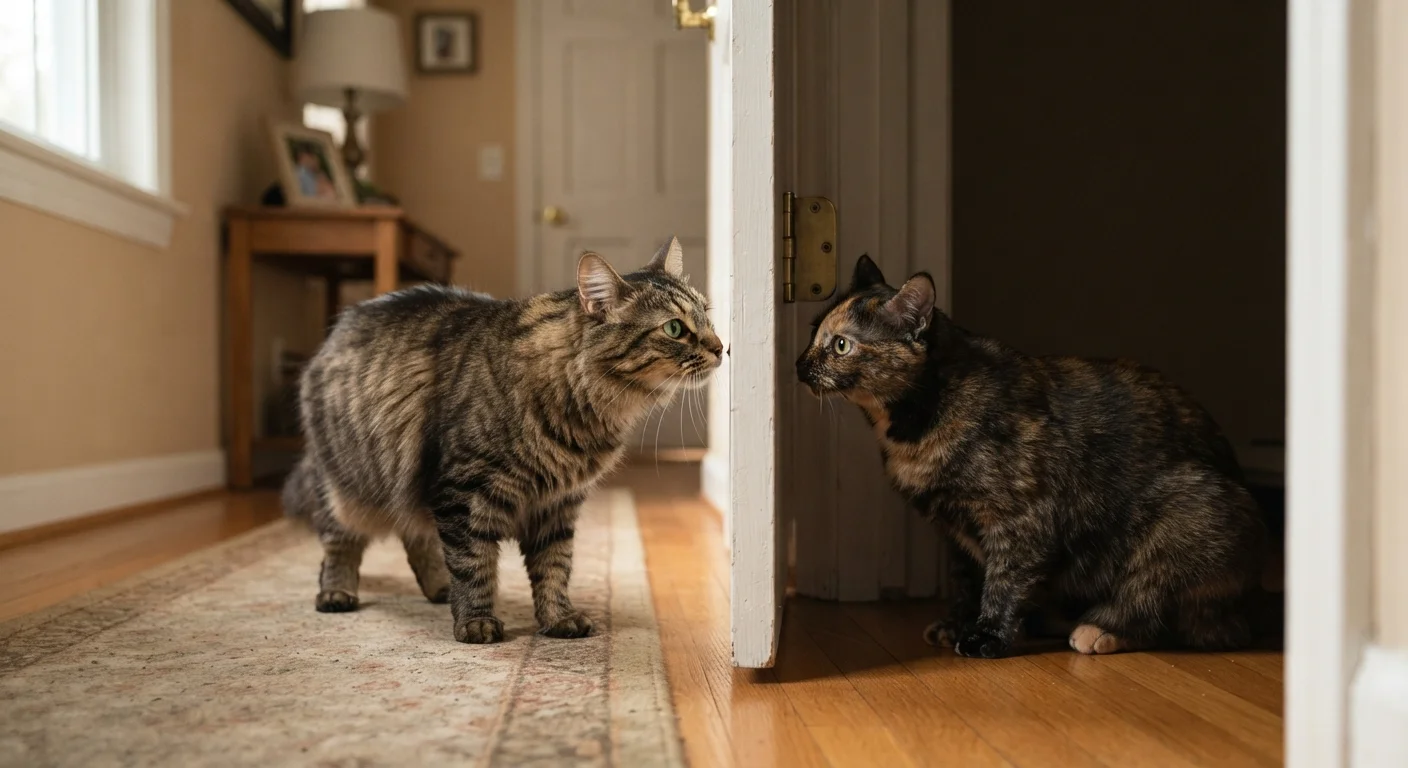
For the first several days, let both cats sniff and investigate each other under the closed door. This is normal exploratory behavior - hissing or swatting at the gap is common early on. Feed both cats on opposite sides of the door to build a positive association between the other cat's scent and something enjoyable. Gradually move the bowls closer to the door over several feeding sessions.
Swap living spaces temporarily
Once both cats seem calm at the door - no prolonged hissing, eating comfortably - let each one explore the other's territory while the other cat is elsewhere. This scent-swapping exercise gives both animals a richer understanding of each other before any face-to-face meeting. Rotate them once or twice daily for one to two days.
Introduce a visual barrier meeting
When both cats are reliably calm during scent exchanges, open the door slightly or use a tall baby gate or cracked door secured with a hook to allow them to see each other. Offer high-value treats to both cats simultaneously to keep the mood positive. Keep these sessions short - five to ten minutes - and watch body language carefully. Relaxed posture, slow blinking, or simple curiosity are good signs. Puffed tails, flat ears, and growling mean both cats need more time apart.
Allow supervised shared access
Once both cats consistently appear calm during barrier meetings, open the space for fully supervised, free-roaming sessions. Stay present and observed. Provide multiple vertical spaces - cat trees, shelves, or cleared counters - so the resident cat has elevated territory to claim if needed. Keep initial sessions under 15 minutes and gradually extend them as both cats demonstrate relaxed behavior around each other.
Transition to unsupervised cohabitation
Only when both cats can spend extended supervised time together without sustained aggression should you allow them to be unsupervised. Even then, continue providing separate feeding stations and multiple litter boxes to prevent resource-based conflict. Some cats become close companions; others remain politely tolerant. Both outcomes are acceptable - the goal is a household where both cats feel safe.
Use Scent as Your Most Powerful Tool
Cats navigate their world primarily through smell. Swapping bedding or rubbing a cloth on each cat's cheeks and then placing it near the other cat's food bowl is one of the most effective ways to build positive scent associations. Doing this consistently during the isolation phase can meaningfully shorten the overall adjustment period.
Do Not Force Physical Contact
Holding cats close together or placing them in the same space before they are ready can cause serious injury and create lasting fear or hostility between them. Always let each cat approach interactions voluntarily and at its own pace. If either cat shows sustained aggression - not just brief hissing - separate them and slow the process down.
Troubleshooting Common Setbacks
Even with a careful approach, setbacks happen. Here's how to handle the most common ones:
- One cat won't eat near the door: Increase the distance between the bowls and the door. Progress only when both cats eat calmly at whatever distance they're currently comfortable with.
- Sustained hissing or growling during visual meetings: Return to the scent-swapping phase for several more days. Some cats need two to three weeks of scent familiarity before visual contact is comfortable.
- A chase or fight breaks out: Separate the cats immediately and calmly - avoid yelling or physical punishment, which adds more stress. Return to the previous phase and slow down considerably. If serious injury occurs, consult your veterinarian.
- The resident cat stops using the litter box: This may indicate stress. Make sure litter boxes are plentiful and positioned so neither cat can be ambushed while using one. Consult a veterinarian if the behavior persists beyond a few days.
Some cats take months to fully accept a new housemate, and that's within the normal range. The presence of multiple safe resting spots, vertical territory, and consistent routine all support a successful long-term relationship between cats sharing a home.