

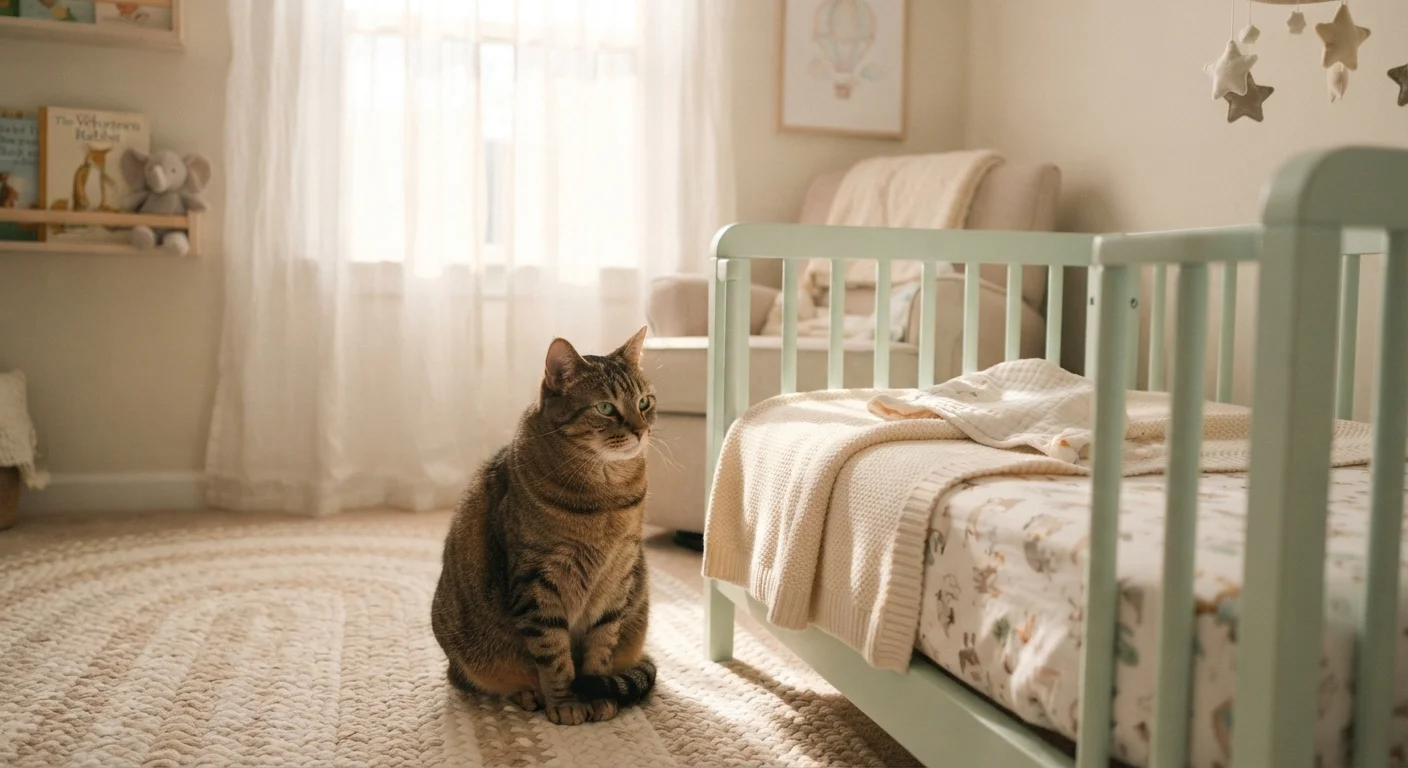
Key Takeaways
- Start preparing your cat weeks before the baby arrives, not the day you come home from the hospital.
- Gradual exposure to baby sounds, scents, and equipment reduces your cat's stress significantly.
- Establishing clear boundaries protects both your cat and your newborn without banishing your pet.
- Keeping your cat's routine as consistent as possible helps prevent anxiety-driven behavior changes.
- A veterinary checkup before the baby arrives ensures your cat is healthy and up to date on vaccines.
Summary
22 items · 30-60 minutes to review and begin implementing
Why Advance Preparation Makes All the Difference
Cats are creatures of habit. Sudden changes to their territory, routine, or household dynamics can trigger anxiety, unwanted behaviors, and even health issues. A new baby represents one of the biggest disruptions a cat can face - unfamiliar sounds, smells, equipment, and a dramatic shift in your attention all arrive at once. The good news is that most cats can adjust well when their owners plan thoughtfully ahead of time.
The key principle is gradual exposure. Rather than overwhelming your cat on the day you bring the baby home, you can introduce each new element - the nursery furniture, the baby's scent, the sounds of crying - over weeks or even months. This gives your cat time to build neutral or positive associations instead of fear-based ones.
This checklist is designed to be worked through before and after the baby arrives, giving you a clear roadmap at every stage. If you have a senior cat or a cat with existing health concerns, consider reading our guide on caring for a senior cat alongside this one, as older cats may need additional support during major transitions.
Before-Baby Preparation
Space and Boundaries
The First Introduction
Ongoing Routine and Wellbeing
Setting Up Your Home and Tools
Before you start working through the checklist, it helps to gather the right resources. Physical barriers and environmental enrichment tools do a lot of the heavy lifting when it comes to keeping both your cat and your baby safe.
Crib tent or nursery gate
Creates a physical barrier that keeps your cat out of the sleeping space while allowing air flow.
Baby sound recordings
Used during pre-arrival desensitization to familiarize your cat with infant vocalizations.
Pheromone diffuser
Releases synthetic calming signals that may reduce anxiety in cats during major household changes.
Elevated cat perch or hideaway
Gives your cat a safe elevated retreat where they can observe the household without feeling cornered.
You don't need to invest in everything at once. Start with the essentials - a reliable nursery barrier and a dedicated cat retreat - and add calming supports as needed based on how your cat responds. For general guidance on setting up your cat's environment well, our article on first-time cat setup covers the foundational principles that apply here too.
Never Leave Cat and Baby Alone Together
Even the most gentle, well-socialized cat should never be left unsupervised with a newborn or infant. Cats may curl up near a sleeping baby seeking warmth, which poses a potential safety risk. Always ensure the nursery door is closed or gated when an adult is not present in the room.
Don't Ignore Stress Signals
A cat showing persistent signs of stress - such as hiding for extended periods, refusing food, or urinating outside the litter box - needs veterinary attention, not punishment. These behaviors often reflect anxiety, which is treatable. Addressing them early prevents them from becoming entrenched habits.
After the Baby Comes Home: Sustaining the Balance
The first few weeks are the most unpredictable - for you and your cat. Your schedule is disrupted, your attention is divided, and your cat is processing a completely new household reality. During this period, consistency in the small things matters most.
Try to keep your cat's mealtimes, grooming sessions, and play windows as close to their normal schedule as possible. Even 10 minutes of focused interactive play each day can preserve your bond and help your cat feel secure. Grooming is another underrated tool - regular brushing reduces dander in the home and gives your cat positive one-on-one time. Our at-home grooming guide can help if this is new territory for you.
As your baby grows into a curious crawler and then a toddler, the dynamic between them and your cat will continue to evolve. Teaching children early how to interact gently with animals is as important as any physical boundary you set up. The goal is a household where your cat feels safe enough to engage rather than hide - which benefits your child's relationship with animals for years to come.
This article is for general informational purposes only and does not constitute veterinary or medical advice. Always consult a qualified veterinarian for guidance specific to your cat's health and behavior, and speak with your healthcare provider about any concerns related to pet safety during pregnancy or infancy.