

Key Takeaways
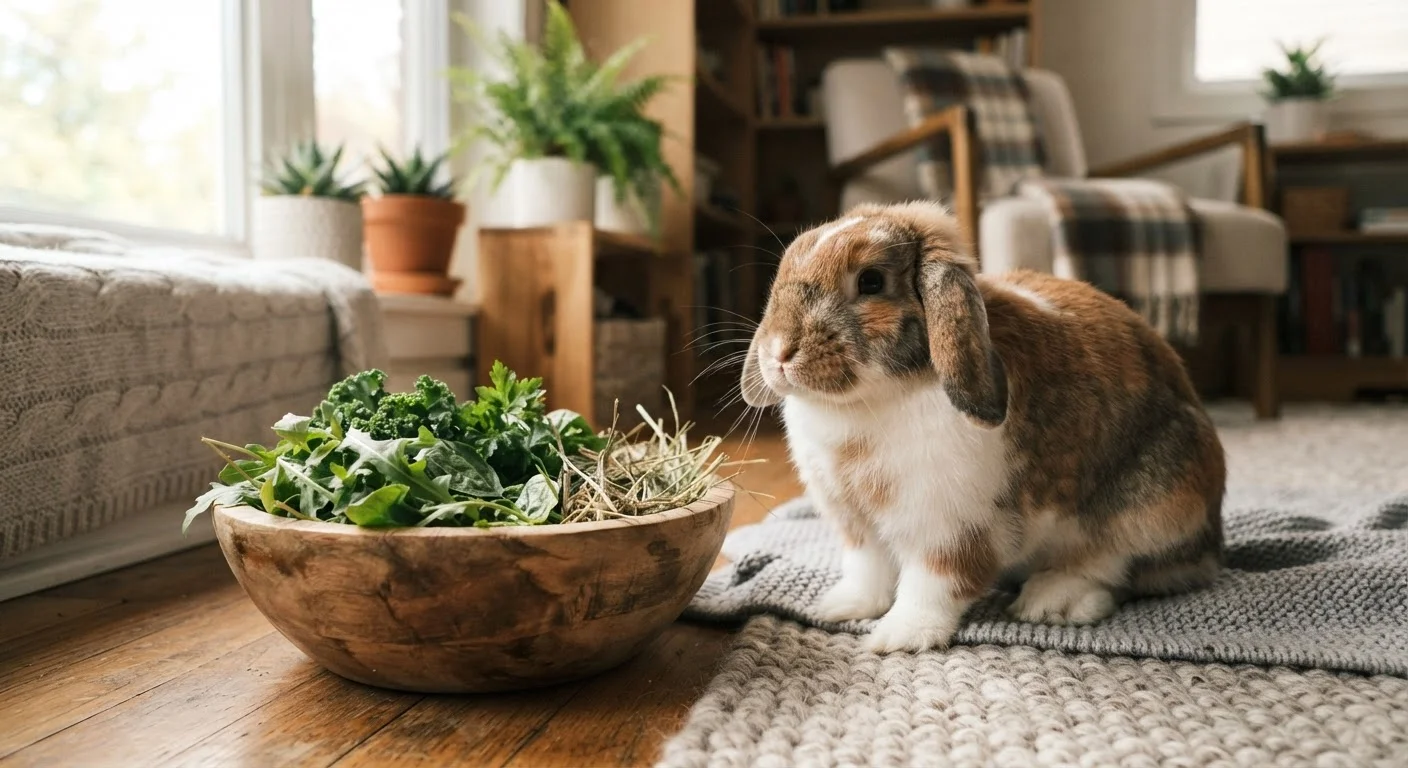
- Unlimited grass hay - not pellets - should make up the majority of a rabbit's daily diet.
- Fresh leafy greens are a valuable supplement, but some common vegetables are unsafe for rabbits.
- Several everyday foods including iceberg lettuce, avocado, and fruit seeds can be toxic to rabbits.
- Pellets are a useful supplement for young rabbits but should be rationed carefully for adults.
- Fresh, clean water must be available at all times - dehydration is a serious health risk.
Why Rabbit Nutrition Is Often Misunderstood
Many new rabbit owners picture a diet of pellets and the occasional carrot - a picture shaped more by cartoons than veterinary science. In reality, rabbits have a highly specialized digestive system that depends on continuous fiber intake to function properly. Feeding the wrong foods, or too much of a good thing, can lead to serious gastrointestinal problems.
Understanding what rabbits actually need helps prevent some of the most common health issues owners encounter. If you're still in the planning stage, our guide on setting up a safe rabbit habitat covers the broader care picture alongside nutrition.
The Core Diet: Hay Above Everything Else
Grass hay - timothy, orchard grass, or meadow hay - should make up roughly 80 to 90 percent of an adult rabbit's diet. Hay does more than provide calories: it keeps the digestive tract moving, prevents dangerous blockages called GI stasis, and naturally wears down continuously growing teeth. A rabbit without adequate hay access is at meaningful health risk.
Alfalfa hay is appropriate for young rabbits under six months old because of its higher calcium and protein content, but adult rabbits should transition to grass hay as their primary source. Alfalfa fed in excess to adults can contribute to urinary tract problems.
Keep Hay Fresh and Appealing
Rabbits are more likely to eat hay consistently when it's dry, fragrant, and loosely piled rather than packed tightly into a rack. Store hay in a breathable container away from moisture. Offering a small amount of fresh hay several times a day can encourage a reluctant eater to consume more.
Fresh Greens, Pellets, and Treats: Getting the Balance Right
Once hay needs are covered, fresh leafy greens are the next most important component. Aim for a variety - romaine lettuce, cilantro, parsley, arugula, and leafy kale (in modest quantities) are generally well tolerated. Introduce new greens one at a time to watch for loose stools or digestive upset. A rough guideline often cited by rabbit welfare organizations is about one packed cup of greens per two pounds of body weight per day, though your rabbit's individual needs may vary - consult your veterinarian for personalized guidance.
Pellets can be a useful part of the diet, particularly for younger or underweight rabbits, but they're often overfed. For healthy adult rabbits, pellets are a supplement - not a staple. Look for plain, high-fiber varieties without added seeds, nuts, or colored pieces.
Fruits like apple slices (no seeds), blueberries, or strawberries can serve as occasional treats, but their sugar content means small amounts, no more than once or twice a week. It's worth checking our article on small pet myths that can harm your animal, which addresses some widespread misconceptions about rabbit feeding habits.
80-90%
Portion of diet that should be grass hay
Rabbit welfare organizations consistently recommend that hay make up the vast majority of an adult rabbit's daily food intake.
~1 cup
Fresh greens per 2 lbs of body weight daily
This general guideline is widely cited by rabbit care resources, though individual needs vary - confirm appropriate amounts with a veterinarian.
Foods to Keep Far Away From Your Rabbit
Some foods that seem harmless - or even healthy - are genuinely dangerous to rabbits. Knowing this list is as important as knowing what to feed.
- Iceberg lettuce: Contains lactucarium, a compound that can be harmful in larger quantities, and offers almost no nutritional value.
- Avocado: All parts of the avocado plant contain persin, which is toxic to rabbits.
- Onions, garlic, and leeks: These can damage red blood cells and cause serious systemic illness.
- Apple seeds and fruit pits: Contain cyanogenic compounds - remove all seeds before offering any fruit.
- Rhubarb: Toxic to rabbits and should be kept entirely out of reach.
- Processed human foods: Crackers, bread, cereal, chocolate, and sugary snacks have no place in a rabbit's diet.
- Potatoes and other starchy vegetables: High starch content can disrupt gut flora and cause digestive distress.
If you suspect your rabbit has eaten something toxic, contact a veterinarian promptly. Don't wait for symptoms to worsen.
Water, Monitoring, and When to Call a Vet
Fresh water should be available at all times. Both sipper bottles and heavy ceramic bowls work - what matters is that the source is cleaned and refilled daily. Rabbits that aren't drinking enough are at risk of kidney problems and GI complications.
Healthy digestion in rabbits also involves cecotropes - soft, nutrient-rich droppings that rabbits consume directly from their hindquarters. This is normal and important; do not try to prevent it. If you notice your rabbit isn't eating cecotropes, or you see consistently soft or absent droppings, consult a veterinarian.
Diet changes should always be gradual. A sudden shift can upset the delicate bacterial balance in a rabbit's gut, leading to diarrhea or, more seriously, GI stasis - a life-threatening slowdown of digestive motility. When in doubt, your exotic animal or rabbit-savvy veterinarian is the right resource for diet questions specific to your pet.
This article is for general informational and educational purposes only and is not a substitute for professional veterinary advice. Always consult a qualified veterinarian for guidance specific to your rabbit's health and dietary needs.