

Key Takeaways
- Rabbits need a minimum enclosure of 8 square feet, with daily free-roaming time outside it.
- Electrical cords, toxic plants, and small chewable objects must be removed before a rabbit roams freely.
- Hay should make up the majority of a rabbit's diet and also serves as essential bedding material.
- Rabbits are sensitive to temperature extremes - keep their space between 60°F and 72°F.
- A predictable daily routine reduces stress and supports long-term rabbit health.
What you will need
Why Indoor Habitat Setup Matters More Than Most Owners Expect
Rabbits are often assumed to be simple, low-effort pets - a belief that leads many first-time owners to underestimate what a healthy living environment actually requires. In reality, the way you set up your rabbit's habitat directly affects their physical health, emotional wellbeing, and lifespan. Poor enclosure choices, inadequate space, or overlooked hazards are among the most common causes of preventable injury and illness in pet rabbits.
Understanding what rabbits actually need - rather than what many pet store setups suggest - is the first step. Many commercially sold cages marketed for rabbits are far too small for a rabbit to live in comfortably. Rabbits are active, curious animals that need room to run, jump, and explore. If you're also considering what your rabbit should eat, our guide on what to feed a pet rabbit covers the nutritional side of rabbit care in detail.
Rabbits Are Not Low-Maintenance Pets
Despite a common misconception, rabbits require significant daily care, social interaction, and a carefully prepared environment. Keeping a rabbit in a small cage with minimal stimulation can lead to serious physical and behavioral problems. Before bringing a rabbit home, review common myths about small pets so you're working from accurate information from the start.
With the right setup, rabbits can be deeply rewarding companions. The steps below walk you through everything you'll need to do before your rabbit comes home - and what ongoing maintenance looks like once they've settled in.
What you will need
What You'll Need Before You Start
Gathering the right supplies before your rabbit arrives prevents last-minute scrambles and makes the transition smoother for your new pet. Below are the essential tools for a safe, functional indoor rabbit habitat.
X-pen or modular wire panels
Creates a large, flexible enclosure boundary that can be expanded or reconfigured as needed.
Cord covers or split loom tubing
Protects electrical cords from chewing, preventing electrocution risk during free roam.
Paper-based litter
Provides safe, absorbent litter box material that won't harm rabbits if ingested in small amounts.
Rubber-backed area rugs or foam mats
Gives rabbits traction on slippery floors, protecting their hocks and joints.
Ceramic or stainless-steel food bowls
Heavy, unchewable bowls that resist tipping and are easy to sanitize.
Cardboard hideout or wooden hide box
Provides a secure retreat inside the enclosure where the rabbit can rest undisturbed.
Baby gate or room divider
Restricts access to off-limits rooms during supervised free-roaming time.
Give Your Rabbit a Place to Hide
Rabbits are prey animals and feel safest when they have a covered retreat inside their enclosure. A simple cardboard box with an entry hole works well and can be replaced easily. Providing this hiding spot reduces stress and gives your rabbit a sense of security in their new environment.
Once your supplies are ready and your space is secured, follow the step-by-step process below to put it all together correctly.
Choose the right enclosure size and type
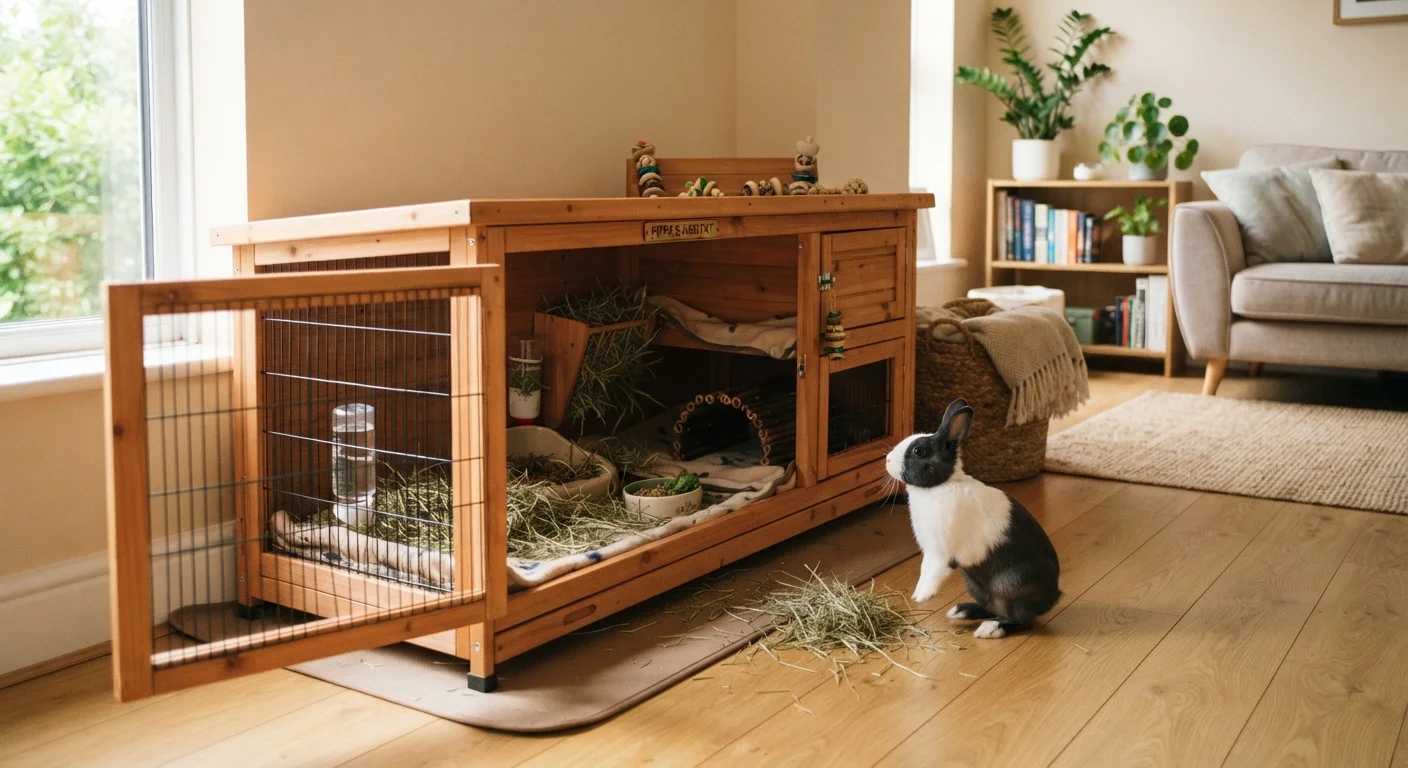
The minimum recommended enclosure size for a single rabbit is 8 square feet of floor space, though larger is always better. Many rabbit welfare organizations suggest a space where your rabbit can take at least three to four full hops in a straight line and stand fully upright on their hind legs without their ears touching the top.
Modular x-pens or wire panel enclosures are generally preferred over traditional cages because they offer more room and can be easily expanded. Avoid enclosures with wire flooring - these are hard on a rabbit's hocks and can cause a painful condition called sore hocks over time.
Set up bedding and litter in the right spots
Line the floor of the enclosure with a rubber-backed mat or fleece blanket to provide traction and warmth. Place a litter box in one corner - rabbits naturally tend to eliminate in a single area, making litter training relatively straightforward.
Fill the litter box with a layer of paper-based litter and top it generously with hay. Because rabbits often graze while using their litter box, keeping hay accessible in that spot reinforces the behavior you want. Avoid cedar or pine wood shavings, which can irritate a rabbit's respiratory tract.
Position the enclosure in a safe, comfortable room location
Rabbits do best in temperatures between approximately 60°F and 72°F. Keep the enclosure away from direct sunlight, heating vents, air conditioning drafts, and exterior doors. Avoid basements or garages where temperature fluctuations and fumes can be problematic.
Choose a spot where the rabbit can see and hear household activity without being overwhelmed by it. Rabbits are social animals and do better when they feel part of the home environment rather than isolated in a back room.
Bunny-proof every room your rabbit will access
Before allowing any free-roaming time, systematically inspect the space at rabbit level - which means getting down on your hands and knees. Cover or conceal all electrical cords using cord covers or run them behind furniture. Remove or elevate houseplants, and check each one for toxicity before assuming it's safe.
Block access to areas behind appliances, under low furniture, or behind entertainment systems where cords gather. Use baby gates or door blockers to restrict access to rooms you haven't fully rabbit-proofed yet.
Provide daily supervised free-roaming time
Rabbits should have a minimum of three to four hours outside their enclosure each day for exercise and mental stimulation. This time should happen in a pre-secured area and ideally at consistent times, since rabbits are creatures of habit and thrive on routine.
During free-roam sessions, offer enrichment like cardboard tunnels, safe chew toys, or foraging activities. This reduces destructive chewing behavior and keeps your rabbit mentally engaged. See our first-week readiness checklist for a fuller picture of what to have ready before your rabbit arrives home.
Establish a daily cleaning and maintenance routine
Spot-clean the litter box daily by removing soiled hay and litter. Do a full litter box change every two to three days, or more frequently if you have more than one rabbit. Wipe down food bowls and water containers daily to prevent bacterial buildup.
Check the enclosure weekly for chewed or damaged components and replace anything that could cause injury. A clean, consistent habitat dramatically reduces the risk of respiratory issues and bacterial infections.
Hidden Household Hazards Can Be Lethal
Rabbits chew constantly and will gnaw on electrical cords, baseboards, and houseplants without hesitation. Several common houseplants - including philodendron, pothos, and aloe vera - are toxic to rabbits. Survey every room your rabbit will access and remove or securely cover all hazards before allowing free roaming.
Rabbits living in well-maintained indoor environments with adequate space, enrichment, and a proper diet can live 8 to 12 years or more. The effort invested in habitat setup pays off in a healthier, happier animal. For ongoing guidance as you settle into rabbit ownership, the first-week readiness checklist is a practical next resource to review.
This article is intended for general informational purposes only. For health concerns related to your specific rabbit, consult a licensed veterinarian experienced with small animals.