
New York City for First-Time Visitors: Neighborhoods, Logistics, and What to Expect

Key Takeaways
- NYC has five distinct boroughs - most first-time visitors focus on Manhattan, but others offer genuine appeal.
- The subway is the most practical way to get around; learning basic fare card usage before you arrive saves friction.
- Neighborhood choice matters more than hotel star rating for shaping your overall experience.
- Summer and holiday periods bring peak crowds and higher costs; spring and fall tend to be more manageable.
- Many iconic landmarks require timed entry reservations booked weeks in advance.
Start here
The Five Boroughs: What Each One Actually Offers
Next
Getting Around: Subways, Buses, and Walking
Then
Neighborhoods Worth Knowing Before You Arrive
When you're ready
Seasons, Crowds, and What to Realistically Expect
Final step
Cultural Landmarks and How to Approach Them
The Five Boroughs: What Each One Actually Offers
New York City is not one place - it is five boroughs, each with its own character. Understanding this upfront prevents the common mistake of assuming the city begins and ends at Times Square.
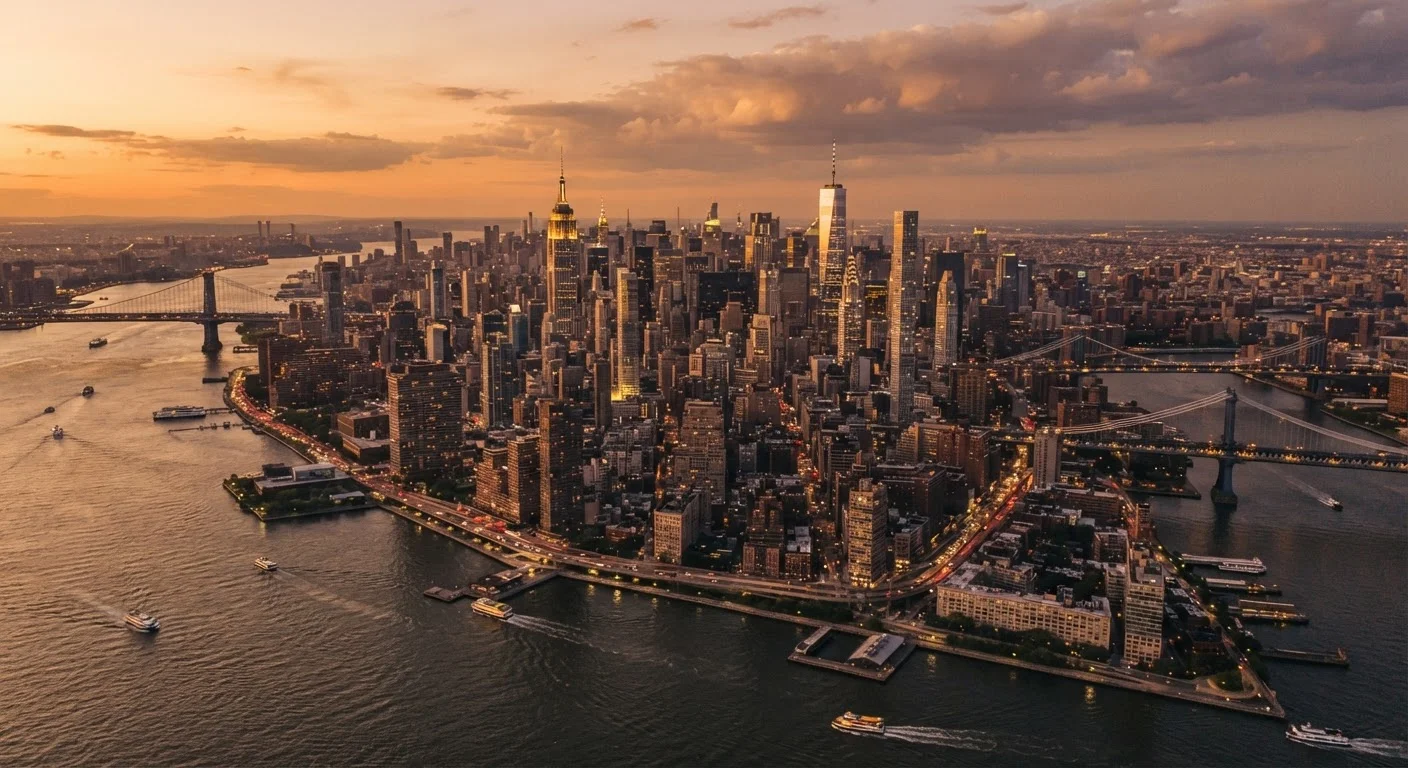
Manhattan is what most visitors picture: dense, vertical, and home to the majority of iconic landmarks. Brooklyn draws travelers for its walkable neighborhoods, independent food scene, and waterfront views of lower Manhattan. Queens is one of the most ethnically diverse urban areas in the world, offering food from virtually every country. The Bronx is the birthplace of hip-hop and home to the New York Botanical Garden and Yankee Stadium. Staten Island is quieter and primarily residential, though its free ferry ride offers a classic view of the harbor.
If your trip is short, Manhattan makes sense as a base. But even a single afternoon in Brooklyn or Queens adds real depth to an NYC visit that a Times Square hotel alone cannot provide. For a broader look at how to build a trip around a destination like this, see our complete American trip planning guide.
Borough
One of the five administrative divisions of New York City: Manhattan, Brooklyn, Queens, The Bronx, and Staten Island. Each has its own distinct character and neighborhoods.
MetroCard
A physical fare card used to pay for rides on the NYC subway and bus system. You load money or a set number of rides onto the card at station kiosks.
OMNY
NYC's contactless payment system for transit. Riders tap a compatible credit card, debit card, or phone at the fare reader instead of using a MetroCard.
Timed Entry
A reservation system used by popular attractions where visitors must book a specific entry window in advance, rather than showing up and waiting in line.
Crosstown
Travel going east or west across Manhattan, as opposed to uptown (north) or downtown (south). Crosstown trips are often better served by buses or walking than by subway.
Getting Around: Subways, Buses, and Walking
The subway runs 24 hours a day, seven days a week - a feature few major transit systems can match. For first-timers, the learning curve is real but manageable. Download an offline map before you arrive, because service changes and signal issues are common.
Fares are paid via contactless bank card tap (OMNY) or MetroCard. A single ride is a flat fare regardless of distance, which works in your favor if you're crossing Manhattan. Buses follow numbered and lettered routes and work well for crosstown travel where subway lines are sparse.
Use Subway Maps Offline
Cell signals in underground stations are inconsistent, even with improvements in recent years. Download a transit map to your phone before your first trip out. The MTA's official website offers printable and digital maps. Knowing your line and direction before you enter the station reduces confusion considerably.
Walking is underrated. Many Manhattan attractions sit within 15-20 minutes of each other on foot, and street-level NYC - the markets, storefronts, and architecture - is lost entirely when you spend the trip underground. Rideshare apps work but add up quickly in congested midtown traffic.
Neighborhoods Worth Knowing Before You Arrive
Where you spend time in NYC shapes your experience far more than which specific attractions you check off. Misaligned neighborhood expectations are a leading reason visitors leave cities like New York feeling underwhelmed.
- Midtown Manhattan: High density, major landmarks, heavily touristed. Practical but not representative of how most New Yorkers live.
- Lower East Side & East Village: Historically working-class neighborhoods now known for food, nightlife, and independent shops.
- Harlem: Rich cultural history, gospel music, soul food, and architecture. Often skipped by first-timers without good reason.
- DUMBO (Brooklyn): Cobblestone streets, Manhattan Bridge views, weekend markets. A short subway or walk from downtown Brooklyn.
- Astoria (Queens): Accessible from midtown, dense with international restaurants, and significantly calmer than Manhattan.
Planning time in at least two different neighborhoods gives you a more honest picture of the city.
Seasons, Crowds, and What to Realistically Expect
NYC operates at full intensity year-round, but the visitor experience shifts dramatically by season. Summer (June-August) brings heat, humidity, and peak tourist numbers. Lines at major attractions grow long, and accommodation costs tend to rise. Winter holiday periods - especially Thanksgiving through New Year's - are among the most congested times of year.
Spring (April-May) and fall (September-October) are widely considered the most pleasant: moderate temperatures, manageable crowds, and the city's parks at their best. Late January through February is typically the quietest and coldest stretch.
Weather Can Shift Quickly
NYC weather - especially in spring and fall - can swing significantly within a single day. Light layers and a compact rain jacket are practical additions for any season. Snow is possible from November through March, though sustained accumulation is variable from year to year. Always verify current conditions before heading out for a full day of walking.
Regardless of when you visit, NYC sidewalks, subways, and popular sites will feel busier than almost anywhere else in the United States. If you find dense urban environments stressful, building deliberate downtime into your itinerary - a sit in Central Park, a quieter museum wing - helps significantly.
Cultural Landmarks and How to Approach Them
New York's cultural institutions are among the world's most significant, and many are genuinely worth the time - but approaching them without preparation leads to rushed, surface-level visits.
The Metropolitan Museum of Art alone could occupy multiple full days. The American Museum of Natural History, MoMA, the Whitney, and the Tenement Museum each reward visitors who come with a specific focus rather than trying to see everything. Entry fees and hours vary; many museums offer reduced or suggested-donation pricing on certain days or evenings.
For outdoor landmarks, the High Line (an elevated park built on a former rail line) and Central Park are free and offer a welcome contrast to the museum circuit. The Statue of Liberty requires advance ferry tickets and a half-day commitment - plan accordingly.
The overall lesson: prioritize two or three experiences per day rather than trying to maximize a checklist. First-time visitors who do less tend to leave more satisfied than those who rush through ten attractions in four days. If you find yourself planning a trip from scratch, our first-timer's trip planning overview walks through the full process step by step.
MTA Trip Planner
The Metropolitan Transportation Authority's official trip planner helps you map subway and bus routes across all five boroughs. Use it to plan transit legs before your trip or navigate service changes during your visit.
NYC Parks Department Website
The official source for Central Park events, accessible park locations, and seasonal programming across the city's public green spaces. Useful for building free, walkable time into your itinerary.
NYC Tourism + Conventions Official Site
The city's official tourism portal covers neighborhood guides, cultural event calendars, and practical visitor information without commercial promotion of specific operators.