

Key Takeaways
- Mexico is an enormous, geographically and culturally diverse country - not a single uniform destination.
- U.S. State Department travel advisories vary significantly by state and region within Mexico.
- Many Mexican cities have well-developed infrastructure, cuisine, and cultural institutions well beyond resort zones.
- Spanish language skills help but are not required; many tourist areas have English-speaking staff.
- Trip costs in Mexico range widely depending on location, travel style, and how far visitors stray from tourist corridors.
Why Mexico Gets Misread More Than Almost Any Other Destination
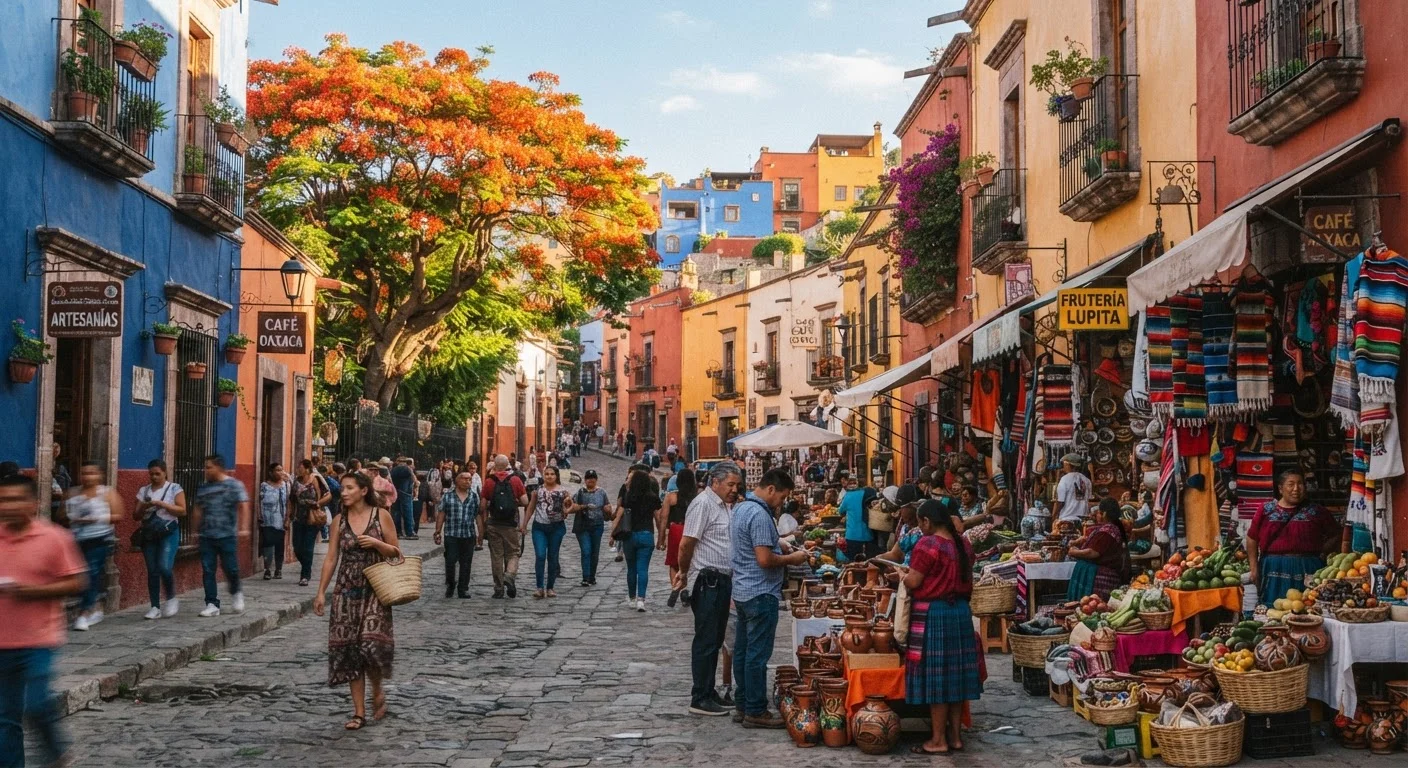
For American travelers, Mexico is simultaneously one of the most visited and most misunderstood countries in the world. It's a neighbor, a frequent vacation destination, and yet assumptions about safety, affordability, culture, and infrastructure routinely paint an inaccurate picture - one that leads travelers either to avoid worthwhile places or to arrive with expectations that don't match reality.
Mexico spans nearly 760,000 square miles and contains 31 states, each with distinct geography, cuisine, economics, and character. Treating it as a monolith - or reducing it to beach resorts and cautionary headlines - misses most of what the country actually offers. The myth-and-fact pairs below address some of the most common assumptions travelers bring, and what a more grounded view looks like.
Myth
Mexico is uniformly dangerous, and travelers should avoid it altogether.
Fact
Risk levels vary dramatically by region. Many Mexican states and cities have safety profiles comparable to popular U.S. travel destinations.
The U.S. State Department assigns travel advisories at the state level within Mexico, not for the country as a whole. Some states carry Level 1 or Level 2 designations - "Exercise Normal Precautions" or "Exercise Increased Caution" - while others carry higher warnings. Millions of Americans travel to Mexico each year without incident, particularly to well-trafficked destinations with established tourism infrastructure. Treating an entire country the size of Western Europe as uniformly risky leads to decisions based on fear rather than facts.
Myth
Mexico is always significantly cheaper than traveling within the United States.
Fact
Costs vary widely. Popular resort destinations can be priced similarly to U.S. travel, while independent travel in smaller cities tends to be more affordable.
All-inclusive resorts in Los Cabos or Cancún can carry nightly rates that rival comparable properties in Florida or the Caribbean, particularly once flights are included. Travelers who stay within resort corridors often spend more than those who stay in smaller cities or travel independently. Food, transportation, and lodging costs drop considerably when travelers move away from heavily touristed zones - but that requires planning. Budgeting assumptions based on a general notion of "cheap Mexico" can lead to real surprises at checkout.
Myth
You need to speak Spanish fluently to travel comfortably in Mexico.
Fact
English is widely spoken in major tourist areas, though learning basic Spanish phrases significantly improves the travel experience.
In established tourist destinations - Cancún, Puerto Vallarta, Mexico City's central neighborhoods, Los Cabos - English is commonly spoken by hotel staff, tour operators, and many restaurant workers. That said, venturing beyond the tourist infrastructure into smaller towns, local markets, or rural areas will expose travelers to predominantly Spanish-speaking environments. A basic conversational vocabulary - greetings, numbers, food terms, directional phrases - goes a long way toward respectful, smoother interactions and is generally appreciated by locals.
Myth
Mexican food in Mexico is essentially the same as Mexican-American food in the U.S.
Fact
Mexican cuisine is enormously regional and often bears little resemblance to what's commonly served in Mexican-American restaurants in the United States.
What most Americans recognize as "Mexican food" - heavily loaded burritos, crunchy tacos, yellow cheese - reflects a Tex-Mex or Mexican-American hybrid tradition. Within Mexico, cuisine shifts dramatically by region: Oaxaca is known for its mole sauces and tlayudas; the Yucatán Peninsula features cochinita pibil and achiote-based dishes; coastal regions emphasize fresh seafood prepared quite differently from landlocked states. Traveling through Mexico with an open palate - and an understanding that regional variation is the norm - leads to a far richer culinary experience.
Myth
Mexico City is too chaotic, polluted, and unsafe for casual tourists.
Fact
Mexico City is one of the largest and most culturally rich cities in the world, with well-developed transit, world-class museums, and neighborhoods widely considered safe for visitors.
Mexico City (CDMX) has undergone significant investment in its transit system, public spaces, and cultural institutions. Neighborhoods like Roma, Condesa, Coyoacán, and Polanco are walkable, restaurant-dense, and frequented by both locals and international visitors. The city is home to more than 150 museums, a UNESCO World Heritage historic center, and a culinary scene with global recognition. Air quality has improved substantially from its peak pollution era, though it remains a large urban center with corresponding considerations. As with any major city, neighborhood-level awareness matters - the kind of research covered in our guide on why city trips sometimes disappoint.
Myth
Drinking the tap water is fine if you're careful.
Fact
Tap water in Mexico is generally not considered safe for travelers to drink; bottled or purified water is the standard recommendation.
Municipal water treatment varies across Mexico, and many residents use purified water for drinking even in urban areas. Travelers unaccustomed to local water conditions may experience gastrointestinal issues even if the water meets local standards. Most hotels provide purified water, and bottled water is widely available and inexpensive. Ice in reputable restaurants and hotels is typically made from purified water, but it's reasonable to ask if you are uncertain. This is a basic precaution that most experienced Mexico travelers take routinely.
How to Build a More Accurate Picture Before You Go
Correcting assumptions starts with better research habits. The U.S. State Department publishes travel advisories broken down by Mexican state - not by country - and the risk levels vary considerably from region to region. Consulting these before planning, and rechecking close to your departure date, gives you a factual baseline rather than a generalized impression. Always verify entry requirements, current advisories, and health recommendations through official government sources, as these details change.
Verify Entry and Health Requirements Before Booking
Entry requirements, passport validity rules, and any health-related documentation for travel to Mexico can change with relatively short notice. Check official sources - the U.S. State Department and the Mexican government's tourism portal - well before your travel date and again closer to departure. Relying on outdated information from travel blogs or booking confirmation emails is a common source of avoidable travel complications.
Beyond advisories, seeking out firsthand accounts from travelers who have recently visited specific regions - not just general impressions of "Mexico" - tends to produce more useful information. Travel forums, destination-specific communities, and resources that focus on independent travel can all help. For a broader framework on reading destinations past their promotional image, see how to research a destination beyond its tourism branding.
Budget assumptions also deserve scrutiny before booking. Mexico can be affordable, but resort zones often price comparably to U.S. domestic destinations once flights, resort fees, and packaged amenities are factored in. Building a realistic travel budget before you book can help you map true costs honestly, and our guide on hidden costs that catch travelers off guard covers the specific charges - resort fees, dynamic pricing, airport transport - that inflate Mexico trip budgets most often.
Ultimately, Mexico rewards travelers who approach it with curiosity rather than assumptions. Verifying information, planning with regional specificity, and staying open to a destination that is far more layered than its reputation suggests tends to produce much better trips - and fewer surprises.
This article is for general informational purposes only. Travel conditions, safety advisories, entry requirements, and local regulations can change. Always verify current information with official government and provider sources before traveling.