

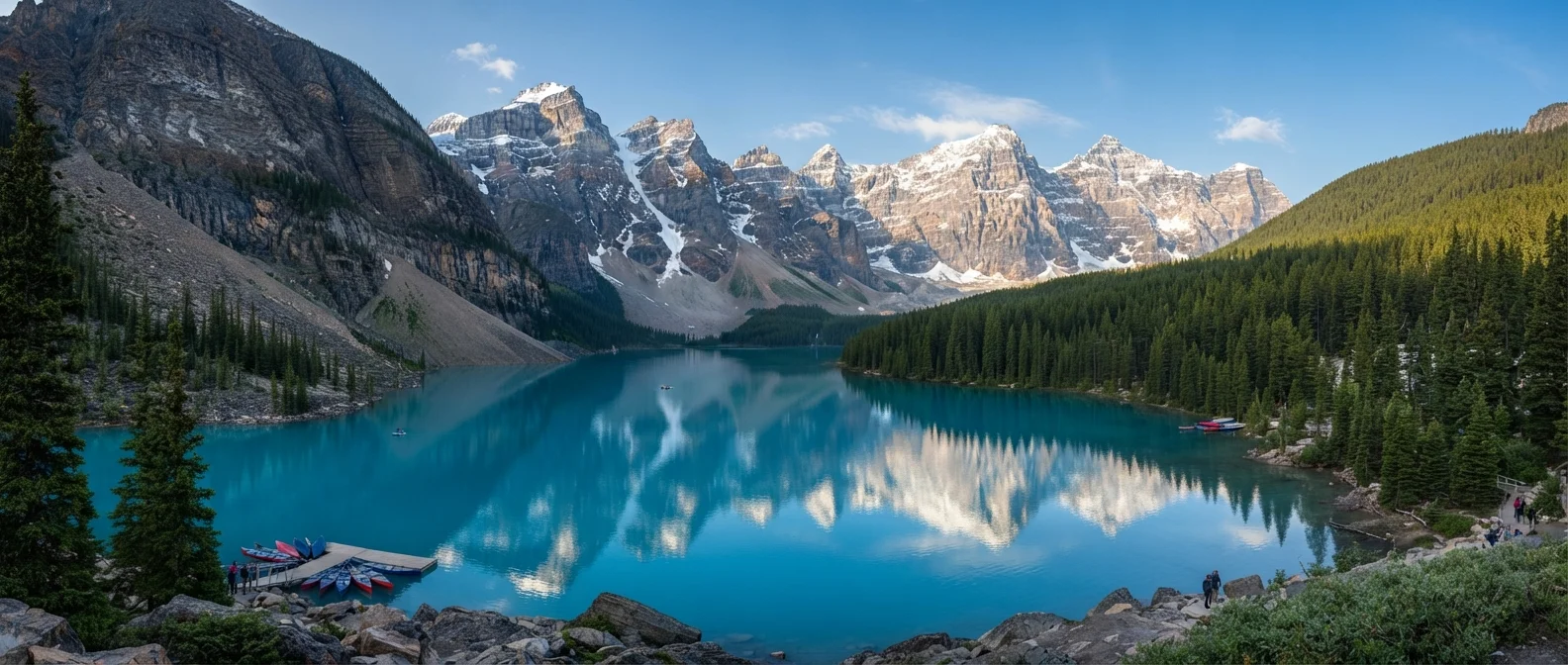
Summer (June-August): Peak Color, Peak Crowds
Summer is when the Canadian Rockies - particularly Banff and Jasper National Parks - are at their most visually iconic. Glacial lakes like Moraine Lake and Lake Louise reach their vivid turquoise color, fed by glacial meltwater that scatters blue light. Wildflowers carpet alpine meadows, wildlife is active, and virtually every trail is accessible.
What this season also brings is significant crowd pressure. Moraine Lake Road in Banff typically requires a reservation or shuttle system to access. Popular trailheads fill before 7 a.m. on weekends. Hotel and campground availability is limited, and prices reflect demand. If summer is your window, arriving midweek and booking accommodations months in advance are practical necessities, not just suggestions.
Temperatures in July average in the mid-60s°F (around 18°C) at valley elevations, though afternoon thunderstorms are common. Higher elevations remain cooler, and snow can linger at altitude well into June. Layering remains essential regardless of the calendar date.
Autumn (September-October): Fewer Crowds, Striking Color
September is arguably the most underrated month in the Canadian Rockies. Crowds thin noticeably after Labor Day, access restrictions ease, and the landscape shifts from green to gold as larch trees - the only deciduous conifers in the region - turn a vivid yellow. The larch peak typically falls in late September around areas like Larch Valley near Moraine Lake, though timing varies year to year.
Early October can still offer clear skies and comfortable hiking temperatures, but a season-ending snowstorm can arrive without much warning. By mid-October, some park roads and visitor facilities begin closing for winter. Travelers planning an autumn visit should confirm which services remain open and have flexible itineraries. Understanding the trade-offs of visiting in shoulder season is covered in more depth in our guide to peak vs. off-season travel.
Verify Facility Hours Before You Go
Seasonal closures in the Canadian Rockies are not always well-publicized in advance. Visitor centers, shuttles, campgrounds, and scenic roads can close earlier or later than expected depending on snowfall and staffing. Always check Parks Canada's official website for current operating status before finalizing autumn or spring travel plans.
Winter (November-March): Snow, Silence, and Ice
Winter in the Canadian Rockies is a genuine transformation. Frozen lakes, snow-draped spruce trees, and dramatically fewer visitors create an atmosphere of near-solitude in places that are gridlocked in July. Lake Louise becomes a world-class ice skating venue. Banff townsite remains open and accessible year-round, offering cross-country skiing, snowshoeing, and ice climbing opportunities.
What winter does not offer is ease of access. Many scenic roads - including the Icefields Parkway - can close due to avalanche risk or snowpack. Wildlife sightings can actually increase as animals move to lower elevations, but hiking options are limited and require proper winter gear. Temperatures regularly drop below 0°F (-18°C) at night. Visitors should check road and park conditions through Parks Canada before departing.
4+ million
Annual visitors to Banff National Park
Banff consistently ranks among Canada's most-visited national parks, with the majority arriving June through August.
~230 km
Length of Icefields Parkway (Hwy 93)
The Icefields Parkway connecting Banff and Jasper is considered one of the most scenic drives in North America, though portions close seasonally.
Winter travel also requires honest preparation: four-season tires or chains, emergency kits in vehicles, and familiarity with layering systems are baseline requirements, not optional extras.
Spring (April-May): Transition and Uncertainty
Spring is the most unpredictable season in the Rockies. Snow persists at elevation well into May, many trails remain icy or muddy, and certain roads and facilities are still closed from winter. Wildlife is especially active - and wildlife jams on roads are common as bears emerge from hibernation and elk calve in valley bottoms.
For travelers drawn to quieter parks and lower prices, late April and May can offer a rewarding experience, provided expectations are realistic. The lakes won't yet show their famous turquoise color, which depends on glacial melt that typically peaks in late spring and early summer. Hiking in bear country during spring also requires carrying bear spray and traveling in groups - standard practice throughout the parks but especially important during this high-activity period.
Spring is best approached as an exploratory season rather than a highlight-reel one. Some visitors find the rawness and quiet genuinely appealing; others are better served by waiting until June for more predictable conditions.