

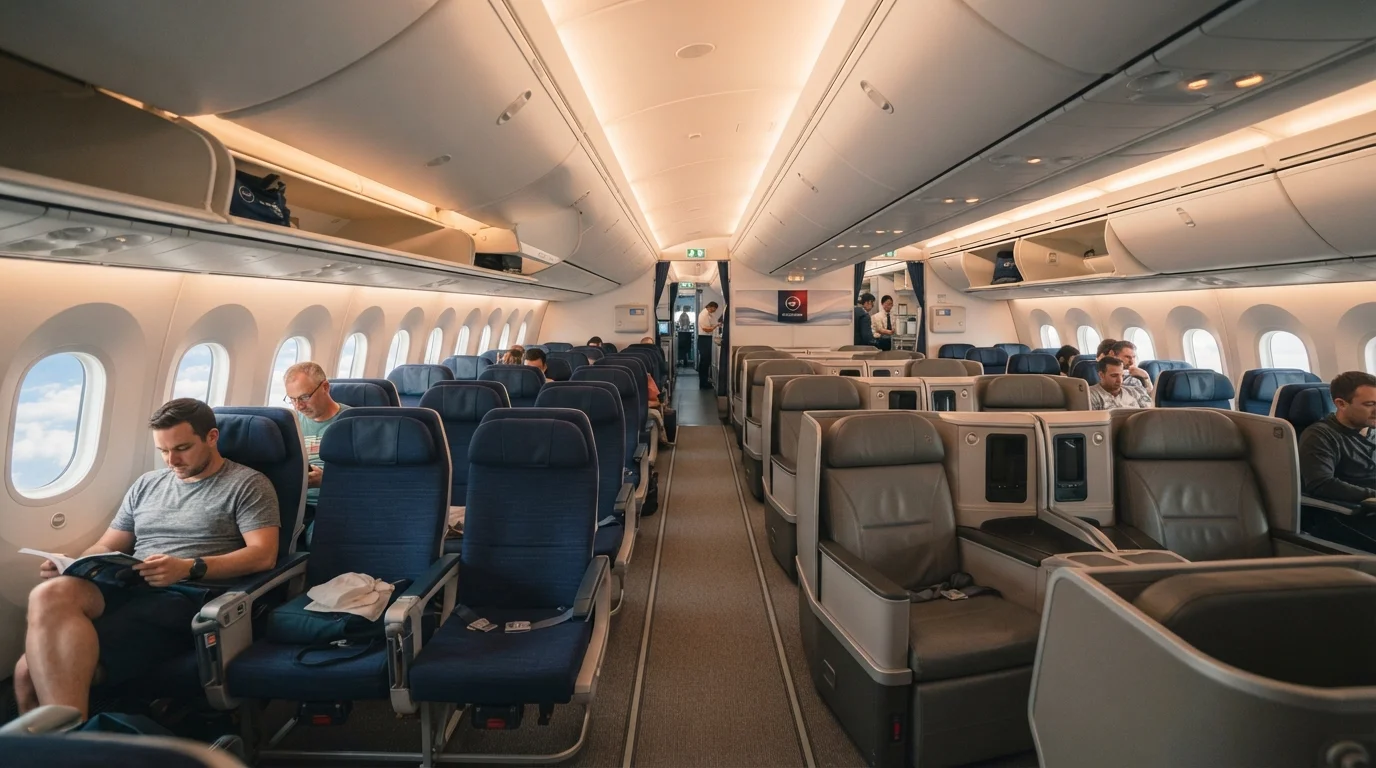
The Four Main Cabin Classes
Most commercial flights offer between two and four distinct cabin classes, each representing a different combination of seat space, service, and price. Understanding what separates them helps you weigh comfort against cost before you book. For a broader look at booking terminology, see our plain-language glossary of travel terms.
Economy Class
Economy is the most common cabin and the most affordable. Seats are arranged in tight rows - typically 3-3 or 3-4-3 across on wide-body jets - with limited recline and seat pitch (the distance from your seat back to the one in front) generally ranging from about 28 to 32 inches. Meals and checked bags are often sold separately on domestic and budget routes. On long-haul international flights, a meal and one checked bag are more commonly included, though policies vary by carrier and ticket type.
Premium Economy Class
Premium economy occupies a middle ground that many travelers overlook. Seats are wider and offer more legroom - pitch typically runs 35 to 38 inches - and recline is noticeably greater than standard economy. Most carriers that offer this cabin include a checked bag, priority boarding, and an upgraded meal. The price difference versus economy can be significant, so it's worth comparing what's actually bundled into each fare before deciding.
Business and First Class: What You're Actually Paying For
Business Class
Business class varies considerably between airlines and aircraft, but on most modern long-haul routes you can expect a fully flat-bed seat, direct aisle access, significantly more storage, and multi-course meals with broader drink options. Lounge access at departure airports is typically included. On shorter domestic routes, "business class" often means a slightly wider economy seat with the middle blocked - a much smaller upgrade than the international version of the same name.
First Class
First class is the most premium cabin and is not offered on every airline or route. Where it exists, it typically features a private suite or enclosed pod, a larger flat bed, dedicated cabin crew, curated dining, and premium amenity kits. On many carriers, first class has been replaced by an enhanced business class product, so the distinction matters less than it once did. Always check the specific aircraft configuration for your route rather than assuming by cabin name alone.
Cabin Names Don't Always Match the Experience
A "business class" seat on a two-hour domestic flight is often very different from business class on a long-haul international route. The cabin label alone doesn't tell the full story. Always look up the specific aircraft type and seat map for your individual flight before making a booking decision based on cabin name.
Pricing across all four classes fluctuates based on route demand, booking timing, and seat availability. For context on how airline pricing works, our article on booking patterns and dynamic pricing explains the general patterns worth understanding.
Factors Worth Weighing Before You Upgrade
Choosing a cabin class isn't only about price - it depends on the nature of your trip. Consider these practical factors:
- Flight duration: The comfort gap between economy and business matters far more on a 14-hour transoceanic flight than a 90-minute domestic hop.
- Purpose of travel: If you need to arrive rested for a work commitment, a lie-flat seat may have functional value beyond mere comfort.
- What's included: Factor in checked bags, meals, and lounge access when comparing total costs across cabins - the gap may be smaller or larger than the ticket price suggests.
- Aircraft type: The same cabin label can mean very different things depending on the plane. Check the specific aircraft and seat map for your flight before booking.
- Redemption options: Many travelers use airline miles or credit card points to access premium cabins. The award rates and availability for each class are worth researching if you hold relevant loyalty currency.
If you're new to flying and still working through the basics, our first-time flyer guide walks through the full booking-to-landing process in plain language.
Seat pitch
The distance measured from any point on one seat to the same point on the seat directly in front of it. A larger pitch generally means more legroom, though seat design also plays a role.
Cabin class
A designated section of an aircraft with a specific configuration of seats, services, and pricing. The four main classes are economy, premium economy, business, and first.
Lie-flat seat
A seat that reclines fully into a horizontal sleeping surface. Commonly found in business and first class on long-haul international flights.
Seat map
A diagram of the aircraft's interior showing seat locations, configurations, and sometimes individual seat features. Available on most airline and booking sites before purchase.
Award redemption
Using accumulated airline miles or loyalty points to book a flight, often at a significantly lower out-of-pocket cost than a paid ticket. Availability and rates vary by program and cabin.