

Key Takeaways
- Book directly through an airline's website or a well-known travel search tool to avoid confusion about ticket ownership.
- Arrive at the airport at least two hours before a domestic flight and three hours before an international one.
- TSA security has clear rules about liquids - containers must be 3.4 oz or smaller and fit in one quart-sized bag.
- Your boarding pass and government-issued ID are the two documents you cannot afford to lose track of.
- Ground transportation options vary widely - compare cost, convenience, and travel time before committing.
Start here
Booking Your First Flight
Next
What to Pack (and What to Leave Behind)
Then
Getting Through the Airport
Almost there
On the Plane: What to Expect
Final step
After You Land
Booking Your First Flight
The process of booking a flight is more straightforward than it looks. Most airline websites let you search by route and date, compare fare classes, and purchase a ticket in one session. Travel search tools aggregate options across carriers, which can be useful for getting a broad overview - but always read fare rules carefully before purchasing, since some low prices reflect restrictive tickets with no changes or refunds allowed.
When comparing fares, pay attention to what's included. A base fare may not cover a checked bag, seat selection, or even a carry-on on certain carriers. Adding those costs up front gives you a more accurate picture of what you'll actually spend. For more on how booking timing myths can affect your decision-making, see our piece on common myths about flight booking timing.
Once you purchase, you'll receive a confirmation email with your booking reference number. Save that - you'll need it to check in and retrieve your boarding pass.
Book a Direct Flight for Your First Trip
If your schedule and budget allow it, choosing a nonstop flight removes the complexity of connections, tight layovers, and navigating an unfamiliar connecting airport. Direct flights reduce the number of things that can go wrong on your first journey, letting you focus on the experience rather than the logistics.
What to Pack (and What to Leave Behind)
Packing smart is one of the most practical things a first-time flyer can do. Airlines typically allow one personal item (like a backpack or small tote) and one carry-on bag free of charge, though checked baggage fees vary. Weigh your bags before leaving home - overweight bags can carry surprise fees at the counter.
For carry-on liquids, TSA's 3-1-1 rule applies: all liquid, gel, or aerosol containers must be 3.4 ounces (100 ml) or smaller, placed in a single quart-sized, clear zip-top bag. One bag per passenger. Items like full-size shampoo, water bottles filled before security, or large toothpaste tubes will be confiscated at the checkpoint.
Essentials to keep in your carry-on - not your checked bag - include medications, a phone charger, one change of clothes, and any valuables. Checked bags occasionally get delayed or misrouted, so the carry-on should sustain you if that happens.
Boarding pass
A document (digital or printed) that confirms your seat on a specific flight. You receive it after check-in and must present it at the gate to board.
Carry-on bag
A piece of luggage small enough to fit in the overhead bin or under the seat in front of you on the plane. Airlines specify size and weight limits.
TSA (Transportation Security Administration)
The US federal agency responsible for security screening at airports. TSA officers check passengers and bags at checkpoints before the gate area.
Fare class
A pricing category for airline seats that determines the cost and what's included, such as whether you can change or cancel the ticket without a fee.
Jet bridge
The enclosed walkway that connects the airport gate directly to the aircraft door, allowing passengers to board without going outside.
Baggage claim
The area of the airport where checked bags arrive on a conveyor belt after your flight lands. Look for screens listing your flight's assigned carousel.
Getting Through the Airport
Check-in typically opens 24 hours before departure. Most airlines allow online check-in through their app or website, where you can download your boarding pass directly to your phone. If you prefer paper, airport kiosks print boarding passes quickly with your confirmation number and ID.
At TSA security, you'll place your carry-on bag and personal items in bins on the conveyor belt. Laptops and large electronics must come out of bags and go in a separate bin. Shoes, belts, and jackets are removed and placed in a bin as well. Walk through the scanner, collect your belongings, and you're cleared - most checkpoints take under 10 minutes when lines are light. For a more detailed walkthrough, our guide to navigating airport security without the stress covers every step.
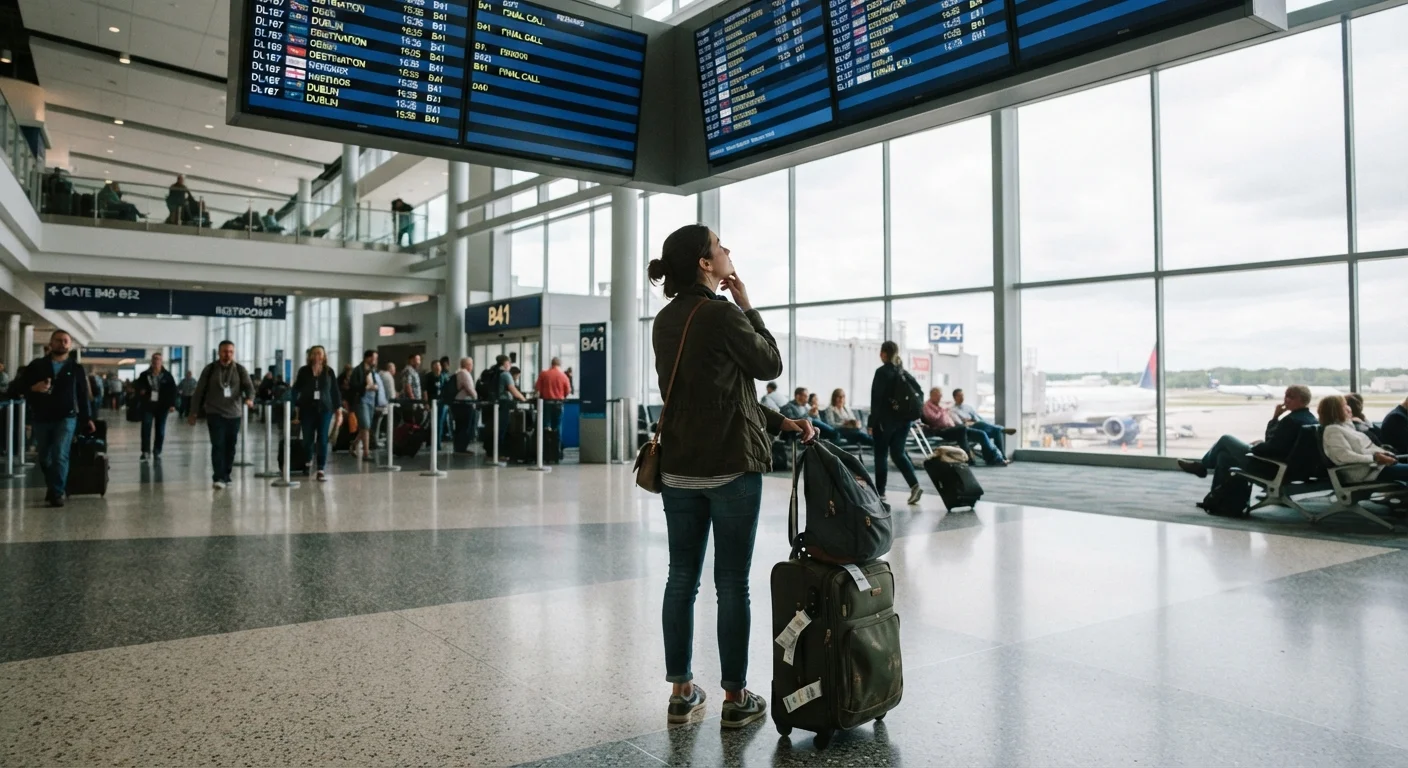
After security, check the departures board for your gate. Gates can change, so glance at the board periodically rather than assuming the gate on your boarding pass is final. Aim to be at your gate at least 30 minutes before departure.
If your itinerary includes a connecting flight, our article on layovers, stopovers, and connections explains what each term means and what to do during them.
On the Plane: What to Expect
Boarding usually begins 30-45 minutes before departure. Airlines board in groups - your boarding pass will show your group or zone number. When your group is called, scan your boarding pass at the gate, walk the jet bridge, and find your assigned seat.
Overhead bins fill quickly on busy flights. Board as early as your group allows so your carry-on stays close to your seat. If the bin above your row is full, a flight attendant can help find a nearby space.
During the flight, flight attendants will demonstrate safety procedures - including seatbelt use, the location of emergency exits, and oxygen mask deployment. Pay attention even if it feels routine; safety briefings are legally required for good reason, and exit locations vary by aircraft.
Cabin pressure changes during ascent and descent can cause ear discomfort. Yawning, swallowing, or chewing gum typically equalizes pressure effectively. If you feel anxious during turbulence, remember that moderate turbulence is normal and pilots and crew are trained to manage it.
Don't Wait to Flag a Medical Concern
If you feel unwell during a flight - whether from ear pressure, motion discomfort, or something more serious - notify a flight attendant promptly rather than waiting it out. Flight crews are trained in basic first aid and can assist or coordinate with ground medical support if needed. Never assume symptoms will resolve on their own mid-flight.
After You Land
Once the plane reaches the gate and the seatbelt sign turns off, gather your belongings from the overhead bin and follow the flow of passengers off the aircraft. Signs in the terminal will direct you toward baggage claim, connecting gates, or the airport exit.
If you checked a bag, find the baggage claim carousel assigned to your flight - it's displayed on screens throughout the baggage claim area. Bags typically begin arriving within 20-30 minutes of landing, though this varies by airport and flight size.
From there, you'll need ground transportation to your final destination. Airports generally offer taxis, app-based rideshares, shared shuttles, and public transit options. Each has trade-offs in cost, convenience, and travel time. Our guide to ground transportation at airports breaks down each option so you can choose what fits your situation best.
Once you're settled, the hard part is behind you. Your next trip will feel noticeably easier - each flight builds familiarity with a process that quickly becomes routine. If you're still in the planning phase, the trip planning hub has guidance on the full journey from destination research to departure day.