

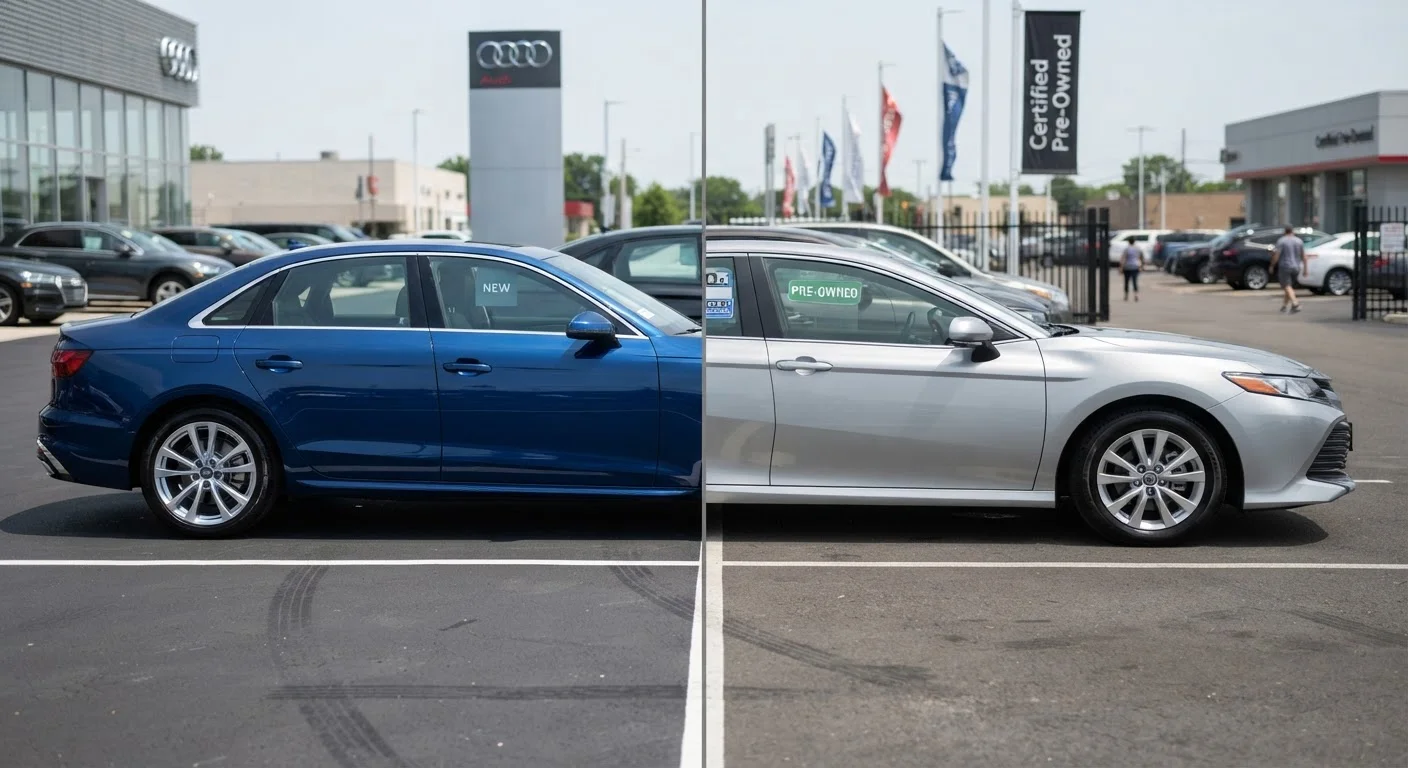
Key Takeaways
- New cars depreciate most sharply in the first two to three years of ownership.
- Used cars typically carry lower purchase prices and insurance costs but may need more maintenance.
- Certified pre-owned vehicles offer a middle ground with inspections and limited warranty coverage.
- Financing rates on new cars are often lower, but the larger loan amount can offset that advantage.
- A pre-purchase inspection by an independent mechanic is strongly recommended for any used vehicle.
Option A
New Car
The latest features, full warranty, and zero prior ownership history.
Best for: Buyers who want peace of mind, modern safety technology, and predictable long-term ownership costs.
Option B
Used Car
Lower upfront cost with the trade-off of unknown history and limited warranty.
Best for: Budget-conscious buyers willing to do their homework to find a reliable vehicle at a reduced price.
If you want the lowest possible monthly payment
Used Car
A used vehicle's lower sticker price generally means a smaller loan and lower monthly obligation, even if the interest rate is slightly higher.
If you want maximum warranty protection and modern safety features
New Car
New cars come with full manufacturer warranties and the latest driver-assistance technology, reducing uncertainty in the first years of ownership.
If you plan to keep the vehicle for ten or more years
New Car
Spreading depreciation and ownership costs over a long timeline makes the new-car premium less significant per year.
If you want to avoid the steepest depreciation hit
Used Car
Buying a vehicle that is two to four years old means a prior owner has absorbed the sharpest value drop, so your resale loss is typically smaller.
If you want a balance of price savings and reliability assurance
Used Car
A certified pre-owned vehicle combines a lower price than new with a manufacturer-backed inspection and limited warranty - see our guide on what CPO programs actually cover.
Depreciation: Where the Real Money Goes
Depreciation is the single largest cost most car owners never see as a line item. A new vehicle can lose roughly 15-25% of its value in the first year alone, and as much as 50% over five years - though exact figures vary widely by make, model, and market conditions. When you buy used, a prior owner has already absorbed that steepest portion of the curve.
That said, depreciation only matters if you plan to sell. If you intend to drive a vehicle until it has little resale value left, buying new and spreading ownership costs over 10-15 years can make the math more defensible. The key is matching the purchase decision to your actual ownership timeline, not an idealized one.
| Criterion | New Car | Used Car |
|---|---|---|
| Purchase Price | Full MSRP or negotiated price | Typically 20-50% less than new |
| Depreciation Exposure | Highest in first 1-3 years | Prior owner absorbed steepest drop |
| Warranty Coverage | Full manufacturer warranty included | Varies; may be expired or limited |
| Financing Rates | Often lower; manufacturer incentives available | Generally higher rates |
| Insurance Cost | Higher due to vehicle value | Often lower, especially older models |
| Ownership History | None - you are the first owner | Unknown; requires verification |
| Technology & Safety Features | Latest driver-assist systems standard | Depends on model year and trim |
| Customization Options | Full factory-order options available | Limited to what exists in market |
Financing, Insurance, and Total Cost of Ownership
New cars typically qualify for lower manufacturer-subsidized financing rates, which can reduce the interest paid over the loan term. However, a lower rate on a larger loan can still mean higher monthly payments than a higher rate on a smaller used-car loan. Run the full numbers - total interest paid plus purchase price - before concluding which option costs less overall.
Insurance also reflects the vehicle's value. New cars generally cost more to insure because they cost more to repair or replace. Comprehensive and collision coverage requirements tied to a lender add further to that gap. Used cars, particularly older models with lower market values, often carry meaningfully lower insurance premiums.
Maintenance is the wildcard. A new car comes with a manufacturer warranty - typically three years or 36,000 miles for basic coverage, with powertrain warranties often extending further - that shields you from most repair costs early on. A used vehicle outside its original warranty period shifts repair risk entirely to you. For a full picture of what ownership involves beyond the purchase, the Car Ownership Basics hub is a useful reference.
~20%
Average new car value lost in year one
Industry data from automotive valuation sources consistently shows new vehicles lose roughly 15-25% of their value within the first 12 months of ownership.
3 yrs / 36K mi
Typical new-car basic warranty period
Most major automakers offer a 3-year/36,000-mile bumper-to-bumper warranty as the baseline for new vehicles sold in the U.S.
$100-$200
Cost of independent pre-purchase inspection
A licensed mechanic's inspection of a used vehicle before purchase is widely recommended by consumer advocates as a low-cost way to identify hidden issues.
Reliability, History, and the Used-Car Due Diligence Requirement
Modern vehicles are built to last longer than ever, which means a well-maintained three- or four-year-old car can offer many years of dependable service. The challenge is verifying that maintenance history. A vehicle history report (using services like Carfax or AutoCheck) surfaces prior accidents, ownership count, and service records - but it is not a substitute for a hands-on inspection.
Before committing to any used vehicle, having an independent, licensed mechanic perform a pre-purchase inspection is one of the most practical steps you can take. It typically costs $100-$200 and can reveal issues that no report captures. Our used car inspection guide walks through exactly what to look for, even if you have no mechanical background.
New car buyers sidestep this uncertainty entirely - but they pay a premium for that certainty. Whether that premium is worth it is a personal calculation, not a universal answer.
Making the Decision That Fits Your Situation
Neither new nor used is categorically superior. The right choice hinges on your budget, how long you plan to own the vehicle, your risk tolerance for repair costs, and how much you value features like the latest safety systems or fuel-efficiency improvements.
If you are still working through the broader purchase process - from setting a budget to negotiating at the lot - The Car-Buying Process, Start to Finish provides a structured walkthrough of every stage. And if you are weighing whether to buy outright or lease instead, Owning vs. Leasing a Car examines that dimension clearly.
Whichever direction you lean, going in with accurate information - rather than assumptions about deals or depreciation - puts you in a far stronger position at the negotiating table.
This article is for general informational purposes only and does not constitute financial or legal advice. Consult a qualified financial professional before making significant purchasing decisions.