

Key Takeaways
- A steady check engine light signals a detected fault; a flashing light indicates a more urgent problem requiring immediate attention.
- The light alone doesn't identify the problem - a diagnostic code reader is needed to retrieve the fault code.
- Many common causes (loose gas cap, worn oxygen sensor) are not roadside emergencies but still need attention.
- Ignoring a check engine light can turn a minor issue into a costly repair over time.
- A qualified mechanic should interpret codes and inspect the vehicle - code reading alone doesn't equal a diagnosis.
Check Engine Light
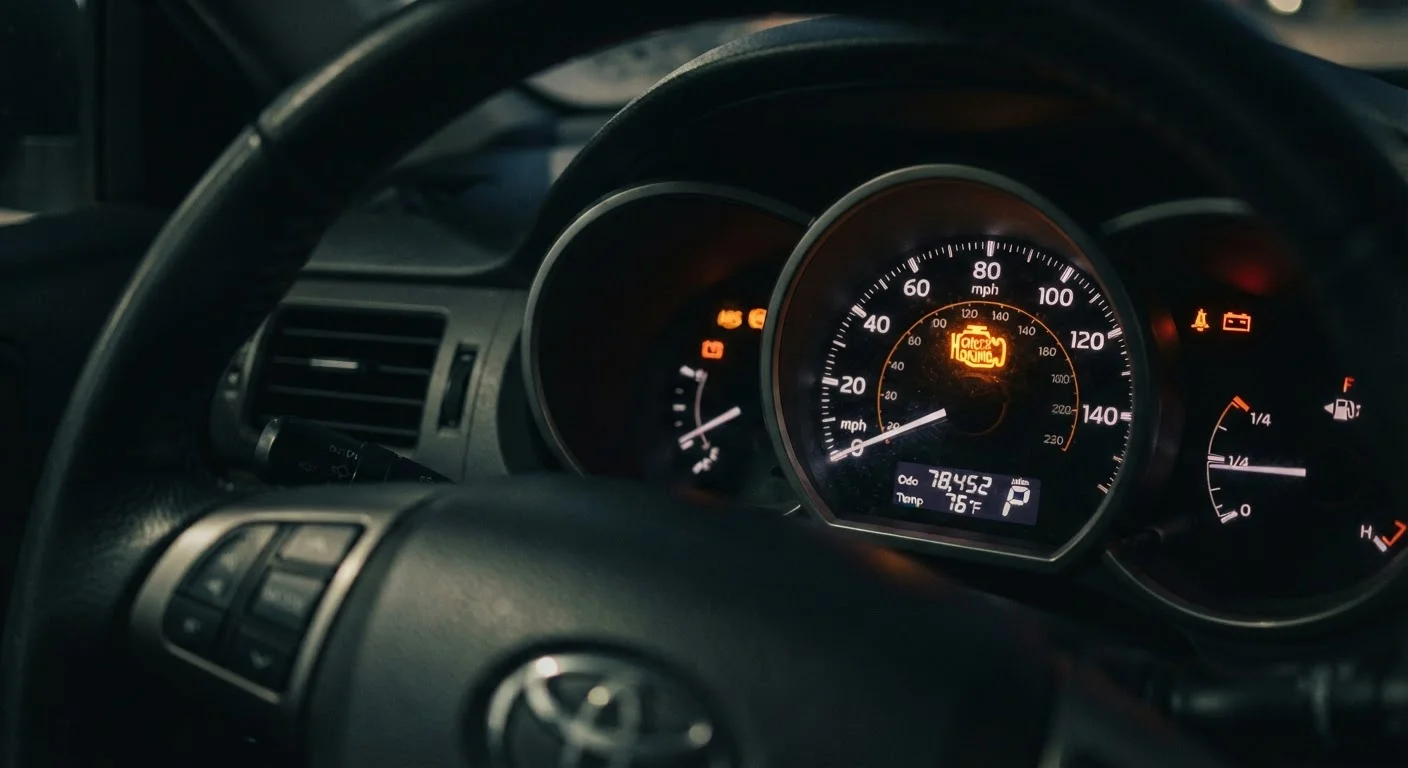
The check engine light - formally called the Malfunction Indicator Lamp (MIL) - is a dashboard warning that activates when your vehicle's onboard diagnostic system (OBD-II) detects a fault it can't correct on its own. It can point to dozens of different issues, ranging from minor (a loose gas cap) to serious (engine misfires or catalytic converter failure). The light itself doesn't tell you what's wrong - it tells you the system detected something worth investigating.
All gasoline-powered vehicles sold in the U.S. after 1996 are required to use the OBD-II diagnostic protocol, which stores standardized fault codes (called DTCs - Diagnostic Trouble Codes) that mechanics and code readers can retrieve.
What the Light Is Actually Telling You
Your vehicle's OBD-II system continuously monitors dozens of sensors - from the oxygen sensor in your exhaust to the mass airflow sensor in your intake. When a reading falls outside acceptable parameters and the system can't self-correct, it stores a Diagnostic Trouble Code (DTC) and switches on the check engine light.
The light is a messenger, not a diagnosis. Fault code P0420, for example, points toward catalytic converter efficiency - but confirming whether the converter itself has failed, or whether a faulty upstream oxygen sensor is sending bad data, requires hands-on inspection. That distinction matters for both your repair bill and your decision-making.
For a broader look at what other symbols on your instrument cluster mean, see your car's dashboard warning lights decoded.
P0420
Most misunderstood common fault code
Catalytic converter efficiency codes are among the most frequently retrieved, yet often result from upstream sensor issues rather than a failed converter itself.
7,000+
Possible OBD-II diagnostic trouble codes
The OBD-II standard covers thousands of possible fault codes across powertrain, chassis, body, and network systems.
1 in 3
Check engine lights linked to oxygen sensors or gas caps
Industry data from automotive repair tracking services consistently shows oxygen sensor faults and evap system issues among the top triggers.
Steady vs. Flashing: Why That Difference Matters
Not all check engine lights carry the same urgency. A steady light means the system has logged a fault that warrants attention but isn't causing immediate, active damage. You can typically drive to a shop within a reasonable timeframe - ideally within a few days rather than weeks.
A flashing or blinking light is different. It signals an active engine misfire - unburned fuel entering the exhaust, which can rapidly overheat and destroy the catalytic converter. Catalytic converter replacement is one of the more expensive repairs a vehicle can need. If your check engine light is flashing, reduce your speed, avoid hard acceleration, and arrange to have the vehicle inspected as soon as possible rather than continuing to drive normally.
Write Down the Code Before Clearing It
If you use an OBD-II reader or have a store read the code, write down the exact alphanumeric fault code (e.g., P0301) before anyone clears it. Clearing a code erases the stored data your mechanic would use to diagnose the problem accurately. Even if the light seems to go away, the code history is valuable context.
Common Causes - From Minor to Serious
The range of issues a check engine light can represent is wide. Some of the most frequently encountered causes include:
- Loose or faulty gas cap: Disrupts the evaporative emissions system. Often the first thing to check.
- Oxygen sensor failure: Affects fuel mixture calculations; can reduce fuel efficiency over time if ignored.
- Spark plugs or ignition coils: Worn plugs or failing coils cause misfires, reduced power, and poor fuel economy.
- Mass airflow sensor: Measures intake air; a dirty or failed sensor skews fuel delivery.
- Catalytic converter efficiency: Often triggered after other ignored issues (like bad oxygen sensors) cause downstream damage.
- Evaporative emission system leak: Small fuel vapor leaks in hoses or the charcoal canister.
This isn't an exhaustive list - the OBD-II system monitors far more than these components. The point is that causes vary enormously in severity and cost, which is why reading the actual code is the essential first step.
Your Practical Next Steps
When the light comes on, work through a simple sequence rather than immediately assuming the worst - or ignoring it entirely:
- Check the gas cap first. Tighten it firmly. If it's cracked or damaged, replace it. Drive normally for a day or two and see if the light clears.
- Note any other symptoms. Rough idle, hesitation, unusual smells, or reduced power give a mechanic important context and help narrow the diagnosis.
- Get the code read. Many auto parts retailers offer free code reading. Write down the exact code - not just the general description - and bring it with you when you speak with a mechanic.
- Assess the light behavior. Steady light: schedule a shop visit soon. Flashing light: treat it as urgent.
- See a qualified technician. A code is a starting point, not a repair instruction. A professional diagnosis identifies the actual cause.
Before your shop visit, it helps to know a few basics so you can ask informed questions. Our article before you take your car in for service covers exactly that.
And if you're evaluating a used vehicle with a check engine light already illuminated, that's a significant red flag - see what to inspect on a used car before you commit for guidance on what to look for before any purchase.
Code Reading Is Not the Same as a Diagnosis
A fault code narrows down which system triggered the alert - it doesn't tell a technician exactly what part failed or why. Two vehicles with the same code can have completely different root causes. Always have a qualified mechanic perform a full inspection rather than replacing parts based on the code description alone. This prevents unnecessary parts spending and misdiagnosis.