

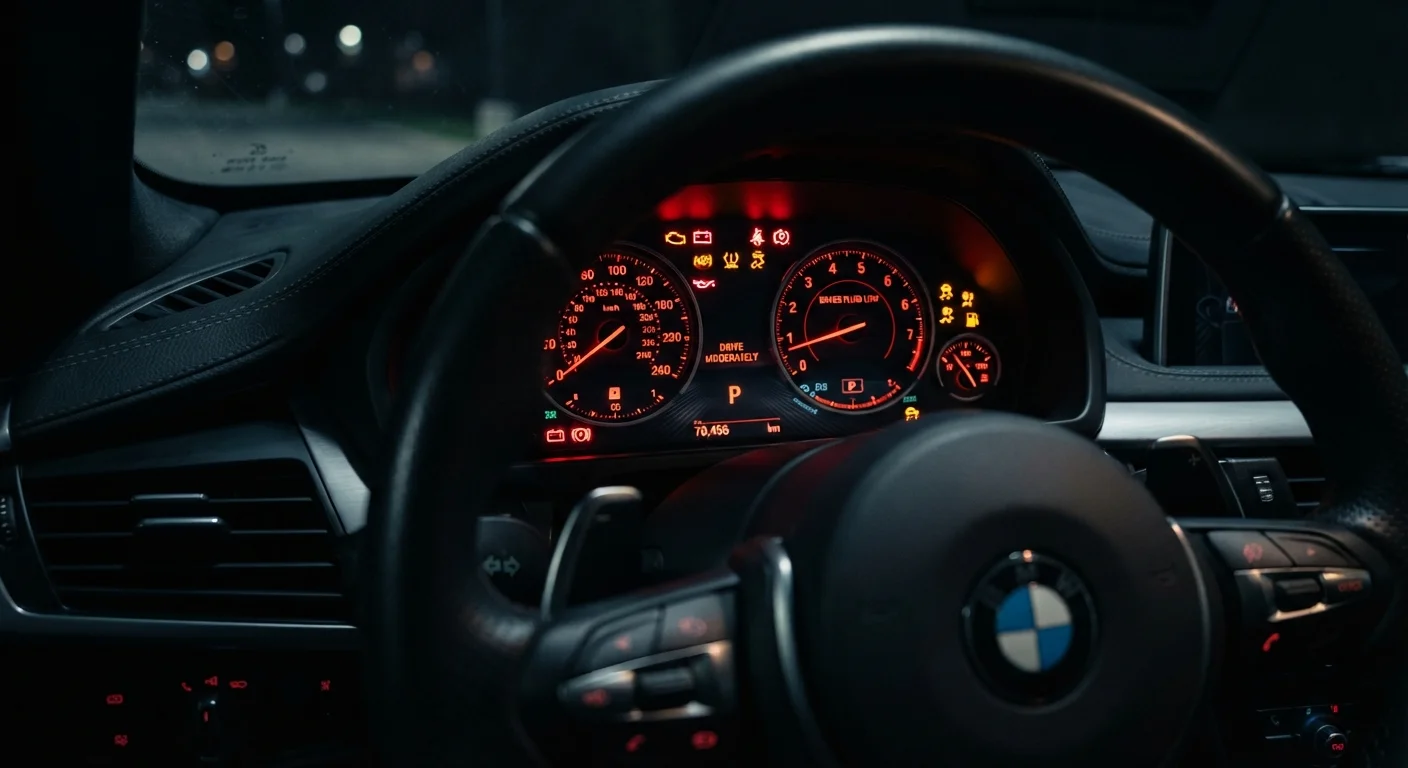
Color Is the First Signal
Before decoding any specific symbol, understand what the color of a warning light is telling you. Modern vehicles use a consistent traffic-light logic across most makes and models.
- Red: Stop, investigate, or pull over safely. These lights signal conditions that can cause immediate damage or create a safety hazard - low oil pressure, overheating engine, or brake system failure.
- Amber or Yellow: A caution signal. Something needs attention, but you typically have time to schedule service rather than pulling off the road immediately.
- Green or Blue: Informational only. High beams are on, a turn signal is active, or a driver-assist feature is engaged. No action needed.
Treating every light as an emergency wastes money and creates unnecessary anxiety. Treating every light as trivial can leave you stranded - or worse. Color gives you the first, fastest triage.
The Lights You're Most Likely to See
While a modern vehicle can display over 200 distinct indicators, a handful account for the vast majority of what everyday drivers encounter.
Check Engine Light (MIL)
This amber symbol - typically an engine outline - is the most misunderstood light on any dashboard. It does not always mean catastrophe. It means the vehicle's computer has logged a fault code that ranges from a loose gas cap to a misfiring cylinder. If the light is solid, you have time to investigate. If it's flashing, reduce speed and seek service promptly - a flashing check engine light often indicates an active misfire that can damage the catalytic converter. Our guide on why your check engine light came on covers your next steps in detail.
TPMS (Tire Pressure)
A horseshoe symbol with an exclamation point indicates one or more tires are significantly underinflated. Check all four tires with a gauge - don't rely on visual inspection. Underinflated tires reduce fuel economy, handling precision, and tire lifespan. For a full picture of what your tires are communicating, see what the numbers on your tires are telling you.
Oil Pressure Warning
A red oil can symbol means the engine is not receiving adequate oil pressure. Pull over safely and shut off the engine. Driving with low oil pressure can cause severe internal engine damage within minutes. Check the oil level only after the engine has cooled. If the level is correct, have the vehicle towed - do not drive it.
Battery / Charging System
A battery outline in red or amber signals that the charging system isn't maintaining voltage. This is typically the alternator, not the battery itself. You may have limited driving time before the vehicle loses electrical power entirely. Minimize electrical load and head to a service facility.
Brake System Warning
If this light appears while driving (not at startup, which is a normal self-check), it may indicate low brake fluid, a hydraulic pressure imbalance, or an engaged parking brake. First confirm the parking brake is fully released. If the light persists, treat it as a red-level concern and have the brakes inspected before further driving.
When to Drive, When to Stop, When to Call
The practical question most drivers face isn't "what does this light mean" - it's "what do I do right now?" Here's a straightforward framework:
- Red light, no driveability symptoms: Pull over safely as soon as possible. Continuing to drive risks serious damage.
- Amber light, no driveability symptoms: Schedule service within a few days. Monitor for any changes in the vehicle's behavior.
- Any light plus unusual sounds, smells, or handling changes: Stop driving and have the vehicle inspected before proceeding, regardless of color.
- Light disappears on its own: The fault code may still be stored. An intermittent issue can become a recurring one. Consider having the codes read at your next service visit.
A basic OBD-II scan tool - available at many auto parts stores for a modest cost - lets you retrieve fault codes at home. This doesn't replace a mechanic's diagnosis, but it gives you information to have a more informed conversation. If you're evaluating a used car and wondering about its history, our guide on reading a vehicle history report can help you spot patterns that matter.
This article is for general informational purposes only. Always consult a qualified mechanic for diagnosis and repair decisions specific to your vehicle.