

Key Takeaways
- A quick pre-trip inspection catches problems before they become dangerous or expensive on the road.
- Tires, lights, fluid levels, and visibility are the four highest-priority areas to check before driving.
- Most pre-trip checks take under ten minutes and require no special tools.
- Making this a consistent habit reduces your risk of breakdowns, accidents, and unexpected repair bills.
- Some checks - like tire pressure and oil - matter more for longer trips than short daily drives.
Summary
22 items · 5-15 minutes
Why a Walk-Around Pays Off Every Time
Most vehicle problems that lead to breakdowns or accidents don't appear without warning - they develop gradually and announce themselves with subtle signs that a hurried driver simply misses. A deliberate walk-around before you pull out of the driveway gives you the chance to catch a slow-leaking tire, a burned-out brake light, or a fluid puddle before any of those become a roadside emergency or a collision.
The habit also has a practical financial dimension. Catching a nail in your tire at home costs far less than a blowout on the highway. A non-functioning brake light caught early prevents a traffic stop or, worse, a rear-end collision. If you're planning a longer drive, these checks become even more important - see our Road Trip Logistics guide for a fuller pre-departure vehicle preparation process.
The checklist below is organized so that the most safety-critical items come first. Work through the groups in order, and the entire routine should take no more than five to fifteen minutes depending on your vehicle and conditions.
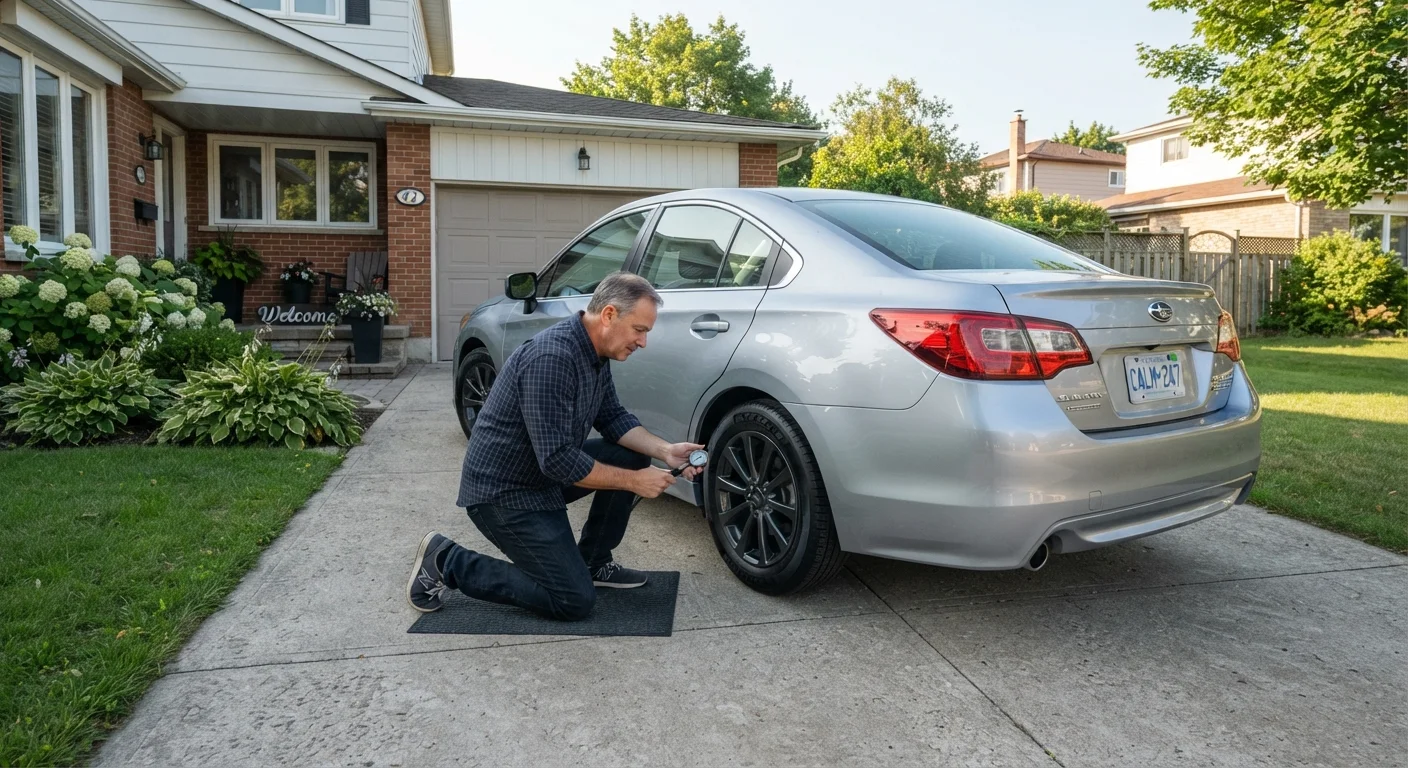
Tire pressure gauge
Accurately measures tire PSI so you can compare against the recommended level on your door jamb sticker.
Coin (quarter or penny)
Used for a quick tread-depth check to assess whether tires are dangerously worn.
Flashlight or phone torch
Helps inspect tires, under the vehicle, and engine bay fluid levels in low-light conditions.
Windshield washer fluid
Keeps the washer reservoir topped up for clear visibility on wet or dusty roads.
Engine oil (correct grade for your vehicle)
Allows you to top up oil on the spot if the dipstick shows a low level before departure.
How to Use This Checklist
Print it, bookmark it, or save it to your phone - whichever format means you'll actually use it. For everyday local trips, focus on the must items, particularly tires, lights, and visibility. For highway drives or trips in adverse weather, work through the full list. If you drive with newer or less-experienced passengers, consider doing the walk-around together so they learn the habit too. The Safe Driving From Scratch guide covers the broader habits that complement this pre-trip routine.
Never Skip Brake or Steering Checks
If your vehicle pulls strongly to one side during normal driving, the steering feels loose or unresponsive, or the brake pedal sinks lower than usual or feels spongy, do not drive the vehicle. These symptoms can indicate serious brake or suspension issues that require professional inspection before the vehicle is safe to operate. Driving with compromised brakes or steering puts everyone on the road at risk.
Items marked must are non-negotiable safety checks. Items marked should are strongly recommended, especially for trips longer than a few miles. Items marked nice to have are optional enhancements that add comfort or prevent minor inconveniences.
Tires
Lights and Signals
Visibility and Glass
Fluid Levels
Dashboard and Controls
Emergency Preparedness
After the Walk-Around: What to Do If You Find a Problem
Not every issue you discover requires canceling your trip. Use this quick decision framework:
- Tires visibly flat or severely underinflated: Do not drive. Inflate to the recommended PSI (found on the driver's door jamb sticker) or call for roadside assistance.
- Brake lights, headlights, or turn signals not working: Address before driving, especially at night or in poor weather. Many bulb replacements are straightforward, but if you're unsure, a mechanic can help quickly.
- Warning lights on the dashboard: A check engine light that came on recently warrants investigation. Our article on what to do when your check engine light comes on walks you through the next steps without panic.
- Fluid puddles under the vehicle: Identify the fluid if possible (oil is dark and oily; coolant is often green or orange and sweet-smelling; brake fluid is clear to yellowish). Don't drive if you suspect a brake fluid leak - contact a qualified mechanic.
- Windshield damage or dirty glass: Clean it before departure. Driving with a compromised view, especially into glare or at night, significantly increases risk. This matters even more on roads with changing surfaces - conditions covered in our guide on driving on wet roads, black ice, and gravel.
The goal isn't perfection - it's awareness. Catching problems early keeps you, your passengers, and everyone else on the road safer.