

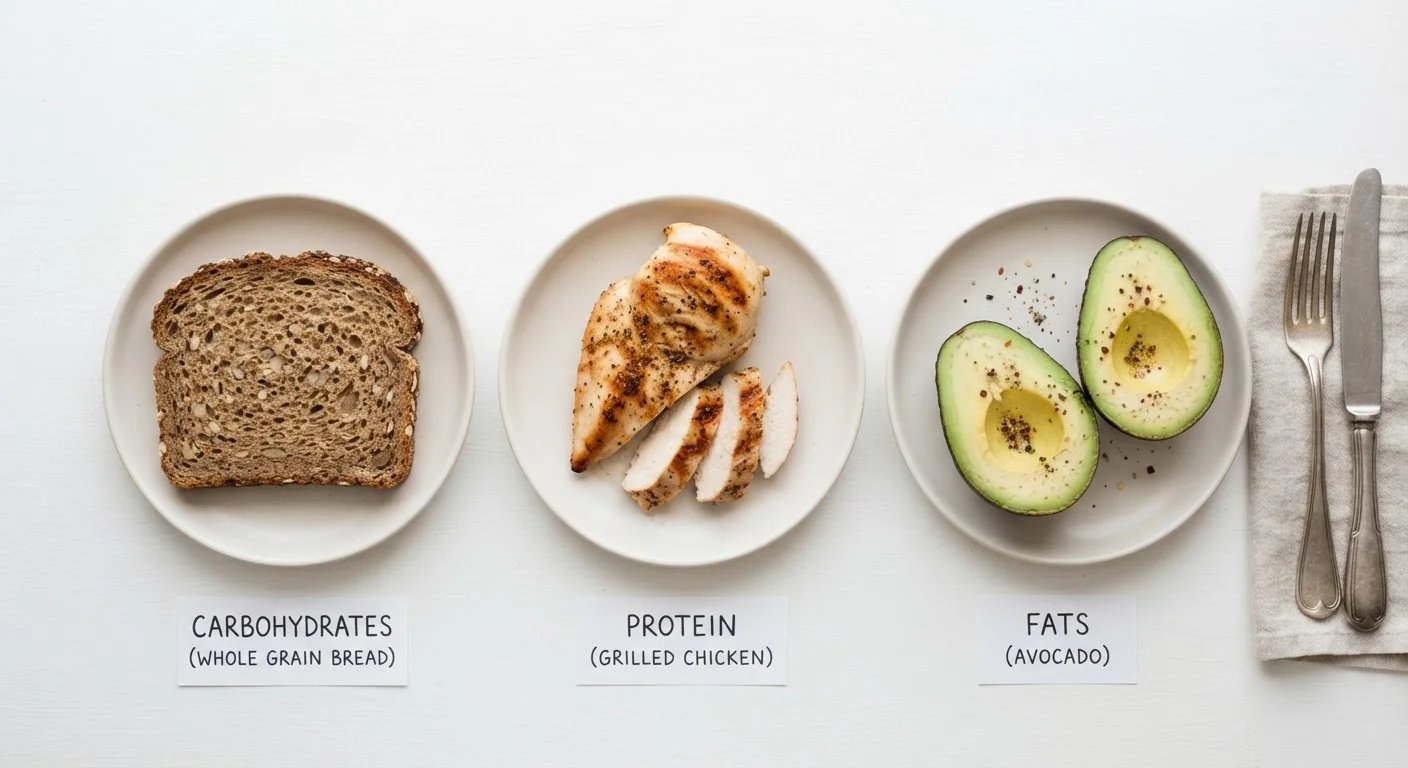
Key Takeaways
- All three macronutrients - carbs, protein, and fat - are essential; none is inherently harmful.
- Carbohydrates are your body's preferred and most efficient source of quick energy.
- Protein supports muscle repair, immune function, and the production of enzymes and hormones.
- Dietary fat is critical for brain health, hormone production, and absorbing fat-soluble vitamins.
- The quality and source of each macronutrient matter as much as the quantity you consume.
- A balanced diet typically includes all three macronutrients working together, not in isolation.
Macronutrients
Macronutrients are the three main categories of nutrients your body needs in relatively large amounts to produce energy and support basic functions: carbohydrates, protein, and fat. Unlike vitamins and minerals, which are needed in smaller quantities, macronutrients form the caloric foundation of your diet. Each one serves distinct roles that your body cannot easily replicate with the others.
Carbohydrates and protein each provide 4 calories per gram, while fat provides 9 calories per gram - a difference that reflects fat's denser energy storage function.
Why Macronutrients Matter More Than Individual Foods
Nutrition conversations often zoom in on specific foods - is bread bad? Is chicken the best protein? - but a more useful starting point is understanding the three macronutrient categories that make up virtually everything you eat. Carbohydrates, protein, and fat are the building blocks of your diet, and each plays a role your body depends on every single day.
Fear around one macronutrient or another has driven decades of dietary trends, from low-fat crazes to zero-carb diets. But the science consistently points in a different direction: all three are necessary, and cutting out any one of them entirely comes with trade-offs. What matters most is the quality of each macronutrient you choose, not whether to include it at all.
To understand more about how nutrition information is presented on packaged foods, see our guide to reading nutrition labels.
45-65%
Recommended share of calories from carbohydrates
According to the Dietary Guidelines for Americans, carbohydrates should make up roughly 45-65% of total daily caloric intake for most adults.
~5%
Americans meeting daily fiber recommendations
Research published in nutrition journals estimates that only about 5% of Americans consume the recommended daily amount of dietary fiber, a type of carbohydrate.
9 kcal/g
Calories per gram of dietary fat
Fat provides more than twice the energy density of carbohydrates or protein, which is why it plays an important role in energy storage in the body.
Carbohydrates: Your Body's Preferred Fuel
Carbohydrates are your body's go-to energy source, especially for your brain and muscles during activity. When you eat carbs, your digestive system breaks them down into glucose - a simple sugar that cells use to power everything from thinking to walking.
Not all carbohydrates behave the same way. Simple carbohydrates (like table sugar or white bread) digest quickly, producing a rapid rise in blood glucose. Complex carbohydrates - found in whole grains, legumes, and vegetables - digest more slowly and often come bundled with fiber, which supports digestion and helps you feel full longer.
Fiber, technically a carbohydrate, isn't digested for energy at all. Instead, it feeds beneficial gut bacteria, helps regulate blood sugar, and supports heart health. Most Americans fall short of the recommended daily fiber intake, making fiber-rich carb sources especially valuable. Many persistent beliefs about carbs don't hold up to scrutiny - our article on nutrition myths and what evidence shows explores this in depth.
Protein: The Body's Builder and Regulator
Protein does far more than build muscle, though that's what it's most famous for. Every cell in your body contains protein, and your system uses it continuously to repair tissue, produce enzymes, support immune responses, and make hormones including insulin.
Proteins are made up of smaller units called amino acids. Your body can produce some amino acids on its own, but nine - called essential amino acids - must come from food. Animal proteins (meat, eggs, dairy) typically contain all nine essential amino acids in sufficient amounts, making them "complete" proteins. Plant proteins like beans, lentils, and tofu can also meet your needs, especially when you eat a varied diet across the day.
“Protein is not just a nutrient for athletes. It's a foundational building block involved in virtually every biological process, from immune defense to hormone regulation.”
— Marion Nestle, Professor Emerita of Nutrition, Food Studies, and Public Health, New York University
Protein is also notably satiating - it tends to keep you feeling full longer than the same calorie count from carbohydrates or fat, which is one reason it features prominently in discussions about appetite regulation.
Fat: Essential, Not the Enemy
Dietary fat spent decades being vilified, but research has steadily rehabilitated its reputation. Fat is essential for absorbing fat-soluble vitamins (A, D, E, and K), building cell membranes, producing hormones, and supporting brain function - your brain is roughly 60% fat by dry weight.
The type of fat you eat matters significantly. Unsaturated fats - found in olive oil, avocados, nuts, and fatty fish - are associated with cardiovascular benefits in most research. Saturated fats, found in red meat and full-fat dairy, have a more nuanced relationship with health that researchers continue to study. Trans fats, largely eliminated from the U.S. food supply through regulatory action, were linked to increased cardiovascular risk.
Fat also slows digestion, which helps moderate how quickly other nutrients enter your bloodstream. For a broader look at how the nutritional value of foods compares beyond macronutrients alone, our article on nutrient density vs. calorie density offers helpful perspective.
How the Three Work Together
In real meals, macronutrients rarely appear in isolation. A bowl of lentil soup contains carbohydrates (the lentils and any grain), protein (lentils again), and fat (from any oil used in cooking). This combination is actually beneficial - the fat slows glucose absorption from the carbs, the protein supports satiety, and the fiber in the lentils supports digestion.
There's no single macronutrient ratio that works for every person. General dietary guidelines from health authorities suggest that a balanced diet draws roughly 45-65% of calories from carbohydrates, 10-35% from protein, and 20-35% from fat - but individual needs vary based on age, activity level, and health conditions. These ranges are reference points, not rigid rules.
If you want to understand how macronutrients compare to the vitamins and minerals your body also depends on, our overview of micronutrients for adults is a useful companion read.
This article is for general informational and educational purposes only and is not a substitute for professional medical or dietary advice. Please consult a qualified healthcare provider or registered dietitian for guidance specific to your health needs.