

Key Takeaways
- Skill level alone doesn't determine whether a project is DIY-appropriate - permits, codes, and liability matter too.
- Electrical, gas, structural, and plumbing-into-mains work typically requires licensed professionals and permits in most U.S. jurisdictions.
- Unpermitted work can complicate home sales, void insurance claims, and create safety hazards.
- Many cosmetic and surface-level projects are well within reach for motivated homeowners with basic tools.
- When in doubt, consult your local building department before starting any substantial project.
Our Verdict
Neither DIY nor hiring a contractor is universally the right answer. The decision should factor in safety codes, permit requirements, your honest skill assessment, and the long-term implications for your home's value and insurability. Cosmetic work often belongs in homeowner hands; anything touching systems - electrical, gas, structural, or plumbing - generally warrants a licensed professional.
| Best for | Recommended |
|---|---|
| Homeowners with basic tool skills and time to invest | DIY for cosmetic and surface projects |
| Projects involving electrical, gas, or structural changes | Licensed Contractor |
| Those planning to sell their home within a few years | Licensed Contractor for permitted work |
| Budget-conscious owners tackling low-risk improvements | DIY with thorough research and preparation |
Why the DIY vs. Contractor Decision Is More Than Skill
Most homeowners instinctively think of the DIY-versus-contractor question as a skills quiz: Can I do this? But the more complete question is: Should I? Skill is only one variable. Permits, safety codes, liability, and what happens at resale all shape the right answer - often more than your comfort level with a drill.
In the U.S., local building codes set legal requirements for a wide range of home improvement work. Many tasks - from adding a bedroom circuit to moving a load-bearing wall - require both a permit and a licensed professional to perform or inspect the work. Skipping that process isn't just a technicality. It can void homeowner's insurance coverage related to that work, create problems during a home inspection, and in some cases pose real physical danger. Our article on what a building permit actually covers walks through when you legally need one and why.
The decision framework here isn't about discouraging initiative - it's about protecting your investment and your household.
Projects That Generally Belong in Homeowner Hands
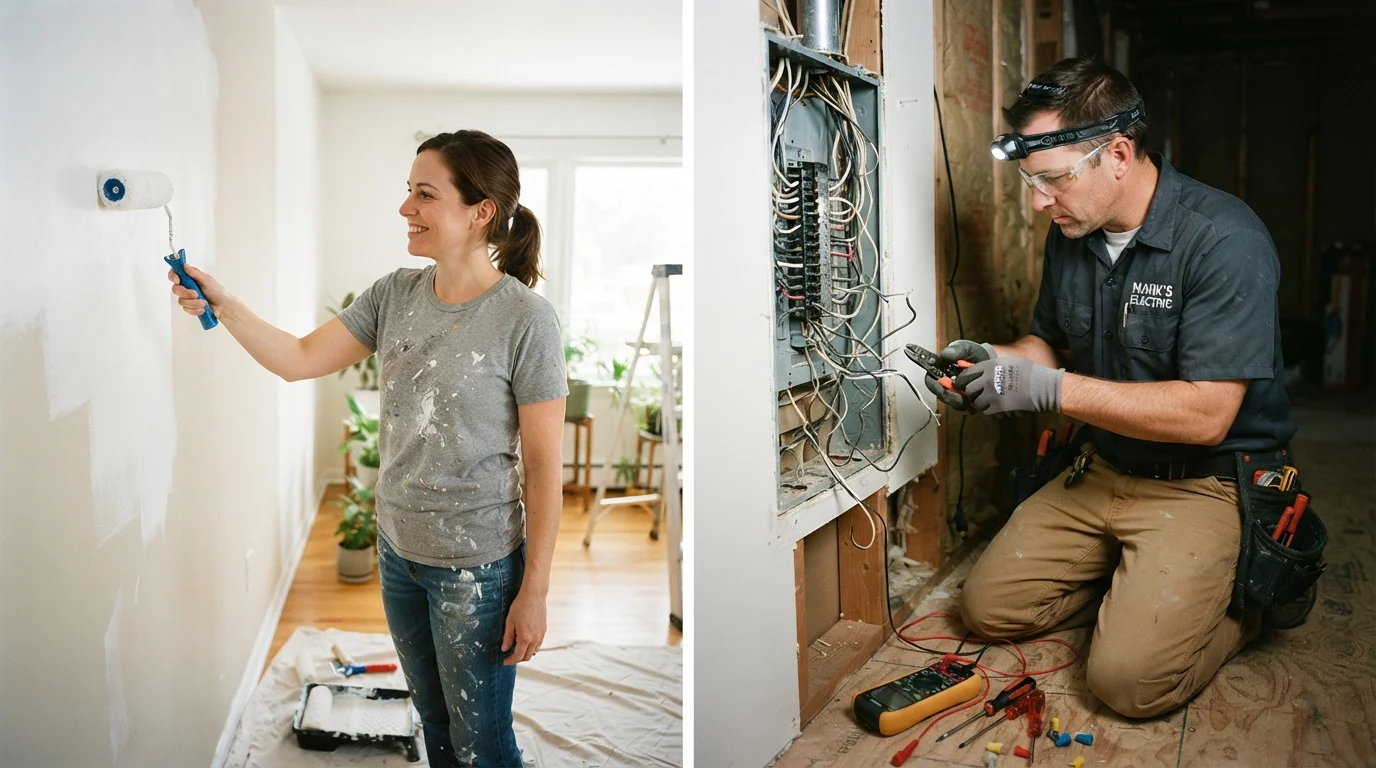
A wide range of cosmetic and maintenance tasks are well-suited to capable, prepared DIYers. These tend to share a few characteristics: they don't touch structural elements, electrical systems, gas lines, or plumbing tie-ins; they don't require permits in most jurisdictions; and mistakes, while annoying, are correctable without safety risk.
- Interior painting - walls, ceilings, trim, and cabinets
- Flooring installation - laminate, vinyl plank, and tile in non-wet areas
- Basic landscaping and garden work - planting, mulching, grading minor slopes
- Caulking and weatherstripping - sealing drafts around doors and windows
- Cabinet hardware and fixture swaps - replacing knobs, faucets (like-for-like, no line moves), and light fixtures where existing wiring is adequate
- Drywall patching - holes up to a certain size, not affecting insulation or structure
For deeper guidance on sequencing these tasks within a larger project, see our guide for first-time renovators.
Test Your Readiness Before Starting
Before committing to a DIY project, look up whether it requires a permit in your county or city - most building departments have this information online. If a permit is needed, check whether homeowners can pull their own (called an owner-builder permit) or whether a licensed contractor must be involved. Starting this research costs nothing and can save significant headache later.
Projects That Typically Require a Licensed Professional
Certain categories of work carry enough risk - to people, to the home, and to legal standing - that professional involvement is strongly advisable or legally required in most U.S. jurisdictions.
| DIY | Licensed Contractor | |
|---|---|---|
| Upfront cost | Lower (labor is your time) | Higher (labor + overhead) |
| Permit eligibility | Owner-builder permits in some jurisdictions | Full permit access in all jurisdictions |
| Code compliance assurance | Relies on homeowner research | Licensed trades are code-trained |
| Insurance implications | Risk of coverage gaps if work is unpermitted | Work typically meets insurer requirements |
| Resale impact | Unpermitted work may flag at inspection | Permitted work documented and transferable |
| Suitable project types | Cosmetic, surface, low-risk maintenance | Electrical, gas, structural, plumbing |
Electrical work beyond simple swaps: Adding circuits, upgrading panels, or running new wiring almost always requires a permit and a licensed electrician. Incorrect wiring is a leading cause of house fires and can be invisible inside walls for years.
Gas line work: Any modification to gas supply lines - for appliances, fireplaces, or outdoor connections - should be performed only by a licensed plumber or gas fitter. Leaks are life-threatening and rarely detectable by smell alone in their early stages.
Structural modifications: Removing walls, altering roof lines, adding load-bearing points, or modifying foundations requires engineering input and permits in virtually every municipality. This includes many basement finishing projects.
Plumbing tied into the main system: Moving drain lines, adding supply lines, or relocating fixtures typically requires a licensed plumber and permit. Our bathroom renovation walkthrough covers how to coordinate tradespeople effectively.
Don't Let Confidence Override Code
Experience with tools doesn't automatically qualify a homeowner for regulated work. Even skilled, experienced DIYers can create hazardous conditions in electrical, gas, or structural work - not because they lack ability, but because these systems have interdependencies that aren't always visible. When a project is in a regulated category, consult your local building department and consider getting at minimum a professional assessment before proceeding independently.
The Resale and Insurance Dimension
Unpermitted work follows a home. When you sell, a home inspector may flag additions, finish work, or system upgrades that don't have corresponding permits on file with the local building department. Buyers can - and do - walk away, or negotiate significant price reductions, when they discover unpermitted work.
Homeowner's insurance is similarly affected. If a fire starts in an improperly wired addition that was never inspected, insurers may deny or reduce your claim on grounds that the work wasn't up to code. This is a real-world scenario, not a theoretical edge case.
The math changes when you account for these downstream costs. A project that saves money up front can become expensive if it complicates a future sale or triggers a coverage dispute. For broader context on maintaining your home's systems and value, explore our home maintenance hub. Also, the same decision logic applies in other contexts - for example, our grooming at home vs. professional grooming guide shows how the DIY-vs.-professional framework plays out in an entirely different domain.
This article provides general educational information about home improvement decision-making. It is not a substitute for advice from a licensed contractor, engineer, or your local building department. Always verify permit and code requirements with local authorities before beginning any home improvement project.