

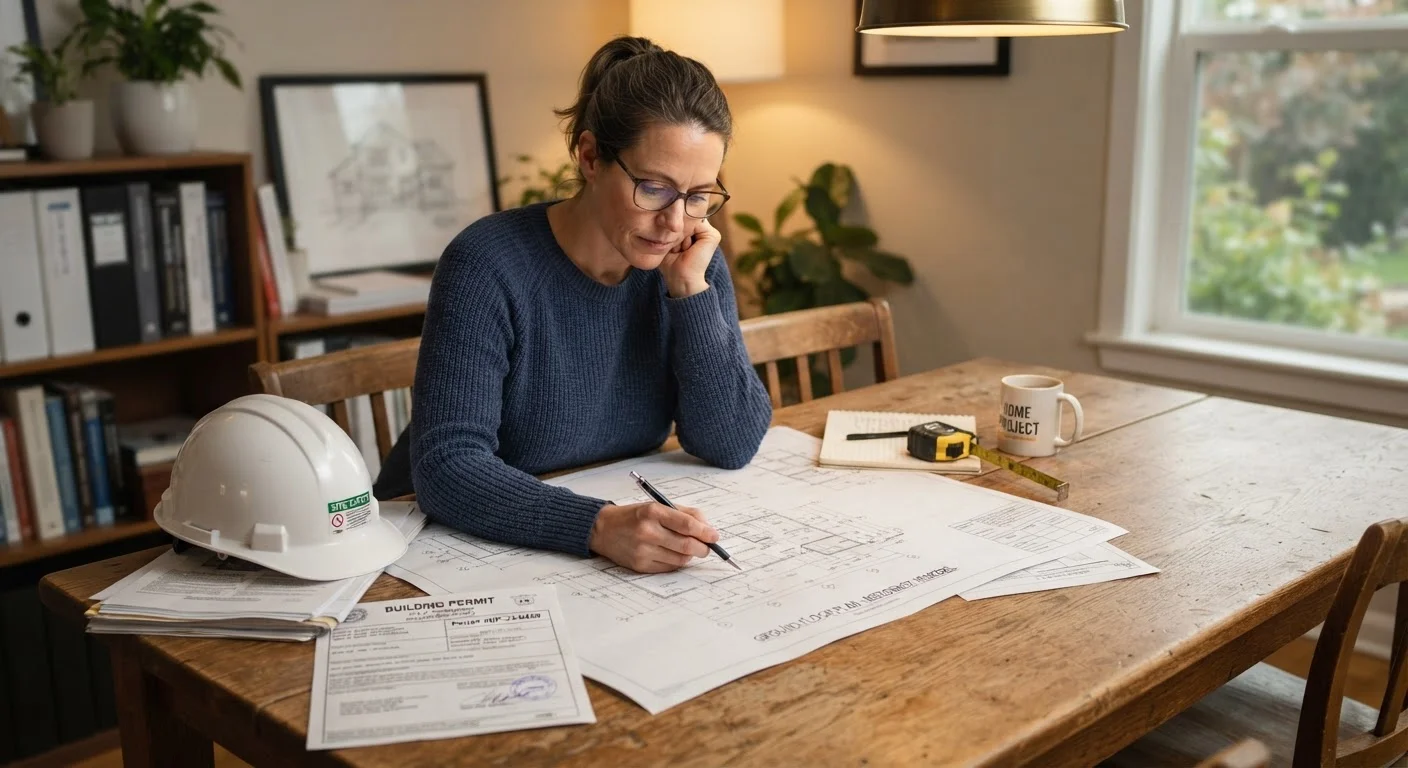
Key Takeaways
- Building permits exist primarily to protect your safety, not to create bureaucratic obstacles.
- Projects involving structural, electrical, plumbing, or HVAC work almost always require a permit.
- Skipping a required permit can result in fines, forced removal of work, and complications when selling your home.
- Permits are typically pulled by homeowners or licensed contractors before work begins - not after.
- Always verify local requirements with your municipal building department, since rules vary significantly by jurisdiction.
Building Permit
A building permit is an official government authorization that allows you to begin a specific construction, renovation, or improvement project on your property. It confirms that your planned work will be reviewed against local building codes - the set of safety standards that govern how structures must be built. Permits are issued by your local municipality, county, or city building department before work begins.
Building codes in the U.S. are generally based on model codes such as the International Building Code (IBC) or International Residential Code (IRC), but each jurisdiction adopts and amends these independently, so requirements vary by location.
Why Building Permits Exist
Building permits are not arbitrary red tape. They exist because home construction and renovation directly affect the structural integrity, fire safety, electrical safety, and overall habitability of a home. Local governments require permits so that a trained inspector can verify the work meets minimum safety standards before walls are closed up and problems become hidden - and potentially dangerous.
When permitted work passes inspection, you get documented proof that the project was done correctly. That record protects you, future occupants, and anyone who buys the home later. Inspections catch genuine hazards: improperly wired outlets, undersized structural beams, or drainage systems that would fail within years of installation. See our room-by-room renovation readiness checklist for a broader look at what to assess before starting any major project.
Permit Rules Vary by Location
There is no single national standard for what requires a permit. Requirements are set at the city, county, or municipal level, and can differ significantly even between neighboring towns. A project that requires a permit in one jurisdiction may not in another. Always verify with your specific local building department - not a neighbor's experience or a general internet search - before making assumptions.
Projects That Almost Always Require a Permit
While specific rules vary by jurisdiction, the following categories of work require a permit in the vast majority of U.S. localities:
- Structural changes: Adding or removing load-bearing walls, room additions, garage conversions, or decks over a certain height or square footage.
- Electrical work: Panel upgrades, adding new circuits, rewiring rooms, or installing EV chargers.
- Plumbing: Relocating or adding new supply or drain lines, installing a new water heater, or adding a bathroom.
- HVAC: Installing a new heating or cooling system, adding ductwork, or replacing a furnace or central air unit.
- Roofing: Full roof replacement or significant structural repairs (rules vary widely here).
- Fences and retaining walls: Over a certain height - typically 6 feet for fences and 4 feet for retaining walls, though thresholds differ by locality.
If a project touches any of these systems, assume a permit is required until your local building department tells you otherwise. Our guide on DIY vs. hiring a pro can help you think through who should handle the work once you know what's involved.
~40%
Home renovations estimated to involve unpermitted work
Industry estimates suggest a significant share of home improvement projects are completed without required permits, creating hidden liability for homeowners.
Varies by city
Permit fee range for common residential projects
Fees can range from under $100 for minor projects to $1,000 or more for major additions; always request a fee schedule from your local building department.
1-6 weeks
Typical permit review timeline for residential projects
Processing times depend on local department workload and project complexity; high-demand periods such as spring and summer often mean longer waits.
Projects That Typically Don't Require a Permit
Many smaller maintenance and cosmetic projects generally fall below the permit threshold, though you should always confirm locally:
- Painting interior or exterior surfaces
- Installing flooring, tile, or carpet
- Replacing like-for-like fixtures (faucets, light fixtures) without new wiring or plumbing
- Installing kitchen cabinets or countertops (without moving plumbing)
- Minor landscaping that doesn't involve grading or drainage changes
- Building small, freestanding garden sheds under a certain square footage
Even when a permit isn't required, the work still needs to be done correctly and safely. "No permit required" is not the same as "no standards apply."
What Happens During the Permit Process
Pulling a permit involves a few straightforward steps. First, you or your contractor submit an application to your local building department, along with project plans or drawings depending on the scope. The department reviews the plans against local code requirements - a process that can take days or weeks.
Once approved, the permit is issued and work can begin. At designated milestones - before drywall is hung, for example - an inspector visits to verify the work in progress meets code. After the final inspection passes, the permit is closed out and the work is officially on record.
Before hiring anyone for permitted work, review our questions to ask a contractor before the job starts.
Call Before You Start - It's Free
Your local building department is often more accessible than homeowners expect. A quick phone call or website check before starting any project can tell you exactly whether a permit is required, what documents to submit, and how long approval typically takes. This simple step can prevent costly mistakes, fines, or forced teardown of completed work.
The Real Risks of Skipping a Permit
Homeowners sometimes skip permits to save money or time, but the risks are significant and often outweigh the short-term convenience:
- Fines and stop-work orders: If discovered, unpermitted work can result in financial penalties and a mandatory halt to construction.
- Forced demolition: In some cases, local authorities can require that unpermitted work be torn out entirely - at the homeowner's expense.
- Complications at sale: Real estate transactions increasingly involve detailed disclosure requirements. Unpermitted square footage or improvements can kill a deal, reduce appraisal value, or expose you to legal liability.
- Insurance gaps: If unpermitted work contributes to a fire, flood, or structural failure, your homeowner's insurance policy may deny the claim.
- Safety hazards: Without inspection oversight, defective work can go undetected until a serious problem - or injury - occurs.
The permit process is designed to be navigable, not punishing. When in doubt, a phone call to your local building department is free and can save you from expensive consequences later.