

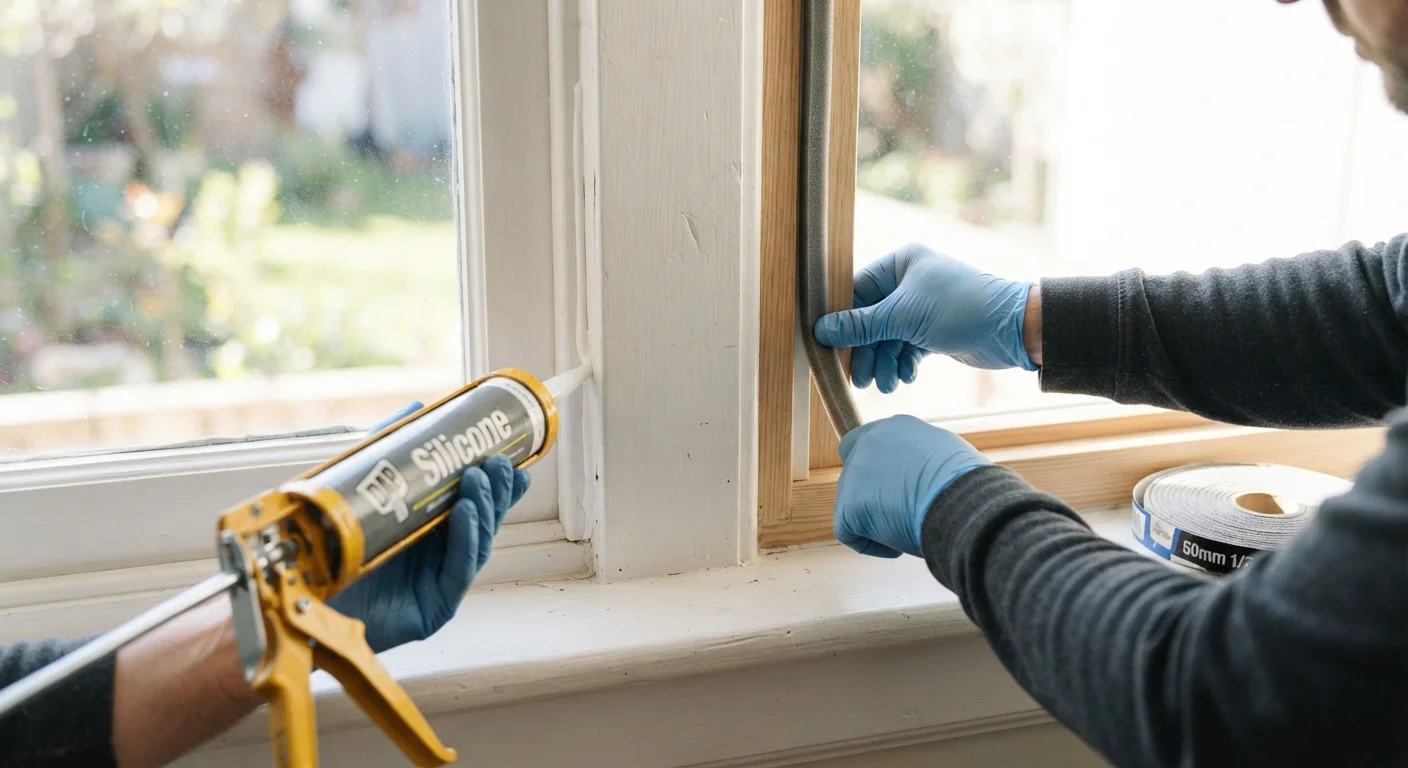
Key Takeaways
- Caulk seals stationary gaps; weatherstripping seals moving parts like doors and operable windows.
- Using caulk on a door jamb can prevent the door from closing properly over time.
- Weatherstripping wears down with use and typically needs replacement every few years.
- Many drafty homes need both caulk and weatherstripping applied in different locations.
- Proper surface preparation is critical for both products to adhere and last.
Option A
Caulk
The permanent, flexible sealant for stationary gaps.
Best for: Sealing fixed cracks and gaps around window frames, door frames, pipes, and where different building materials meet.
Option B
Weatherstripping
The compressible seal for moving parts.
Best for: Creating an air-tight seal around movable doors and windows that open and close regularly.
If you have a visible crack between your window frame and exterior wall
Caulk
That gap is stationary and rigid - caulk bonds to both surfaces permanently and flexes with minor movement due to temperature changes.
If cold air is sneaking in around a door that opens and closes daily
Weatherstripping
The door needs a seal that compresses on contact and springs back repeatedly without cracking or losing its grip.
If you're sealing a drafty older home with both fixed gaps and leaky doors
Both Caulk and Weatherstripping
Most homes benefit from caulk around frames and structural joints plus weatherstripping on all operable doors and windows.
If you're working on bathroom windows near moisture and steam
Caulk
A waterproof, mold-resistant caulk handles the moisture exposure far better than most weatherstripping materials.
Why the Distinction Matters
When cold air creeps in around your windows and doors, the temptation is to grab whatever's handy and fill the gap. But using the wrong product in the wrong place can mean a wasted afternoon - or worse, a door that won't close properly or a seal that fails within a season.
The core rule is simple: caulk is for stationary surfaces; weatherstripping is for surfaces that move. Understanding why each works the way it does helps you apply them correctly the first time.
Drafts account for a meaningful share of home heating and cooling loss. Addressing them strategically - with the right material in the right place - is one of the most cost-effective upkeep tasks a homeowner can do. For a broader look at common misconceptions around air sealing and insulation, see our article on common home insulation myths.
| Criterion | Caulk | Weatherstripping |
|---|---|---|
| Best application | Fixed, stationary gaps and joints | Moving parts - doors and operable windows |
| How it seals | Bonds and cures to both surfaces | Compresses when door or window closes |
| Typical lifespan | 5-20 years (varies by type and prep) | 2-5 years with regular use |
| Common materials | Silicone, latex, polyurethane | Foam tape, V-strip, rubber bulb, door sweep |
| Paintable | Yes (latex); No (silicone) | Generally no |
| DIY difficulty | Low to moderate | Low |
| Risk if misapplied | Cosmetic mess; weak seal | Door may not close or latch properly |
When to Use Caulk
Caulk is a flexible, adhesive sealant that bonds to two adjacent surfaces and dries or cures into a durable bead. It's designed for gaps that don't open, close, or flex significantly - places where two materials meet and stay put.
Common caulk locations include:
- The joint between a window or door frame and the surrounding wall (interior and exterior)
- Where siding meets trim boards
- Around pipes and vents that pass through exterior walls
- Along the base of exterior door frames at the threshold
- Gaps in baseboards or crown molding near exterior walls
Silicone caulk holds up well outdoors and around moisture-prone areas. Latex (acrylic) caulk is easier to apply and paint over, making it a good choice for interior trim work. For bathrooms, use a product specifically labeled mold-resistant. If you want your caulk to last, surface prep is everything - the gap must be clean, dry, and free of old crumbling sealant before you begin. Our guide on why caulk fails and how to make it last covers the most common prep mistakes in detail.
25-30%
Home heating/cooling lost through air leaks
The U.S. Department of Energy estimates that air leaks account for roughly 25-30% of heating and cooling energy use in a typical home.
$0.50-$3
Cost per linear foot of weatherstripping
Weatherstripping materials are widely available at hardware stores, with most standard options ranging from under a dollar to a few dollars per linear foot depending on type.
When to Use Weatherstripping
Weatherstripping is a compressible material installed along the edges of doors and operable windows - anywhere a movable surface needs to form a seal when closed. Unlike caulk, it isn't adhesive in the bonding sense; it works by being physically compressed between two surfaces every time you shut the door or window.
Common weatherstripping locations include:
- Around all four sides of exterior door frames (door stops)
- Along the bottom of exterior doors (door sweeps or threshold seals)
- Around operable window sashes that slide or swing open
- Along garage door frames
Weatherstripping comes in several forms: foam tape (inexpensive, easy to install, shorter lifespan), V-strip or tension seal (durable, good for sliding windows and door sides), door sweeps (attached to the door bottom), and rubber or silicone bulb seals (long-lasting, often used on door stops). The right type depends on the gap size and how much friction the surface experiences when moving.
Because weatherstripping is compressed and released repeatedly, it degrades with use. Inspect it annually and replace it when it looks flattened, torn, or cracked - typically every two to five years depending on the material and traffic.
Using Both Together
In most homes, a complete air-sealing project requires both products working in tandem. A well-weatherstripped door that sits in a frame with cracks along the wall joint will still leak. Similarly, a beautifully caulked window frame doesn't help if the operable sash has a gap when closed.
A practical approach: walk the perimeter of each exterior door and window and assess each component separately. Check the frame-to-wall joint (caulk territory) and then check the movable parts (weatherstripping territory). Don't neglect interior joints along basement walls, crawl space access panels, and attic hatches - these are common overlooked sources of conditioned air loss.
For bathrooms, the same principles apply. Fixed joints around tile surrounds and window frames call for caulk, while any operable window hardware or door gaps call for weatherstripping. Our article on keeping bathroom grout and caulk intact covers the moisture-specific considerations in more depth.
Neither product requires professional installation for most residential applications, but take your time. A rushed bead of caulk that bubbles or a strip of foam tape applied to a dirty surface will fail quickly and need redoing. Done carefully, these are among the most satisfying and immediately noticeable home maintenance wins you can accomplish in a weekend.