

Key Takeaways
- Envelope budgeting allocates every dollar of income to a named spending category before the month begins.
- The core discipline - stopping when the envelope is empty - works whether you use cash or a digital app.
- It is especially effective for people who overspend in discretionary categories like dining out or entertainment.
- Digital envelope tools can sync with bank accounts, making the method practical without carrying cash.
- Envelope budgeting pairs well with zero-based budgeting and other structured frameworks.
Envelope Budgeting
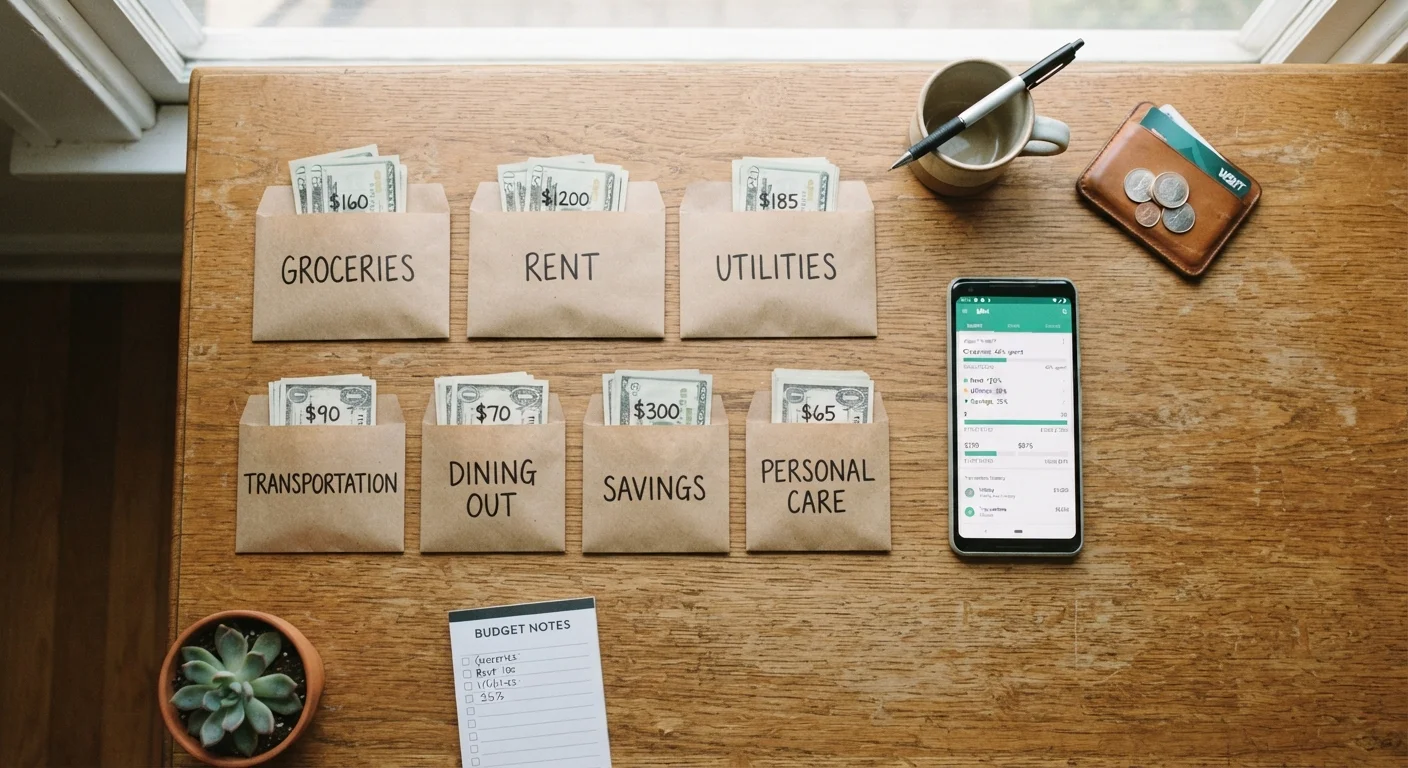
Envelope budgeting is a cash-based spending system where you divide your take-home pay into physical envelopes - each labeled for a specific spending category, such as groceries, gas, or dining out. Once an envelope is empty, spending in that category stops until the next pay period. The method enforces hard spending limits through the simple, tangible reality of running out of cash.
In its digital form, envelope budgeting replicates this logic using virtual "envelopes" or budget buckets within an app or spreadsheet, with transactions automatically reducing each category balance.
How the Envelope Method Works
The mechanics are straightforward. At the start of each pay period, you calculate your take-home income and divide it across spending categories. Each category gets its own envelope - physical or virtual - funded with a set dollar amount. As you spend, money leaves the envelope. When it hits zero, that category is done for the month.
What makes this system powerful is the built-in constraint. Unlike tracking spending after the fact, envelope budgeting forces you to decide - in advance - how much each area of your life is worth. This intentionality is what separates it from passive spending habits. Make sure your categories cover every regular expense; our spending categories reference is a useful starting point for building your list.
Start With Just Three or Four Envelopes
New budgeters often try to track every conceivable category at once and burn out within weeks. Begin with the three or four categories where you most frequently overspend - typically groceries, dining out, and entertainment. Once those feel natural, expand your envelope system gradually.
The Digital Evolution of Envelope Budgeting
The original system required carrying cash and physically distributing bills into labeled envelopes - practical in an era before debit cards, but clunky today. Digital envelope tools preserve the logic while removing the friction.
Budgeting apps and spreadsheet templates now let users create virtual envelopes that sync with their bank accounts. When you swipe your debit card at the grocery store, the purchase deducts from your grocery envelope automatically. You can check remaining balances before spending, set alerts when a category runs low, and fund envelopes the moment your paycheck deposits.
The trade-off is that digital tools can feel less visceral than watching physical cash disappear. Some people intentionally use cash for high-temptation categories - dining out or impulse shopping - while managing fixed expenses digitally. Comparing paper, spreadsheet, and app-based tracking can help you decide which format fits your habits.
1 in 3
Americans who have no monthly budget
According to a survey by the National Foundation for Credit Counseling, a significant share of U.S. adults report not following any structured spending plan.
~$1,000+
Average monthly discretionary spending per U.S. household
U.S. Bureau of Labor Statistics Consumer Expenditure data shows substantial monthly spending on food away from home, entertainment, and apparel - the categories where envelope budgets have the most impact.
Who Benefits Most From This Approach
Envelope budgeting suits anyone who finds it easy to overspend in specific categories without realizing it. It's particularly effective for:
- New budgeters who want a concrete, visual system rather than an abstract spreadsheet
- Discretionary overspenders who regularly exceed their dining, entertainment, or shopping limits
- Couples managing joint finances, where shared visibility into each category's balance reduces conflict
- People recovering from debt, who need a strict framework to curb non-essential spending
It's less suited for people with highly variable expenses or complex financial lives involving multiple income streams, investments, and irregular large costs. For those cases, a more flexible framework may work better. Don't forget that irregular expenses - annual fees, car repairs, holiday gifts - need their own envelopes too; our article on hidden household budget costs explains how to plan for them.
Setting Up Your Envelope Budget
Getting started takes one focused session. Follow these steps:
- Calculate your monthly take-home income. Use your net pay after taxes and deductions - not gross income.
- List every spending category. Cover fixed expenses (rent, insurance, utilities) and variable ones (groceries, fuel, entertainment).
- Assign a dollar amount to each category. Base these on your actual recent spending, not what you wish you spent.
- Fund each envelope. Distribute cash physically, or set up category budgets in your chosen digital tool.
- Track every transaction and deduct it from the corresponding envelope in real time.
A budget that survives real life accounts for imperfection - if your grocery envelope runs short in month one, adjust the allocation rather than abandoning the system entirely. Treat the first month as a calibration period, not a test to pass or fail.
This article is for general informational and educational purposes only and does not constitute personalized financial advice. Consider consulting a qualified financial professional for guidance specific to your situation.