

Key Takeaways
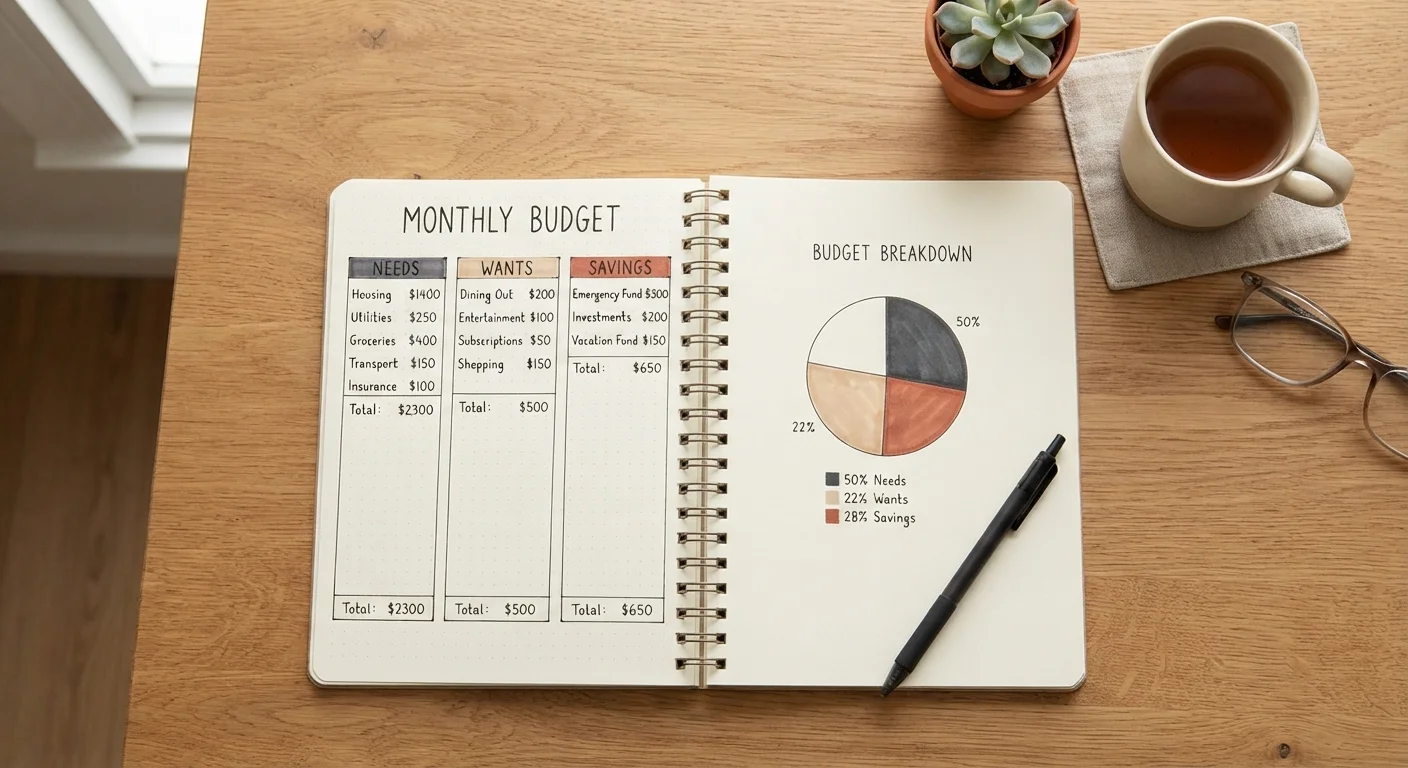
- The 50/30/20 rule splits after-tax income into needs (50%), wants (30%), and savings or debt (20%).
- It works best as a flexible starting point, not a rigid prescription for every household.
- High costs of living in many U.S. cities can make the 50% needs cap difficult to maintain.
- The 20% savings bucket can cover emergency funds, retirement contributions, and debt payoff.
- Adjusting the percentages to fit your situation is expected - and encouraged.
- Automating your savings allocation can make the 20% goal significantly easier to sustain.
The 50/30/20 Rule
The 50/30/20 rule is a budgeting guideline that divides your after-tax income into three categories: 50% for needs, 30% for wants, and 20% for savings or debt repayment. It's designed to give you a simple, memorable structure without requiring you to track every dollar. The goal is balance - covering essentials, leaving room for enjoyment, and consistently building financial security.
The framework was popularized by Senator Elizabeth Warren and co-author Amelia Warren Tyagi in their 2005 book 'All Your Worth.' It applies to net (after-tax) income, not gross pay.
How the Three Categories Actually Break Down
The rule divides your monthly take-home pay into three buckets. Understanding exactly what belongs in each one is where most people get tripped up.
Needs (50%): These are non-negotiable expenses - things that would seriously disrupt your life if unpaid. Rent or mortgage, electricity and water, groceries, health insurance premiums, transportation costs required for work, and minimum loan or credit card payments all belong here. The key test: would skipping this payment create a serious consequence?
Wants (30%): These are lifestyle choices - real and legitimate, but discretionary. Streaming services, gym memberships, restaurant meals, vacations, and clothing beyond the basics fall into this category. Many people underestimate their wants spending, which is why reviewing bank statements before budgeting is worthwhile. See spending categories every budget should account for for a practical reference.
Savings and debt repayment (20%): This bucket covers emergency savings, retirement contributions, investment accounts, and extra payments toward debt. Treating this category as a fixed commitment - rather than whatever is left over - is what separates the rule from informal spending habits.
37%
Americans who follow a formal budget
A Gallup survey found that fewer than four in ten American adults maintain a detailed household budget.
~30%
Median share of income spent on housing
The U.S. Bureau of Labor Statistics Consumer Expenditure Survey consistently shows housing as the single largest spending category for American households.
57%
Adults unprepared for a $1,000 emergency
Bankrate's annual emergency savings report has repeatedly found that a majority of U.S. adults could not cover an unexpected $1,000 expense from savings alone.
Where the Rule Works Well - and Where It Struggles
The 50/30/20 rule earns its popularity because it is genuinely easy to remember and requires no spreadsheet. For someone new to budgeting or someone whose finances are relatively uncomplicated, it provides immediate structure without overwhelming complexity.
But the framework has real limitations worth acknowledging honestly.
High cost-of-living areas: In cities like San Francisco, New York, or Seattle, housing alone can consume 40-50% of a moderate income. That leaves almost nothing for other needs, let alone wants or savings. In these situations, the 50% cap is less a guideline and more a reminder of how strained budgets can become.
Lower incomes: When income is modest, basic needs may consume well over half of take-home pay regardless of spending habits. The rule works best for middle-range incomes where there is genuine flexibility in the budget.
Irregular income: Freelancers, gig workers, and anyone with variable earnings need to plan around fluctuating monthly income. Applying a fixed percentage model requires an additional step - estimating a conservative baseline income first.
These limitations don't disqualify the rule; they just mean it works better as a starting framework than a permanent, rigid system. Building a budget that survives real life explores how to adapt any method to your actual circumstances.
“A budget is telling your money where to go instead of wondering where it went.”
— Dave Ramsey, Personal finance author and radio host
Making the 20% Savings Target Stick
The savings and debt-repayment bucket is the most powerful part of the rule - and the easiest to deprioritize when money feels tight. A few approaches make it more likely to hold.
Automate first, spend second. Setting up an automatic transfer to a savings or retirement account the day after your paycheck arrives removes the temptation to spend that money first. Automating savings explains how this behavioral shift tends to produce more consistent results than manual saving.
Divide the 20% with intention. Not all savings goals are equal. Consider allocating portions toward an emergency fund (generally three to six months of essential expenses), retirement contributions, and - if applicable - accelerated debt payoff beyond your minimum payments.
Start smaller if needed. If 20% feels unreachable right now, starting at 10% and increasing by 1-2% per year is a practical path forward. Momentum matters more than perfection when beginning to build savings habits.
Review Your Buckets Every Few Months
Life changes - a new lease, a raise, or a paid-off loan can all shift which category your dollars belong in. Revisiting your three buckets every three to six months keeps the framework accurate and prevents outdated assumptions from undermining your plan.
This article is for general informational and educational purposes only and does not constitute personalized financial advice. For guidance tailored to your individual situation, consider consulting a qualified financial professional.