

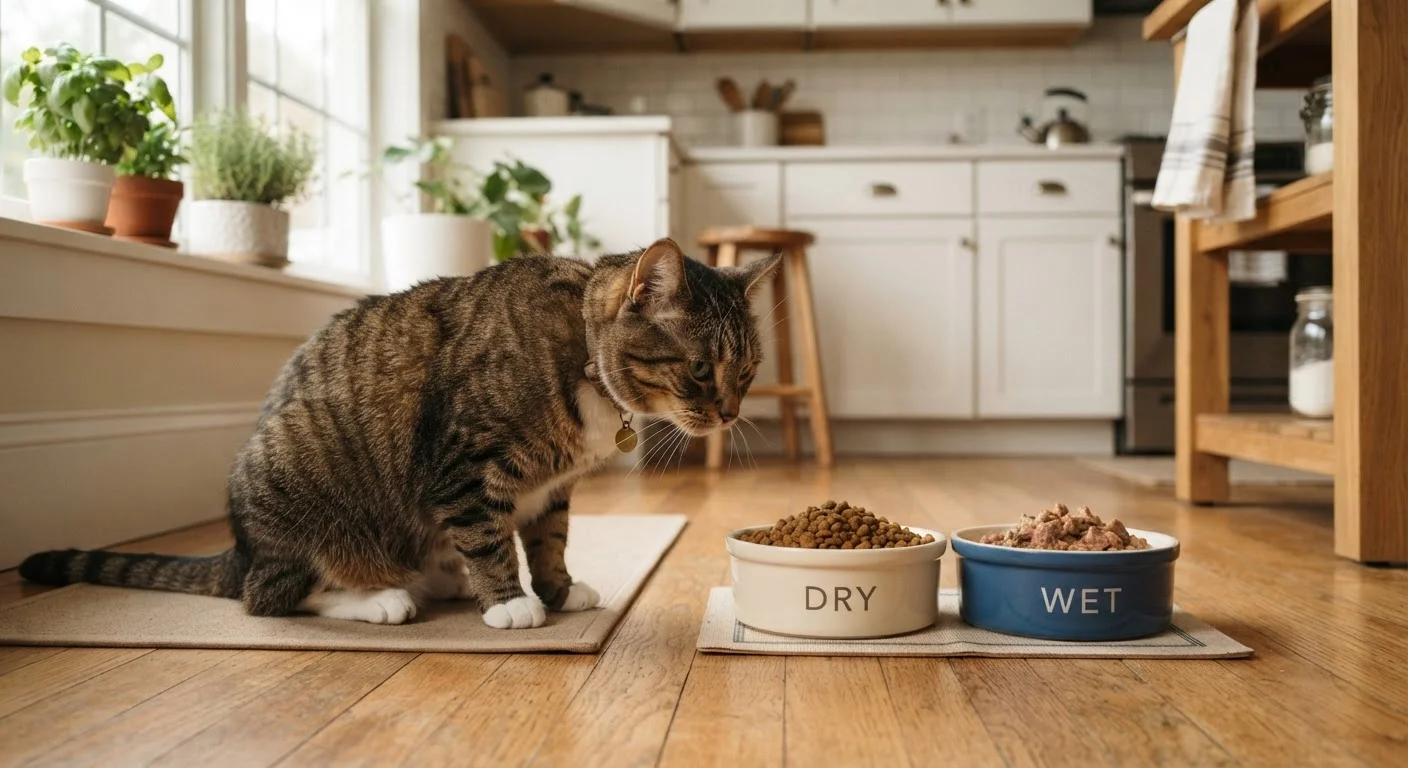
Key Takeaways
- Wet food provides significantly more moisture, supporting urinary and kidney health in cats.
- Dry kibble is calorie-dense and convenient, but cats rarely compensate by drinking enough extra water.
- A combination approach - mixing both types - can balance hydration, palatability, and cost.
- Life stage matters: kittens, seniors, and cats with health conditions often have specific food-type needs.
- Always consult your veterinarian before making significant changes to your cat's diet.
Option A
Dry Cat Food (Kibble)
The convenient, calorie-dense daily staple.
Best for: Cats who do well with free-feeding, owners managing tight budgets, or households needing longer shelf life without refrigeration.
Option B
Wet Cat Food (Canned or Pouched)
The moisture-rich option with broader palatability.
Best for: Cats prone to urinary issues, picky eaters, seniors with dental trouble, or any cat that struggles to stay adequately hydrated.
If your cat has a history of urinary tract issues or kidney disease
Wet Cat Food (Canned or Pouched)
Higher moisture content helps dilute urine and supports kidney function. Veterinarians frequently recommend wet food for cats managing these conditions.
If convenience and cost management are your top priorities
Dry Cat Food (Kibble)
Kibble stores easily, doesn't spoil quickly once poured, and generally costs less per calorie than wet food options.
If your cat is a senior over age 10
Wet Cat Food (Canned or Pouched)
Older cats often develop dental sensitivity and reduced thirst drive, making soft, moisture-rich food easier to eat and digest.
If you want to balance nutrition, hydration, and budget
Dry Cat Food (Kibble)
A mixed feeding strategy - dry food as the base with wet food added regularly - works well for many healthy adult cats and gives owners flexibility.
If your cat is a picky eater or has a reduced appetite
Wet Cat Food (Canned or Pouched)
Wet food's stronger aroma and varied textures tend to be more appealing to cats with selective appetites or diminished senses of smell.
What Actually Differs Between Dry and Wet Cat Food
The most significant difference between dry and wet cat food isn't flavor - it's water content. Wet food is typically 70-80% moisture, while dry kibble usually contains only 8-10%. Because cats evolved as desert animals with a low thirst drive, that gap has real consequences for health.
Cats who eat primarily dry food tend to produce more concentrated urine, which can contribute to the formation of urinary crystals and increase the risk of lower urinary tract disease over time. Wet food helps offset this by delivering hydration directly through meals - something many cats simply won't compensate for by drinking more from a bowl.
Beyond moisture, both formats can be nutritionally complete when formulated to meet AAFCO standards. Protein content, fat ratios, and micronutrients vary more by brand and formula than by food type alone. Reading the nutritional adequacy statement on any label is a reliable starting point.
| Criterion | Dry Cat Food (Kibble) | Wet Cat Food (Canned or Pouched) |
|---|---|---|
| Moisture Content | 8-10% | 70-80% |
| Urinary Health Support | Lower - concentrated urine risk | Higher - dilutes urine naturally |
| Cost Per Meal | Generally lower | Generally higher |
| Shelf Life (Opened) | Weeks to months (airtight storage) | 24-48 hours refrigerated |
| Palatability | Moderate | High - stronger aroma and texture |
| Ease of Free-Feeding | Yes | No - spoils when left out |
| Best Life Stage Fit | Healthy adults | Kittens, seniors, health-condition cats |
| Dental Impact | Minor mechanical scraping benefit | No mechanical cleaning benefit |
Practical Trade-Offs for Everyday Feeding
Dry food wins on convenience. It doesn't spoil once served, travels easily, and is typically less expensive per feeding. Free-feeding - leaving food out throughout the day - is only practical with kibble, though it does carry a risk of overeating in cats prone to weight gain.
Wet food requires more handling: opened cans must be refrigerated and used within 24-48 hours, and uneaten portions left out spoil faster. Cost per meal is generally higher, and some cats make a mess with softer textures. That said, the palatability advantage is real - wet food's scent and texture appeal strongly to most cats, which matters for seniors or recovering animals with reduced appetite.
For owners weighing both, a combination approach is widely used and often recommended by veterinarians. Offering wet food once or twice daily alongside a measured dry kibble portion gives cats hydration benefits without abandoning convenience entirely. For structured guidance on how often and how much to feed, see our guide to feeding schedules and portions.
Transitioning Between Food Types
If you decide to switch your cat's food - whether moving from dry to wet, or introducing a mix - do so gradually over seven to ten days. Abrupt dietary changes can cause digestive upset, including vomiting or loose stools. Start by replacing a small portion of the current food with the new option and increase the ratio slowly. Cats with sensitive stomachs may need a longer transition window.
Choosing by Life Stage and Health Needs
Kittens have high caloric needs and benefit from the easy digestibility of wet food during their earliest weeks. Many owners transition to a mix of wet and dry as kittens approach four to six months. Adult cats in good health can thrive on either format, provided their overall caloric intake and hydration are appropriate for their weight and activity level.
Senior cats often benefit most from wet food. Dental wear, reduced kidney function, and a declining sense of smell all make moist, aromatic food easier to eat and more appealing. If your cat is over ten, their nutritional needs shift in several ways - our guide to caring for a senior cat covers the full picture.
Cats managing specific health conditions - urinary disease, chronic kidney disease, diabetes, or obesity - should have their diet guided by a veterinarian. Food type can significantly affect disease progression or management in these cases, and a one-size-fits-all recommendation doesn't apply.
This article provides general educational information about cat nutrition and is not a substitute for personalized veterinary advice. Always consult your veterinarian before making significant changes to your cat's diet, especially if your cat has an existing health condition.