Feeding Schedules, Portions, and Treats: Building Healthy Eating Habits for Your Cat

Key Takeaways
- Most adult cats do best with two measured meals per day rather than continuous free-feeding.
- Portion sizes depend on your cat's weight, age, activity level, and the caloric density of their food.
- Treats should make up no more than 10% of your cat's total daily caloric intake.
- Kittens, seniors, and cats with health conditions have distinct feeding needs that warrant veterinary guidance.
- Consistency in feeding times helps regulate digestion and reduces food-seeking behavior.
Why Feeding Structure Matters for Cats
Cats are creatures of habit, and their digestive systems reflect that. Unlike dogs, who often eat whatever is available, cats tend to self-regulate - but that ability breaks down when food is constantly accessible or when meal timing is unpredictable. Obesity is one of the most common preventable health problems in pet cats, and irregular or unmonitored feeding is a primary driver.
Establishing a routine does more than prevent weight gain. Predictable meals help you notice changes in appetite early - one of the first signs that something may be off with your cat's health. A cat who skips a meal they normally devour is a cat worth watching closely.
If you're new to cat ownership, our guide for first-time cat owners covers how to build foundational daily routines before your cat even comes home.
How Often Should You Feed Your Cat?
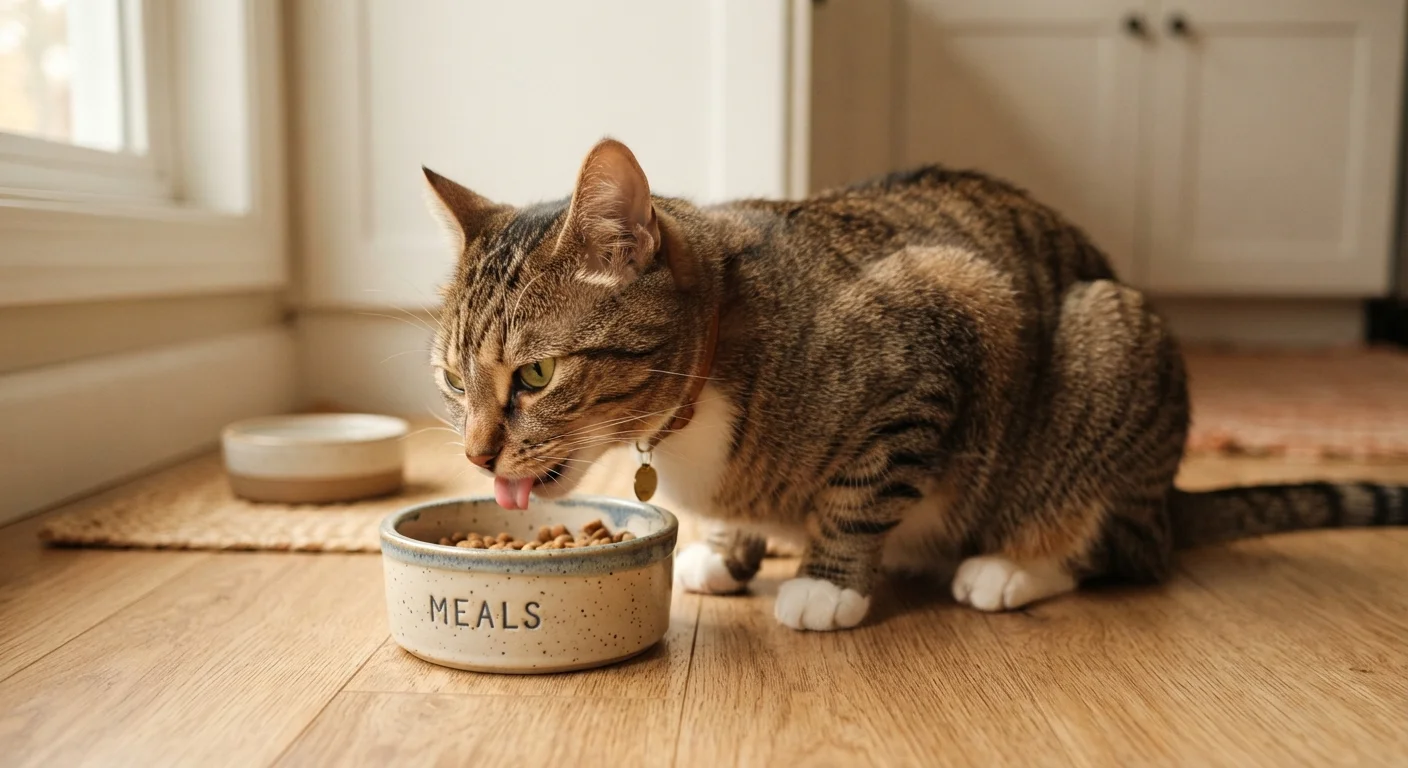
For most healthy adult cats, two meals per day - roughly 8 to 12 hours apart - is the approach most commonly recommended by veterinarians. This mimics a more natural eating rhythm and makes it easy to monitor how much your cat is actually consuming.
Free-feeding (leaving dry food out all day) can work for cats who self-regulate well, but many cats will overeat when food is always available. It also makes it difficult to track intake, which matters both for weight management and health monitoring.
Kittens have smaller stomachs and faster metabolisms, so they generally need three to four small meals per day until around six months of age. Senior cats - typically those over 10 years old - may benefit from smaller, more frequent meals if they have dental issues or digestive sensitivities. Learn more about how nutritional needs shift in our senior cat care overview.
Getting Portions Right
Portion size is where many well-meaning cat owners go wrong. Feeding guidelines printed on cat food packaging are a starting point, not a fixed prescription - they're typically calculated for the average cat at a given weight and may not reflect your cat's actual energy needs.
Key factors that influence how much your cat should eat include:
- Body weight and body condition score - your vet can assess whether your cat is underweight, ideal, or overweight
- Activity level - an indoor-only cat who sleeps most of the day needs fewer calories than an active cat with outdoor access
- Life stage - kittens need calorie-dense food for growth; spayed or neutered adults often need slightly less than intact cats
- Food type - wet food and dry food have very different caloric densities, so portions differ significantly
For a deeper look at how food type affects portions and nutrition, see our article on choosing between dry and wet food.
Where Treats Fit In - and Where They Go Wrong
Treats are a useful tool for training, bonding, and enrichment, but they carry real caloric weight. A general guideline from veterinary nutritionists is that treats should account for no more than 10% of a cat's daily caloric intake. For a typical adult cat consuming around 200-250 calories per day, that's a small number of treats - often far fewer than owners realize.
Common mistakes include offering treats as a substitute for interaction, using high-calorie treats daily without adjusting meal portions, and giving human foods that aren't appropriate for cats. Many human foods - including onions, garlic, grapes, and anything containing xylitol - are toxic to cats and should never be offered.
Treats That Are Off-Limits for Cats
Several common human foods are toxic to cats and should never be used as treats. These include onions, garlic, chives, grapes, raisins, alcohol, and anything sweetened with xylitol. Even small amounts of some of these can cause serious harm. Stick to commercially produced cat treats or small pieces of plain, cooked meat that your veterinarian has confirmed are safe for your individual cat.
If you use treats during training or enrichment activities, factor them into your cat's daily calorie budget and reduce meal portions slightly to compensate. Puzzle feeders and food-dispensing toys can also let treats double as mental stimulation - a win for solo cats in particular. See our tips for keeping an only cat mentally stimulated for enrichment ideas that incorporate food.
When to Talk to Your Vet About Feeding
Feeding guidelines in articles like this one are general information, not a substitute for individualized veterinary advice. Your cat's specific caloric needs, food type, and meal timing may need to be adjusted based on health conditions, medications, or weight management goals.
Talk with your veterinarian if your cat is gaining or losing weight without an obvious cause, if they've been diagnosed with a condition like diabetes, kidney disease, or hyperthyroidism, or if they regularly refuse meals or beg excessively between them. A veterinary professional can calculate your cat's resting energy requirement and recommend an appropriate daily calorie target - far more precise than package guidelines alone.
Keeping feeding schedules, portions, and treat intake consistent doesn't just protect your cat's waistline. It's one of the most practical ways to stay in tune with their overall health day to day.
This article is for general informational purposes only and is not a substitute for professional veterinary advice. Always consult a licensed veterinarian for guidance tailored to your cat's individual health needs.