

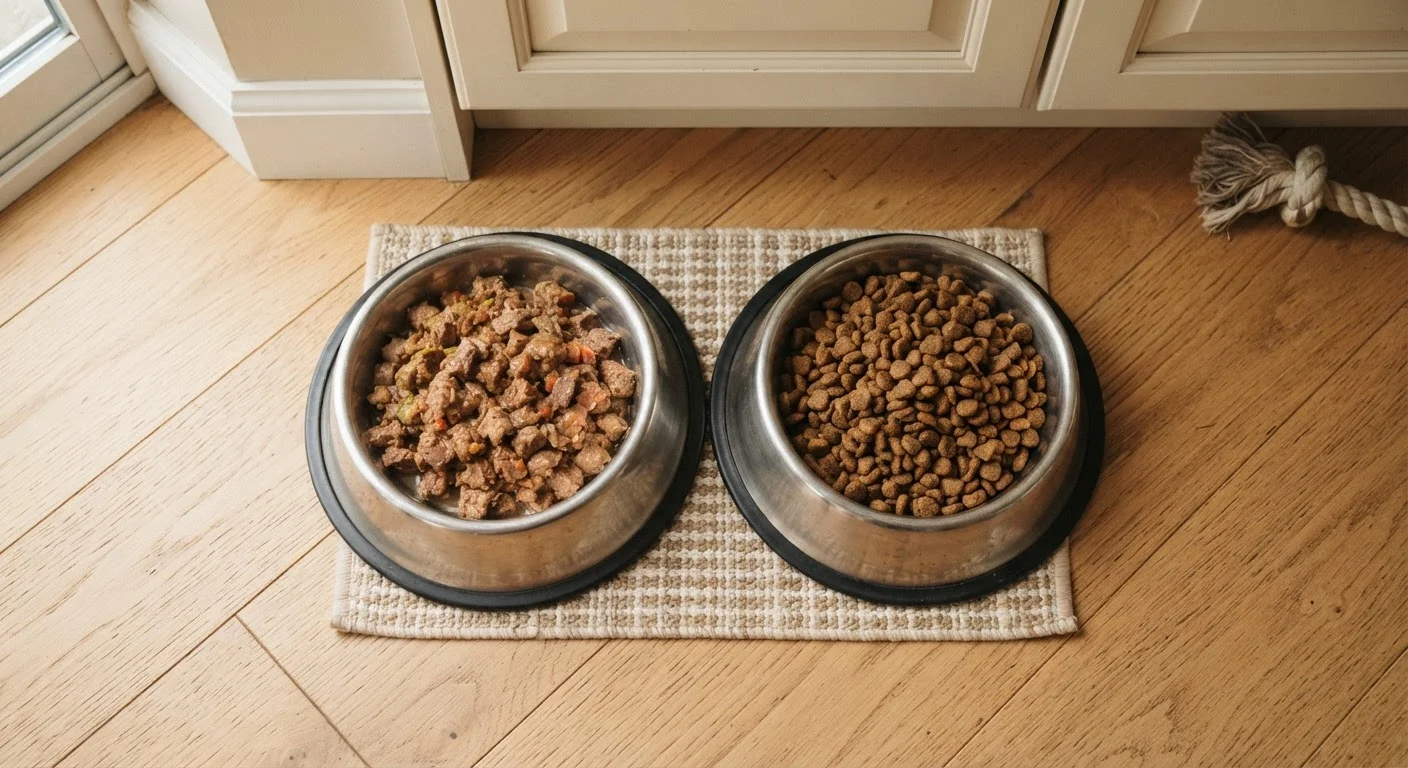
Key Takeaways
- Wet food delivers significantly more moisture, which can benefit dogs with urinary or kidney concerns.
- Dry kibble is generally more affordable per calorie and easier to store long-term.
- Neither format is universally superior - your dog's health, age, and preferences matter most.
- Dental health considerations differ: kibble may offer mild mechanical cleaning, but neither replaces brushing.
- Many owners successfully combine both formats to balance palatability, cost, and nutrition.
- Always consult your veterinarian before making significant changes to your dog's diet.
Option A
Wet Dog Food
The moisture-rich, highly palatable option.
Best for: Dogs with dental pain, picky eating habits, low thirst drive, or conditions requiring increased hydration.
Option B
Dry Kibble
The convenient, cost-effective everyday staple.
Best for: Active, healthy adult dogs whose owners prioritize budget, storage ease, and feeding routine flexibility.
If your dog drinks too little water or has urinary tract issues
Wet Dog Food
Wet food is typically 70-80% moisture, helping dogs meet their daily hydration needs through meals alone - particularly useful for dogs prone to urinary crystals or kidney stress.
If you're managing food costs across multiple dogs or a tight budget
Dry Kibble
Kibble delivers more calories per dollar spent and can be purchased in bulk without spoilage concerns, making it a more economical long-term choice.
If your dog is a picky eater or has lost interest in food
Wet Dog Food
The stronger aroma and softer texture of wet food tends to be more enticing, which can help stimulate appetite in finicky or recovering dogs.
If convenience and routine flexibility are top priorities
Dry Kibble
Kibble requires no refrigeration, has a long shelf life once opened, and is easy to portion and store - ideal for busy households or travel.
If your dog has dental sensitivity or missing teeth
Wet Dog Food
The soft consistency of wet food is much easier for dogs with oral pain, missing teeth, or jaw conditions to eat comfortably.
What Sets These Two Formats Apart
At their core, wet and dry dog foods differ in one defining way: water content. Wet food (also called canned food or pâté) typically contains 70-80% moisture, while dry kibble sits around 10%. This gap has a cascading effect on caloric density, texture, palatability, shelf life, and cost per serving.
Both formats can be nutritionally complete when they meet the AAFCO nutrient profiles for your dog's life stage. That label statement - something like "complete and balanced for adult maintenance" - is your baseline quality check. For a deeper look at how to interpret what's actually in the bag or can, see our guide on decoding a dog food label.
Neither format is inherently better. The decision comes down to your dog's individual health, your household's practical realities, and sometimes, plain preference on both ends of the leash.
| Criterion | Wet Dog Food | Dry Kibble |
|---|---|---|
| Moisture Content | 70-80% | ~10% |
| Cost Per Meal | Generally higher | Generally lower |
| Shelf Life (Opened) | 2-3 days refrigerated | Weeks at room temperature |
| Palatability | Highly aromatic, soft texture | Variable; less aroma |
| Dental Abrasion | Minimal to none | Mild mechanical action |
| Caloric Density | Lower per gram | Higher per gram |
| Hydration Support | Strong | Minimal |
| Portioning Ease | Can vary by can size | Easy to measure by cup or weight |
Nutrition, Hydration, and Health Considerations
From a pure macronutrient standpoint, high-quality versions of both formats can meet your dog's protein, fat, and micronutrient needs. Where they diverge is in hydration support. Dogs have a lower thirst drive than cats but still require adequate daily water intake. Wet food contributes meaningfully to that total - a real advantage for dogs with kidney disease, urinary stones, or a tendency to underdrink.
Dry kibble, by contrast, delivers more calories in a smaller volume, which can be useful for portion control in dogs prone to overeating. Because kibble is calorie-dense, overfeeding is easier to do accidentally - especially with free-feeding setups. Measuring portions and building a consistent feeding schedule helps with this. Our article on building a daily routine your dog can count on offers practical guidance on structuring mealtimes.
70-80%
Moisture in wet dog food
Wet food's high water content can meaningfully contribute to a dog's daily hydration, particularly for dogs prone to urinary issues.
~10%
Moisture in dry kibble
Kibble's low moisture means dogs eating only dry food rely almost entirely on their water bowl to meet hydration needs.
80%+
Adult dogs with dental disease by age 3
Veterinary organizations note dental disease is among the most prevalent conditions in adult dogs, underscoring that food choice alone doesn't address oral health.
Dogs with food allergies, digestive sensitivities, or specific life-stage needs (puppies, seniors, pregnant or nursing dogs) may benefit from veterinary guidance on which format - or which combination - best supports their condition. This is general information, not a substitute for professional advice tailored to your individual dog.
Dental Health: Setting the Record Straight
A common belief is that dry kibble cleans teeth while wet food causes more plaque buildup. The reality is more nuanced. Some kibble formulations do provide mild mechanical abrasion as dogs chew, which may slow tartar accumulation at the gumline - but standard kibble is not a substitute for dedicated dental care.
Wet food doesn't inherently cause more dental disease on its own, but because it doesn't provide even minimal abrasive action, dogs eating exclusively wet food may benefit from more consistent brushing or dental chews. Dental disease is extremely common in adult dogs and frequently underestimated. For a fuller picture, our companion article on dog dental health covers what good oral care actually looks like.
The practical takeaway: regardless of which food format you choose, regular tooth brushing - ideally daily - remains the most effective preventive tool available to dog owners.
Cost, Storage, and Everyday Convenience
On a per-calorie basis, dry kibble is almost always less expensive than wet food. A single can of wet food may provide only one or two meals for a medium-to-large dog, while a bag of kibble can last weeks. For multi-dog households or owners on a fixed budget, this difference adds up quickly over a year.
Storage also favors kibble. An unopened bag can be kept at room temperature for months. Opened wet food requires refrigeration and should generally be used within two to three days. This makes kibble more practical for travel, boarding, and households with irregular schedules.
That said, some owners find a mixed approach works well: kibble as the daily base, with a small amount of wet food added as a topper for palatability or to support hydration. This balances cost with the benefits of both formats and can be particularly helpful for dogs who are bored with their food or need appetite encouragement.
This article is for general informational and educational purposes only. It is not a substitute for professional veterinary advice. Always consult a licensed veterinarian regarding your dog's specific dietary and health needs.